






TLDR
- Base case forecast puts ETH between $8,000–$12,000 by 2031
- Bull case projects $20,000–$30,000 if Ethereum becomes a core digital finance settlement layer
- Bear case sits at $2,500–$4,000 if competitors take market share
- Probability-weighted target is roughly $10,500 by 2031
- Ethereum’s edge comes from its deep ecosystem across DeFi, stablecoins, and tokenized assets
Ethereum has spent years building more than just a cryptocurrency. It became the foundation for stablecoins, decentralized finance, tokenized assets, and thousands of blockchain applications.
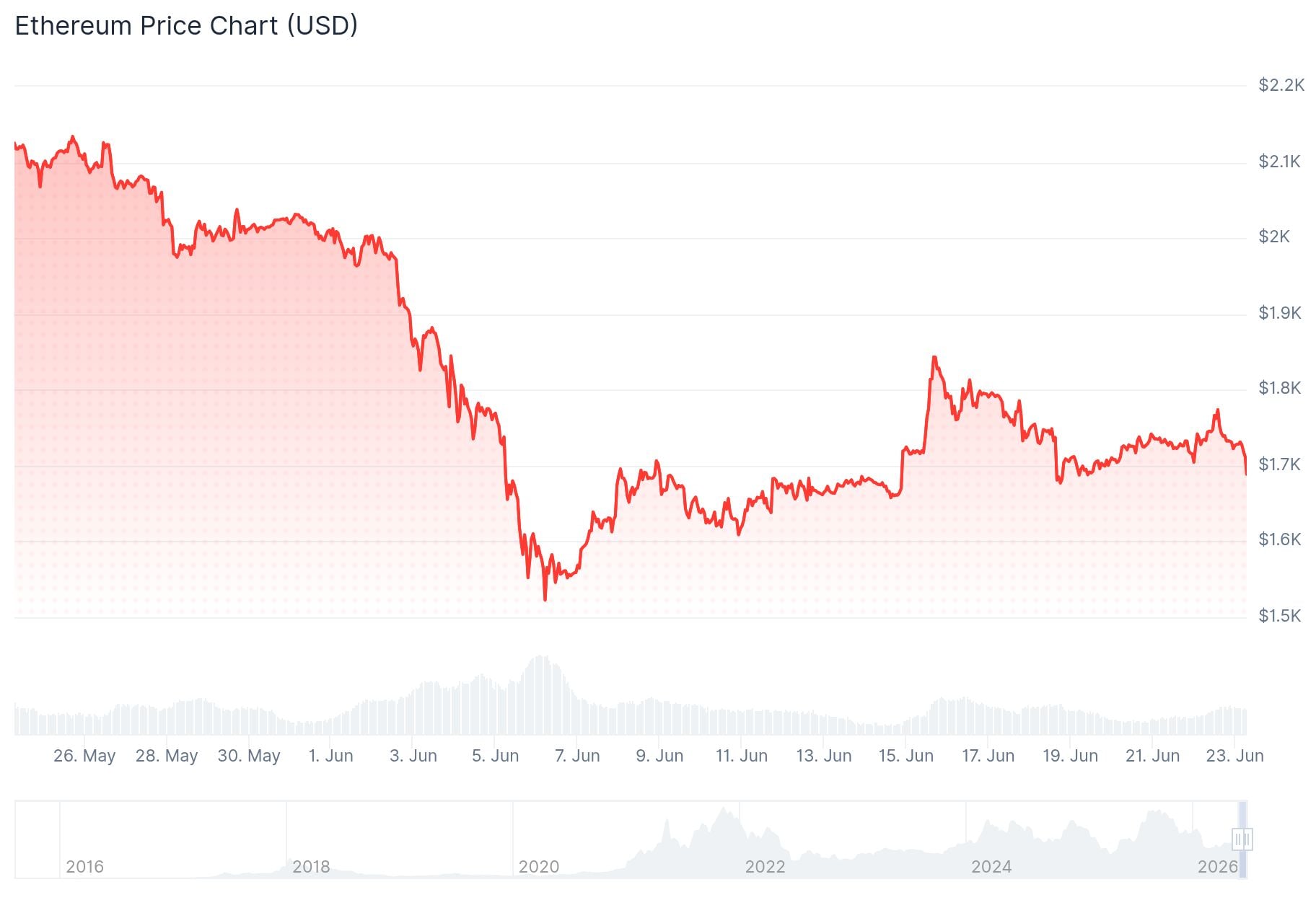
That puts ETH in a unique position heading into the next five years.
A new five-year forecast breaks down where Ethereum could trade by 2031, under three different scenarios.
The probability-weighted target lands at around $10,500.
The Base Case: $8,000–$12,000
The base case assumes Ethereum keeps its role as the leading smart contract platform.
Stablecoins are expected to grow. Tokenized bonds, stocks, and real estate are likely to expand on blockchain rails. Ethereum is well placed to capture a share of that.
If ETH’s market cap reaches $1 trillion to $1.5 trillion, the price lands between $8,000 and $12,000. That assumes continued growth in Ethereum ETFs, Layer 2 expansion, and rising institutional use.

The Bull and Bear Cases
The bull case puts ETH at $20,000–$30,000 by 2031.
That would require Ethereum to become a primary settlement layer for digital finance. Market cap would need to exceed $3 trillion. With roughly 120 million ETH in circulation and ongoing fee burning keeping supply in check, that math works out.
The bear case is $2,500–$4,000.
This assumes Solana and other Layer 1 competitors take meaningful market share. Regulatory pressure could also slow institutional adoption. Even in this scenario, Ethereum’s ecosystem makes a full collapse unlikely.
Ethereum benefits from multiple demand drivers that most blockchains don’t have. Developers build on it. Institutions launch tokenized assets on it. Stablecoins settle trillions of dollars across Ethereum-based networks.
That network effect keeps reinforcing itself.
More users bring more developers. More developers create more apps. More apps attract more capital.
Banks and asset managers are already experimenting with Ethereum-based financial products. Stablecoins are increasingly settling on Ethereum networks.
As of mid-2026, Ethereum remains the largest smart contract platform by ecosystem size and developer activity, despite years of competition from faster, cheaper chains.
The current forecast places the probability-weighted five-year target at approximately $10,500, with the base case range of $8,000–$12,000 considered the most likely outcome.


