






TLDR
- European stocks pulled back slightly on Friday but were on track for their first weekly gain in three weeks
- The Fed raised rates by 25 basis points to 3.75%-4%, its first hike since mid-2023, which reassured markets
- Brent crude stayed near $104 a barrel after spiking above $113 earlier in the week due to pipeline attacks
- The Bank of England held rates at 3.75% but warned of a possible hike in November
- Tech stocks outperformed while energy, telecoms, and luxury goods lagged on Friday
European stocks slipped on Friday but held onto weekly gains after a turbulent stretch driven by oil supply fears and central bank decisions.
The Stoxx Europe 600 fell around 0.44% on Friday, pulling back from a more than one-week high hit the day before. Germany’s DAX and France’s CAC 40 each dropped about 0.7%, while London’s FTSE 100 fell 0.6%.
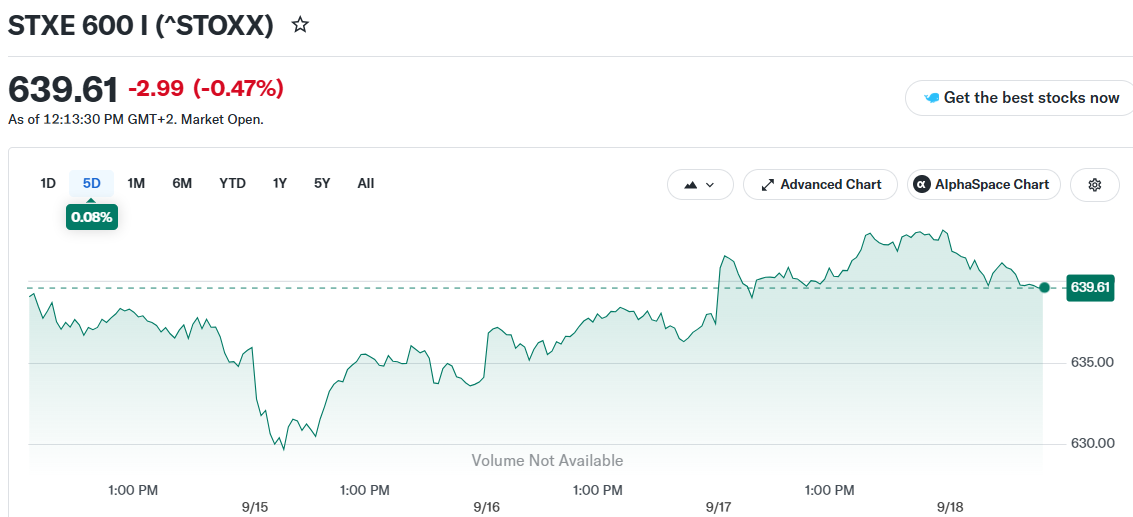
Despite the Friday dip, the Stoxx 600 was set to close the week up around 0.5%. That would mark its first weekly gain in three weeks.
Fed Rate Hike Calms Markets
The Federal Reserve voted unanimously to raise interest rates by 25 basis points to a range of 3.75% to 4%. It was the Fed’s first rate increase since mid-2023.
FED LIFTS PROJECTED RATE PATH ACROSS 2026-2028
The Fed now projects one more hike this year, followed by one cut by the end of 2028.
2026: 4.1% vs 3.8% in June
2027: 4.1% vs 3.6%
2028: 3.9% vs 3.4%
Long run: 3.2% vs 3.1%12 of 18 officials expect another hike this year. pic.twitter.com/BZwY6ydqCp
— Wall St Engine (@wallstengine) September 16, 2026
Fed Chair Kevin Warsh made clear the central bank would keep fighting inflation, even under political pressure. That message steadied investor nerves and sparked the Stoxx 600’s best single-session rally in over two months on Thursday.
The Bank of England held its rate steady at 3.75% in a 6-3 vote. It warned that persistent energy cost pressures could push it to raise rates to 4.00% at its November meeting.

The Bank of Japan raised rates to a 31-year high, though two policymakers voted against the move, raising questions about how long that tightening cycle can last.
Oil Stays Elevated After Pipeline Attack
Brent crude pulled back about 1.5% on Friday but remained nearly 15% higher on the week, hovering near $104 a barrel.
Earlier in the week, a targeted attack on Saudi Arabia’s East-West pipeline threatened up to 4% of global oil supply. Fresh Houthi strikes in the Red Sea pushed Brent past $113 a barrel and sent the US 10-year Treasury yield above 5% for the first time since 2007.
By Friday, energy companies and shippers were finding alternate routes through Oman, helping ease some of the pressure on prices.
Nestle fell around 1% to 1.3% after Russia seized control of the Swiss food giant’s local assets in Russia.
Orange dropped nearly 4%, making it the worst performer on the Stoxx 600. Shell fell 1.2% and Allianz lost 1.3%.
On the brighter side, ASML Holding gained 2.1% and STMicroelectronics rose 2.2%, with tech stocks among the week’s top performers.
Polish fashion retailer LPP jumped 6% after reporting a 64% rise in second-quarter profit.
Rate-sensitive sectors like luxury goods edged lower as elevated bond yields continued to weigh on valuations.
The week closed with European markets recovering from Tuesday’s sharp selloff, when the Stoxx 600 hit its lowest level since June.
Stop guessing and start investing with confidence. KnockoutStocks gives you the AI insights, market intelligence, and stock research you need to spot opportunities, cut through the noise, and make smarter investment decisions — all in one powerful platform.
Sign up today and get 50% OFF full access to our premium stock picks.
Simply use coupon code SPECIAL50 at checkout to claim your exclusive discount.
Get 3 Free Stock Ebooks
Discover top-performing stocks in AI, Crypto, and Technology with expert analysis.
- Top 10 AI Stocks - Leading AI companies
- Top 10 Crypto Stocks - Blockchain leaders
- Top 10 Tech Stocks - Tech giants



