





TLDR
- Gold fell over 1% Monday as the dollar strengthened and U.S.-Iran military exchanges resumed
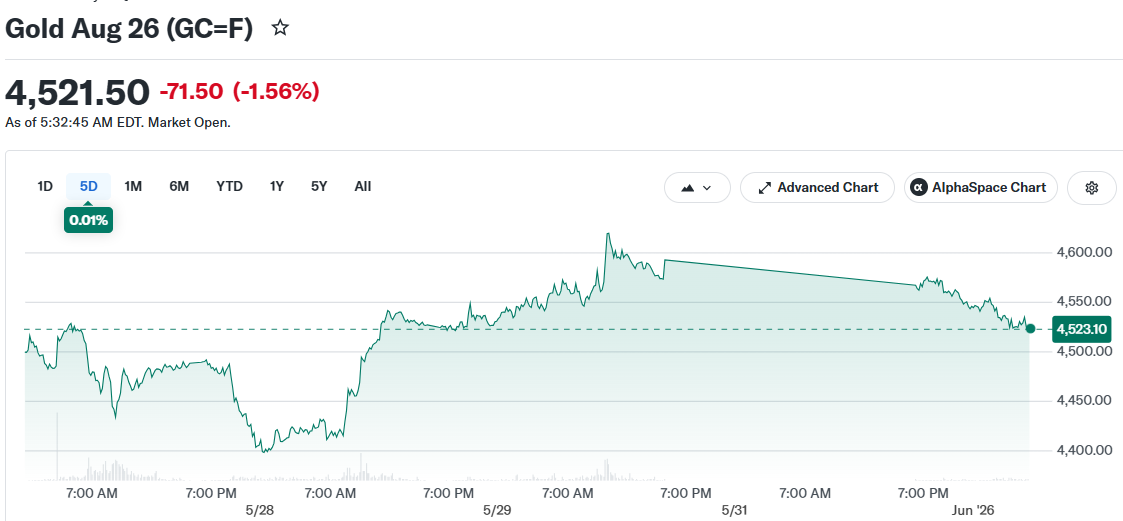
- Spot gold dropped 0.8% to $4,501.54/oz; U.S. Gold Futures fell 1.3% to $4,532.22
- Oil surged more than 3%, raising inflation fears and rate hike expectations
- The U.S. dollar index rose 0.1%, making gold more expensive for foreign buyers
- Traders are watching Fed speeches and upcoming jobs data for interest rate direction
Gold prices dropped sharply on Monday after fresh U.S.-Iran military exchanges over the weekend raised new doubts about a ceasefire deal.
Spot gold fell 0.8% to $4,501.54 an ounce in early trading. U.S. Gold Futures declined 1.3% to $4,532.22.
The U.S. military said it struck Iranian air-defense and drone-related facilities after Iran allegedly shot down a U.S. drone. Tehran then attacked an air base used by U.S. forces. Regional air defenses intercepted missiles and drones during the exchanges.
Gold had ended last week with small gains after reports suggested both sides were discussing a ceasefire extension and the reopening of shipping lanes through the Strait of Hormuz.
BREAKING: The US military has conducted strikes on Iranian targets in Goruk and Qeshm Island, Iran, in what it described as "self-defense strikes."
The US says the strikes were carried out in response to "aggressive Iranian actions," including the shootdown of a US MQ-1 drone…
— The Kobeissi Letter (@KobeissiLetter) June 1, 2026
Those hopes faded after the weekend strikes. Key issues remain unresolved, and any final agreement still needs approval from President Donald Trump.
Oil Jumps, Putting Pressure on Fed Policy
Oil prices climbed more than 3% on Monday following the renewed military activity. That raised concerns about persistently high energy costs and what they could mean for inflation.

Higher inflation could push the Federal Reserve toward raising interest rates rather than cutting them. Before the conflict escalated, markets had been pricing in rate cuts.
Higher interest rates tend to weigh on gold, which pays no yield. When rates rise, investors often move money into yield-bearing assets instead.
The U.S. dollar index edged up 0.1% in Asian trading hours. A stronger dollar makes gold more expensive for buyers using other currencies, adding further downward pressure on prices.
Analysts at Saxo Bank said the market is struggling to balance inflationary pressures from energy prices against longer-term factors that typically support gold, such as central bank buying, fiscal debt concerns, and de-dollarization trends.
Other Metals Show Mixed Moves
Not all precious metals fell on Monday. Silver edged up 0.5% to $75.69 an ounce. Platinum rose 1.1% to $1,940.95 an ounce.
Copper futures on the London Metal Exchange gained 0.3% to $13,663.33 a ton. U.S. Copper Futures also rose 0.3% to $6.44 a pound.
Israel also ordered troops deeper into southern Lebanon as fighting with Iranian-backed Hezbollah intensified, adding to regional uncertainty.
Traders are now keeping a close eye on upcoming speeches from Federal Reserve officials. U.S. labor market data is also due, which could give clearer signals on the interest rate outlook.
Gold fell to a two-month low last week before partially recovering. The metal’s near-term direction will likely depend on how ceasefire talks develop and what the Fed signals next.
Stop guessing and start investing with confidence. KnockoutStocks gives you the AI insights, market intelligence, and stock research you need to spot opportunities, cut through the noise, and make smarter investment decisions — all in one powerful platform.
Sign up today and get 50% OFF full access to our premium stock picks.
Simply use coupon code SPECIAL50 at checkout to claim your exclusive discount.
Get 3 Free Stock Ebooks
Discover top-performing stocks in AI, Crypto, and Technology with expert analysis.
- Top 10 AI Stocks - Leading AI companies
- Top 10 Crypto Stocks - Blockchain leaders
- Top 10 Tech Stocks - Tech giants



