





TLDR
- Spot gold fell over 1% to around $4,688–$4,703 an ounce on Thursday
- The US-Iran standoff over the Strait of Hormuz is driving oil above $103 a barrel
- Higher oil prices are stoking inflation fears, pressuring non-yielding assets like gold
- A stronger US dollar is making gold more expensive for overseas buyers
- Gold has dropped roughly 11% since the conflict began eight weeks ago
Gold prices fell on Thursday as a combination of a stronger US dollar and rising oil prices weighed on the precious metal. Spot gold dropped around 1% to trade near $4,700 an ounce, while gold futures also declined.
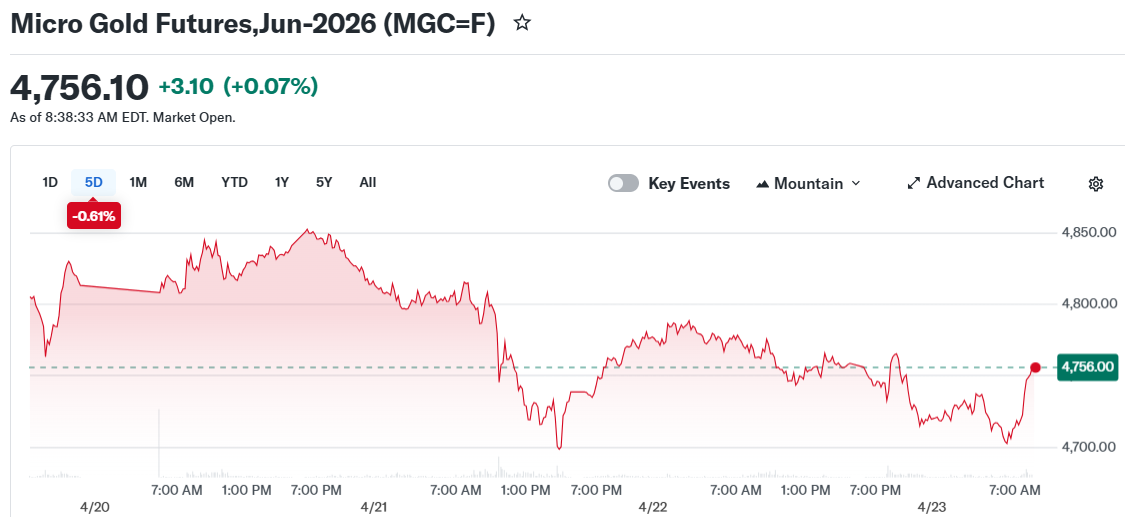
The drop comes as the US-Iran conflict, now in its eighth week, continues to disrupt energy markets. Oil climbed back above $103 a barrel this week, driven by fears over supply disruptions at the Strait of Hormuz.
The Strait of Hormuz is a narrow waterway off Iran’s southern coast. Roughly one-fifth of the world’s oil passes through it.
🚨 BREAKING:
🇮🇷 Iran's parliament has drafted a law formalizing new rules for Strait of Hormuz passage.
– Tolls must be paid in Iranian Rials before any vessel is granted passage
– All contracts must reference the name "Persian Gulf"
– Ships from nations that participated in… https://t.co/wvBvv8zxiA pic.twitter.com/lEE6W76GU6
— Mario Nawfal (@MarioNawfal) April 23, 2026
Iran has continued to block the strait, while the US has maintained a naval blockade on Iranian ships. Iranian gunboats also fired on commercial vessels this week, keeping tensions high.
President Trump extended a ceasefire that was first agreed on April 7, saying it would stay in place indefinitely while Washington waits for Iran to submit a new peace proposal. Iran has said it has no plans to enter negotiations soon.
Iran stated the US must lift its blockade before any talks can happen. Washington, in turn, demanded a full reopening of the Strait of Hormuz. Both sides remain at an impasse.

Why Rising Oil Hurts Gold
Higher oil prices push up inflation expectations. When inflation rises, central banks are more likely to keep interest rates high or raise them further.
Gold does not pay interest or dividends, so it tends to underperform when rates are high or rising. This dynamic has put consistent pressure on gold since the conflict began.
Gold has now fallen about 11% since the war started eight weeks ago.
The US dollar also strengthened this week, on track for its first weekly gain in a month. A stronger dollar makes gold more expensive for buyers using other currencies, reducing demand.
Jake Behan, Head of Capital Markets at Direxion, noted that some traders are now shifting focus away from the conflict and toward corporate earnings. He pointed to renewed interest in AI infrastructure spending as a driver of short-term risk appetite.
Other Precious Metals Also Fall
Silver dropped sharply, falling around 2.7% to 4.3% on Thursday to trade near $74–$75 an ounce. Platinum fell 3.5% to around $2,005 an ounce. Palladium also declined.
Rhona O’Connell, head of market analysis at StoneX, said the precious metals market will “remain cautious and volatile.” She added that professional trading houses are reluctant to take large positions given the unstable geopolitical environment.
Iran’s continued blockade of the Strait of Hormuz and the US naval presence in the region remain the key factors keeping energy markets and inflation risks elevated as of April 23, 2026.
Stop guessing and start investing with confidence. KnockoutStocks gives you the AI insights, market intelligence, and stock research you need to spot opportunities, cut through the noise, and make smarter investment decisions — all in one powerful platform.
Sign up today and get 50% OFF full access to our premium stock picks.
Simply use coupon code SPECIAL50 at checkout to claim your exclusive discount.
Get 3 Free Stock Ebooks
Discover top-performing stocks in AI, Crypto, and Technology with expert analysis.
- Top 10 AI Stocks - Leading AI companies
- Top 10 Crypto Stocks - Blockchain leaders
- Top 10 Tech Stocks - Tech giants



