





TLDR
- Micron and SanDisk have become two of the biggest beneficiaries of booming AI infrastructure spending.
- Micron shares are up nearly 20% over the past month and more than 270% in 2026, while SanDisk has gained over 25% in a month and almost 700% this year.
- Micron has exposure to HBM, DRAM and NAND memory, while SanDisk is more concentrated on NAND flash and enterprise storage.
- Nvidia has outlined about $279 billion of supply and capacity commitments through fiscal 2032, with memory accounting for much of that spending.
- Despite their huge rallies, Micron and SanDisk trade at roughly 6 and 8 times forward earnings respectively, according to the cited analysis.
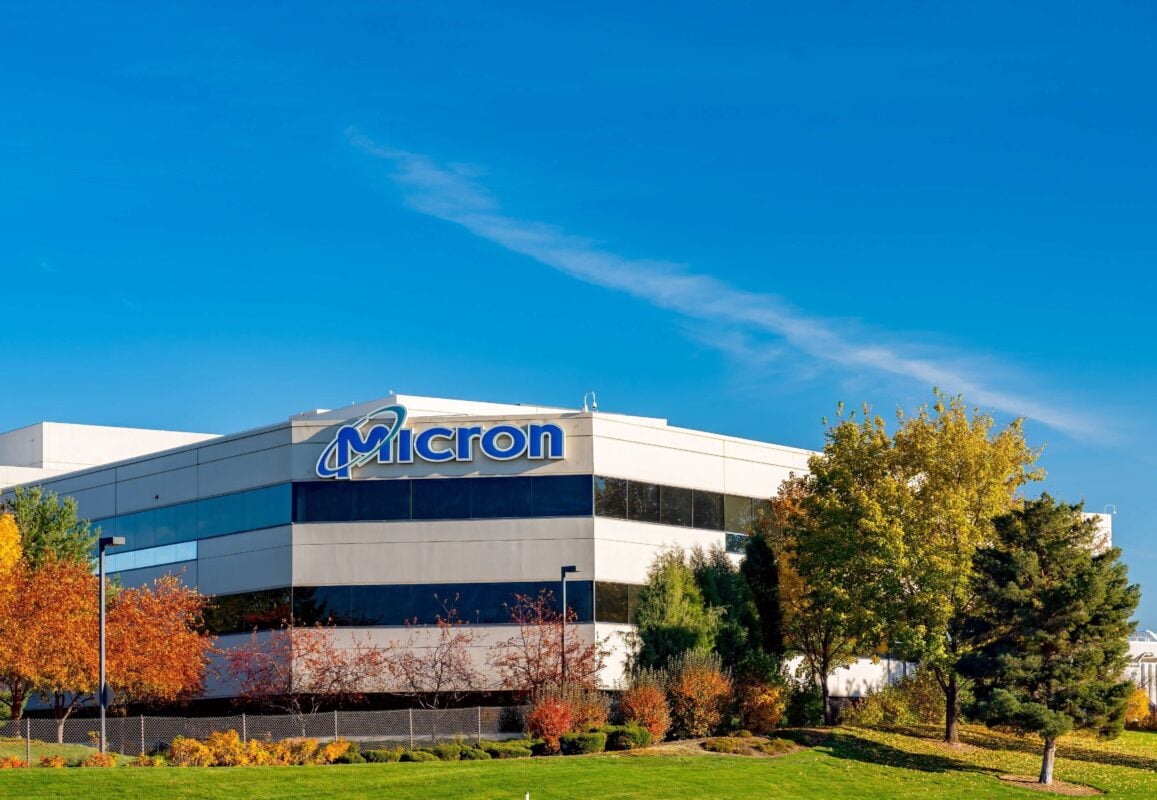
Micron Technology and SanDisk have emerged as two of the strongest-performing stocks from the AI infrastructure boom as demand for memory and data storage accelerates. Micron shares have risen more than 270% this year, while SanDisk has climbed almost 700%.
Both companies benefit from the huge amount of computing infrastructure being built by Nvidia and major cloud providers including Microsoft, Amazon and Alphabet. However, the two companies are exposed to different parts of the rapidly expanding AI memory market.
Micron and SanDisk Offer Different AI Exposure
Micron produces DRAM, NAND flash and high-bandwidth memory, or HBM, giving the company exposure to several critical parts of AI servers. HBM is increasingly important because it sits close to GPUs and provides the enormous memory bandwidth needed for training and running advanced AI models.
The company is already shipping HBM4 and expects production of its enhanced HBM4E products in 2027. That puts Micron directly into the supply chain for increasingly powerful AI accelerators.
SanDisk is more focused on NAND flash memory and storage products such as enterprise solid-state drives. Its data-center revenue jumped 437% during fiscal 2026 as AI systems generated increasingly large volumes of data requiring storage.
That creates a relatively clear distinction between the companies. Micron provides memory used directly around AI processors as well as storage, while SanDisk gives investors more concentrated exposure to the NAND and enterprise-storage side of the AI buildout.

Nvidia’s $279 Billion Memory Plan Highlights Demand
The scale of AI memory demand was highlighted by Nvidia’s recent disclosure about long-term supply commitments. Nvidia outlined roughly $279 billion of supply and capacity commitments through fiscal 2032, with management saying the spending primarily relates to memory procurement.
About $92 billion of those commitments are due during the remainder of fiscal 2027, followed by roughly $87 billion and $88 billion during the next two years. Nvidia described memory pricing conditions as extremely tight as demand continues to exceed available supply.
HBM is one of the most constrained components because it directly affects how many AI accelerators can be completed and shipped. DRAM supplies the wider server environment, while NAND stores training data, checkpoints, logs and other information generated by AI systems.
Micron therefore has direct exposure to some of the most supply-constrained parts of the AI hardware stack. SanDisk remains positioned to benefit from rapidly growing storage requirements as more AI workloads move from training into large-scale production.
Earnings Growth Surges at Both Companies
Micron expects approximately $50 billion in revenue for its current fiscal fourth quarter, with an 86% gross margin and adjusted earnings of roughly $31 per share. Zacks estimates fiscal 2026 revenue could reach $129.71 billion, up 247% from the previous year.
Growth is expected to continue into fiscal 2027, with consensus estimates calling for revenue of about $250.19 billion and earnings of $158.45 per share. Continued demand for HBM and DRAM from AI accelerators is expected to remain a major driver.
SanDisk is also recording rapid growth. Management expects fiscal first-quarter 2027 revenue of between $10.3 billion and $10.8 billion, while consensus estimates put full-year revenue at $49.25 billion.
SanDisk earnings are projected to rise about 201% to $213.31 per share in fiscal 2027. Enterprise SSDs and rising NAND demand from AI data centers remain central to the company’s growth outlook.
Valuations Remain Low Despite Huge Rallies
Despite the sharp increases in their share prices, both companies remain relatively inexpensive based on projected earnings. Micron trades at about six times forward earnings, while SanDisk trades at roughly eight times, compared with about 22 times for the S&P 500 in the cited analysis.
Those low multiples partly reflect the historically cyclical nature of the memory industry. Memory stocks often appear cheapest when pricing, margins and profitability are close to the top of an industry cycle.
The central question is whether AI infrastructure demand changes that pattern. Long-term supply agreements, tight memory availability and enormous hyperscaler spending could potentially make the current cycle last longer than previous memory booms.
Micron provides broader exposure across HBM, DRAM and NAND, while SanDisk remains more concentrated on storage. Both companies are benefiting from the same underlying trend: AI systems are requiring increasingly large quantities of memory at almost every stage of the computing stack.
Stop guessing and start investing with confidence. KnockoutStocks gives you the AI insights, market intelligence, and stock research you need to spot opportunities, cut through the noise, and make smarter investment decisions — all in one powerful platform.
Sign up today and get 50% OFF full access to our premium stock picks.
Simply use coupon code SPECIAL50 at checkout to claim your exclusive discount.
Get 3 Free Stock Ebooks
Discover top-performing stocks in AI, Crypto, and Technology with expert analysis.
- Top 10 AI Stocks - Leading AI companies
- Top 10 Crypto Stocks - Blockchain leaders
- Top 10 Tech Stocks - Tech giants



