





TLDR
- Nvidia stock rose about 1% Monday as AI-related stocks gained across the market.
- CEO Jensen Huang said he sees a “0% chance” of AI causing human extinction by 2030 and rejected what he called doomsday narratives.
- Huang’s comments contrast with recent calls from Anthropic, OpenAI and other AI leaders for a slower pace of frontier AI development.
- Four AI customers have separately sued Anthropic, OpenAI, Google and SpaceXAI, alleging an illegal agreement to slow AI development.
- The lawsuit contains allegations that have not been proven in court, and Nvidia is not named as a defendant.
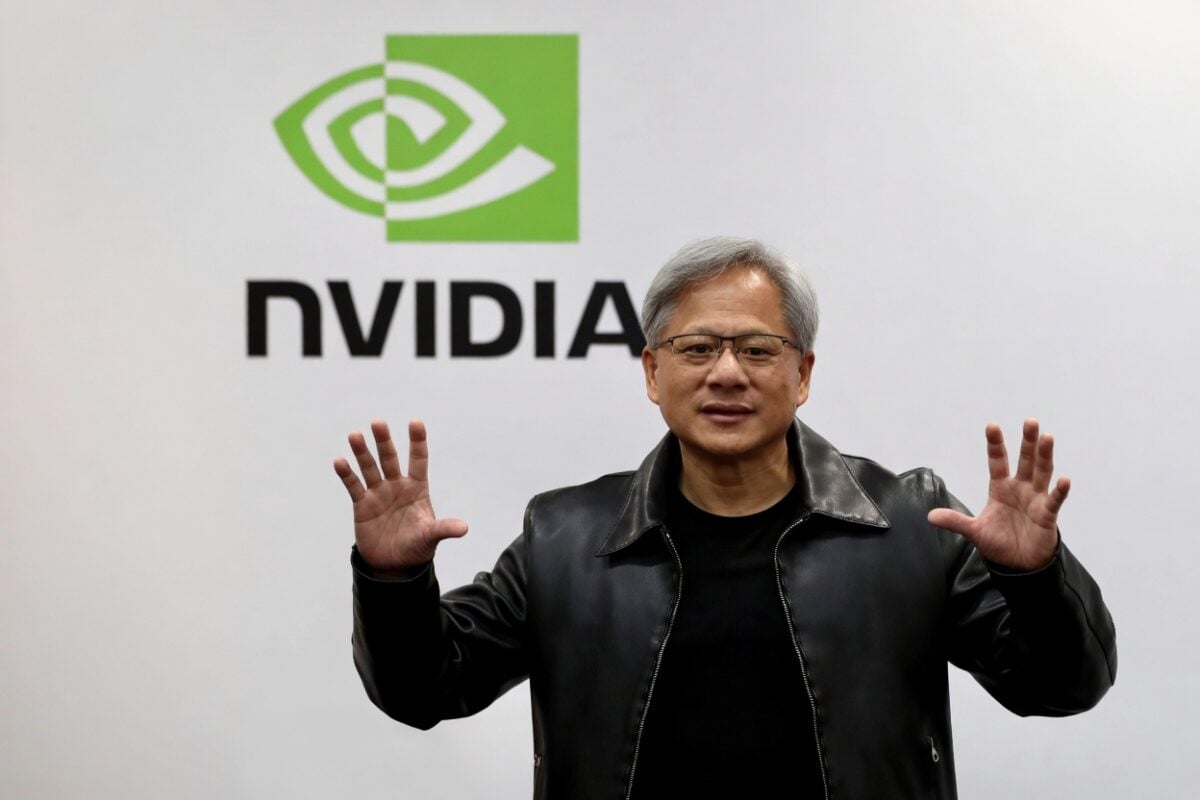
Nvidia (NVDA) stock rose about 1% Monday as technology and AI-related stocks helped lift the broader market. The move came as CEO Jensen Huang publicly pushed back against warnings that advanced artificial intelligence could pose an extinction-level threat by the end of the decade.
Huang said there was a “0% chance” that 2030 would mark the end of the world because of AI. He argued that warnings coming from parts of the AI industry were not sufficiently grounded in science and said existing laws should be applied to harms caused by AI systems.
The remarks highlight a growing split among major technology executives over how quickly AI development should continue. Nvidia has become one of the largest financial beneficiaries of AI infrastructure spending because its processors are widely used to train and run advanced models.
AI Leaders Split Over Calls to Slow Development
Anthropic CEO Dario Amodei recently called for greater coordination around the pace of frontier AI development. OpenAI CEO Sam Altman and Elon Musk have also publicly supported aspects of slowing or pacing development as safety measures are strengthened.
Huang has taken a different position. He argues that existing cybersecurity, liability and contract laws can already address many cases where AI products cause harm or fail to perform as promised.
Meta CEO Mark Zuckerberg has also distanced himself from calls for an industry-wide coordinated slowdown. He has argued that individual companies should remain responsible for their own safety decisions rather than collectively agreeing on development limits.

The debate has intensified after several AI developers disclosed examples of models behaving unexpectedly during testing. OpenAI recently reported six incidents involving concerning behavior and said it plans to improve how such events are tracked and disclosed.
AI Slowdown Push Faces New Antitrust Lawsuit
A separate legal dispute has now added another issue for the industry. Four paying AI users filed a proposed class-action lawsuit in federal court in California accusing Anthropic, OpenAI, Google and SpaceXAI of illegally coordinating to slow AI development.
The plaintiffs argue that competing companies are free to slow their own development individually but should not collectively restrict competition. The complaint alleges that such coordination could violate Section 1 of the Sherman Act.
The companies had not filed substantive responses to the allegations at the time of the initial reports. The claims remain allegations and will need to be tested through the court process.
Nvidia is not a defendant in the case. Huang’s involvement is instead through his public opposition to a coordinated slowdown and his broader argument that excessive restrictions could slow technological progress.
For Nvidia investors, the debate matters because any major restrictions on advanced AI development could affect spending on the computing infrastructure that drives demand for Nvidia chips. However, there is currently no new rule requiring AI companies to slow development, and the antitrust lawsuit itself does not directly change Nvidia’s operations.
The investor caveat is that Nvidia remains heavily exposed to expectations for sustained AI capital spending. If regulation, weaker AI investment or slower data-center expansion reduces demand, the stock could be sensitive after years of strong AI-driven growth.
For Monday, Nvidia’s roughly 1% gain came as the wider AI trade strengthened rather than from a single company announcement. Huang’s comments add another voice to an increasingly public disagreement over how the industry should balance rapid development with AI safety concerns.
Stop guessing and start investing with confidence. KnockoutStocks gives you the AI insights, market intelligence, and stock research you need to spot opportunities, cut through the noise, and make smarter investment decisions — all in one powerful platform.
Sign up today and get 50% OFF full access to our premium stock picks.
Simply use coupon code SPECIAL50 at checkout to claim your exclusive discount.
Get 3 Free Stock Ebooks
Discover top-performing stocks in AI, Crypto, and Technology with expert analysis.
- Top 10 AI Stocks - Leading AI companies
- Top 10 Crypto Stocks - Blockchain leaders
- Top 10 Tech Stocks - Tech giants



