





TLDR
- TSMC stock rose 5% after unveiling its A13 and N2U chip manufacturing processes at its tech symposium in Santa Clara.
- The A13 node targets AI chip production from 2029; the N2U is a cheaper option aimed at phones, laptops, and AI from 2028.
- TSMC plans to avoid ASML’s costly next-gen “high NA” EUV machines, instead squeezing more from existing EUV equipment.
- By 2028, TSMC says it will be able to stitch together 10 large chips and 20 memory stacks — up from two chips and eight stacks today.
- ASML stock dipped 1% on the news, as TSMC’s roadmap reduces near-term demand for its newer, pricier machines.
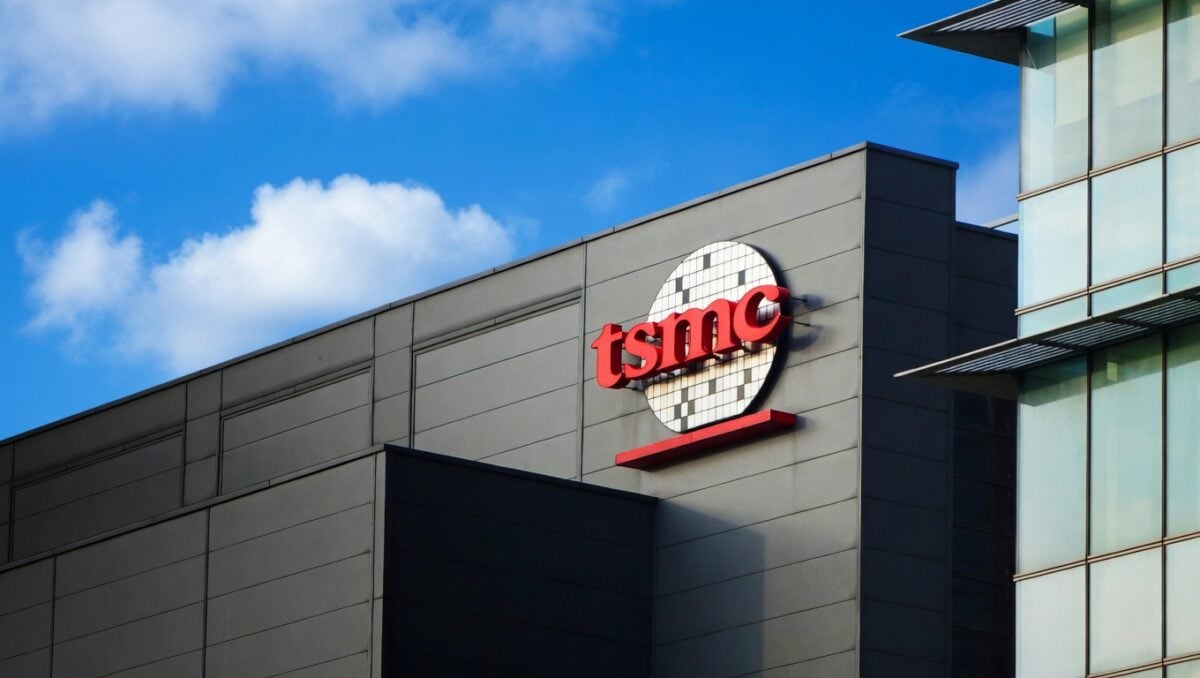
Taiwan Semiconductor Manufacturing Co. (TSM) held its annual technology symposium in Santa Clara on April 22, 2026, unveiling its next generation of chip processes. The stock closed up 5% on the day.
Taiwan Semiconductor Manufacturing Company Limited, TSM
The two headline announcements were the A13 and N2U manufacturing nodes. A13 is a refinement of TSMC’s existing A14 process and is aimed squarely at AI chip production, with volume expected in 2029. N2U is the more affordable option, targeting phones, laptops, and AI applications from 2028.
Both are designed to produce smaller, faster chips. But the performance gains at the individual chip level are described as modest.
The bigger story may be what TSMC is not buying. The company said it plans to skip ASML’s new “high NA” extreme-ultraviolet lithography machines for now. Those machines cost around $400 million each — roughly double the older EUV tools TSMC already owns.
Kevin Zhang, TSMC’s deputy co-chief operations officer, told Reuters the company’s R&D has found ways to push existing EUV technology further. “This is definitely a strength,” he said.
ASML stock fell about 1% following the news. Less urgency to upgrade equipment means near-term headwinds for the Dutch chip toolmaker.

Stacking More Chips Together
The packaging side of Wednesday’s reveal drew attention too. TSMC said that by 2028, it will be able to combine 10 large computing chips with 20 high-bandwidth memory stacks in a single package. Current AI processors like Nvidia’s Vera Rubin — made by TSMC and due out this year — use two large chips and eight memory stacks.
That kind of multi-chip stacking is increasingly how the industry plans to keep performance climbing, even as gains from shrinking transistors slow down. Dan Hutcheson of TechInsights described it as Moore’s Law “morphing from a monolithic, single die in a package to multi-die in a package.”
But stacking chips isn’t without its problems. Heat buildup and the physical stress of different materials expanding at different rates can cause packages to bend or crack. Ian Cutress of More Than Moore noted that Nvidia’s Rubin processor had faced exactly these kinds of issues. He added that TSMC did not directly address how it plans to solve them.
Strong Fundamentals, Premium Price Tag
TSMC carries a P/E ratio of 32.18x and a GF Score of 96 out of 100. Insider activity over the past 12 months shows 33 buys and zero sells.
Despite those metrics, the stock is currently classified as “significantly overvalued” by GuruFocus’s GF Value model.
TSMC’s clients for these new processes include Apple, Nvidia, AMD, and Google. The company controls roughly 70% of the global foundry market.
ASML confirmed the 1% dip in its stock price on the day of TSMC’s announcement.
Stop guessing and start investing with confidence. KnockoutStocks gives you the AI insights, market intelligence, and stock research you need to spot opportunities, cut through the noise, and make smarter investment decisions — all in one powerful platform.
Sign up today and get 50% OFF full access to our premium stock picks.
Simply use coupon code SPECIAL50 at checkout to claim your exclusive discount.
Get 3 Free Stock Ebooks
Discover top-performing stocks in AI, Crypto, and Technology with expert analysis.
- Top 10 AI Stocks - Leading AI companies
- Top 10 Crypto Stocks - Blockchain leaders
- Top 10 Tech Stocks - Tech giants



