





TLDR
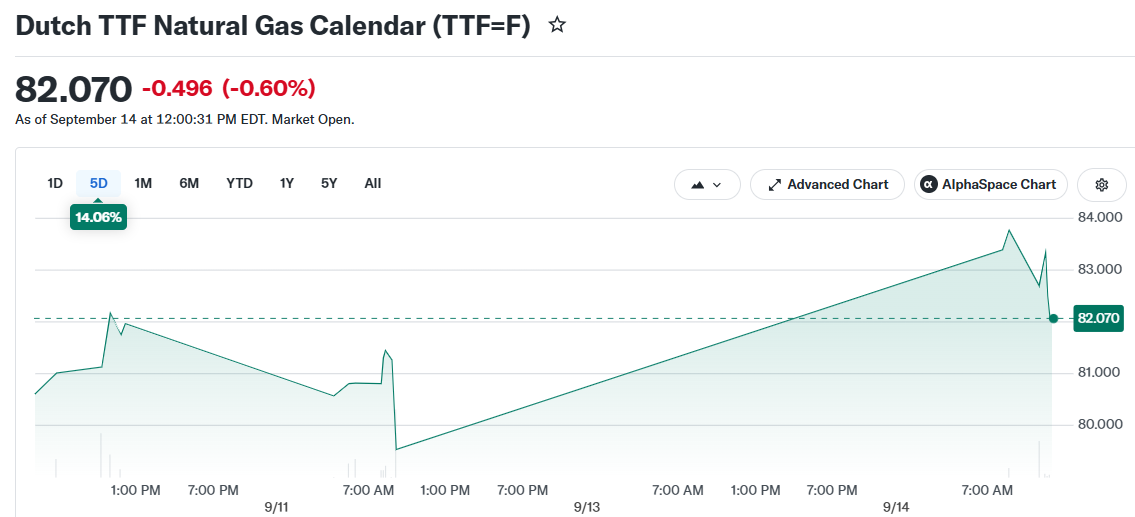
- European TTF gas prices slipped 0.7% to around 82.80 euros/MWh after hitting 2023 highs Monday
- European gas storage sits at just 68% capacity, below the five-year seasonal average
- The Strait of Hormuz remains largely closed, with a key diplomatic meeting in Oman postponed
- Brent crude climbed above $113 a barrel after a strike on a Saudi pipeline threatened 4% of global supply
- The U.S. Federal Reserve begins its two-day FOMC meeting Tuesday, with markets pricing a 90% chance of a rate hike
European natural gas prices pulled back slightly on Tuesday after hitting their highest levels since 2023 the day before. The benchmark Dutch TTF contract fell 0.7% to around 82.80 euros per megawatt-hour (MWh), just below Monday’s peak of 83.40 euros.
In the UK, the NBP wholesale gas contract also fell 0.7% to 200.10 pence per therm. That still keeps it above the key 200-pence level after touching multi-year highs in recent sessions.
The dip came as traders took profits at the end of a volatile run. But the broader pressure on gas markets has not gone away.
Low Storage Levels Add Pressure
Europe’s underground gas storage is sitting at around 68% of capacity, according to Gas Infrastructure Europe. That is below the five-year seasonal average for this time of year, when inventories are usually close to full ahead of winter.
JERA CEO Yukio Kani flagged the issue on Monday, warning that Europe’s thin reserves leave power grids exposed if shipping disruptions continue or competition for LNG cargoes heats up.
Norwegian gas facility maintenance is also adding to supply uncertainty, removing another source of flow into the European network at a critical time.
Hormuz Tensions Push Oil Above $113
Brent crude rose 1.2% on Tuesday to pass $113 a barrel. Saudi Arabia blamed Iran-backed forces for a strike on its East-West pipeline, which could cut up to 4% of global crude supply.

Houthi attacks on Red Sea shipping routes are adding to the disruption. A diplomatic meeting in Oman that was meant to negotiate safe tanker passage through the Strait of Hormuz was postponed, leaving Qatari LNG flows through the Persian Gulf severely restricted.
LNG tanker traffic through the Strait has fallen sharply. That is tightening global supply and putting Europe in direct competition with Asian buyers for available cargoes.
The European Central Bank raised rates by a quarter point to 2.50% last Thursday. The U.S. Federal Reserve starts its two-day meeting Tuesday, with markets placing a 90% chance on another 25-basis-point hike.
Energy traders expect central banks to keep rates high well into 2027 as energy costs continue to push inflation higher.
Despite Tuesday’s small retreat, analysts say the underlying market remains tight. The combination of low storage, disrupted shipping, and rising oil prices means gas prices are unlikely to fall far without a clear resolution to the Hormuz situation or a sharp improvement in storage levels.
Stop guessing and start investing with confidence. KnockoutStocks gives you the AI insights, market intelligence, and stock research you need to spot opportunities, cut through the noise, and make smarter investment decisions — all in one powerful platform.
Sign up today and get 50% OFF full access to our premium stock picks.
Simply use coupon code SPECIAL50 at checkout to claim your exclusive discount.
Get 3 Free Stock Ebooks
Discover top-performing stocks in AI, Crypto, and Technology with expert analysis.
- Top 10 AI Stocks - Leading AI companies
- Top 10 Crypto Stocks - Blockchain leaders
- Top 10 Tech Stocks - Tech giants



