






TLDR
- Bitcoin fell below $69,000 on November 13, and Ethereum dropped under $2,000.
- Liquidations reached $1.47 billion in 24 hours, hitting more than 175,000 traders.
- Long positions made up about 89% of the forced closures.
- Inflation worries, rate hike expectations and tech stock weakness added pressure.
- ETF outflows and a shrinking stablecoin supply have reduced buying power.
Bitcoin fell below $69,000 on Friday, November 13. Ethereum slipped under $2,000 on the same day, following widespread forced closures of leveraged trades.
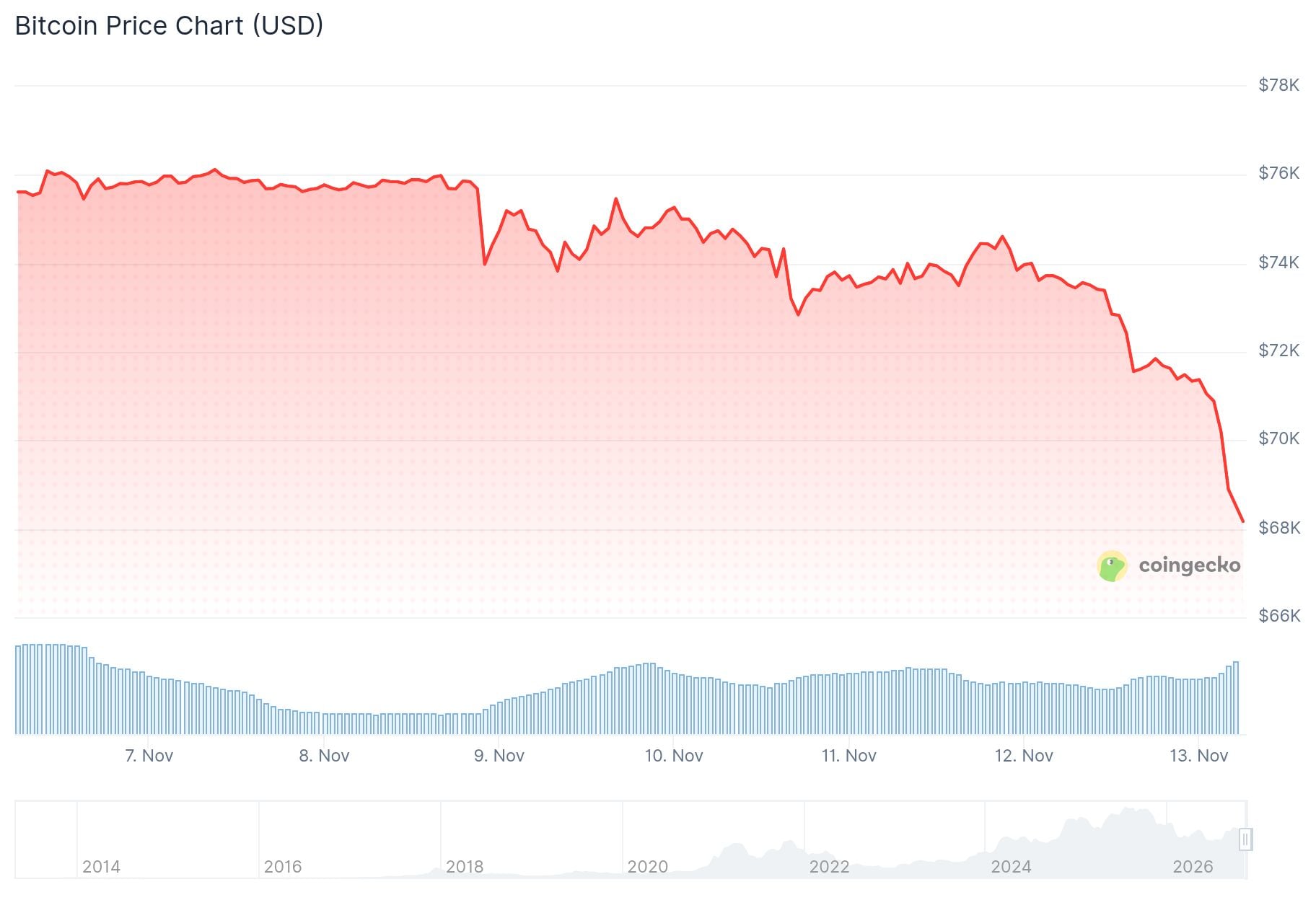
Bitcoin dropped about 7% over 24 hours to trade near $68,400, its lowest level since August. Ethereum lost about 6% to around $1,920, while Solana and XRP also fell.
Traders who used borrowed money took much of the damage. CoinGlass data shows $1.47 billion in leveraged positions was liquidated over a 24-hour window, affecting more than 175,000 traders.
Long Bets Took Most of the Hit
Long positions, which are bets on rising prices, made up about $1.31 billion of the total. That equals 89.2% of all liquidations.
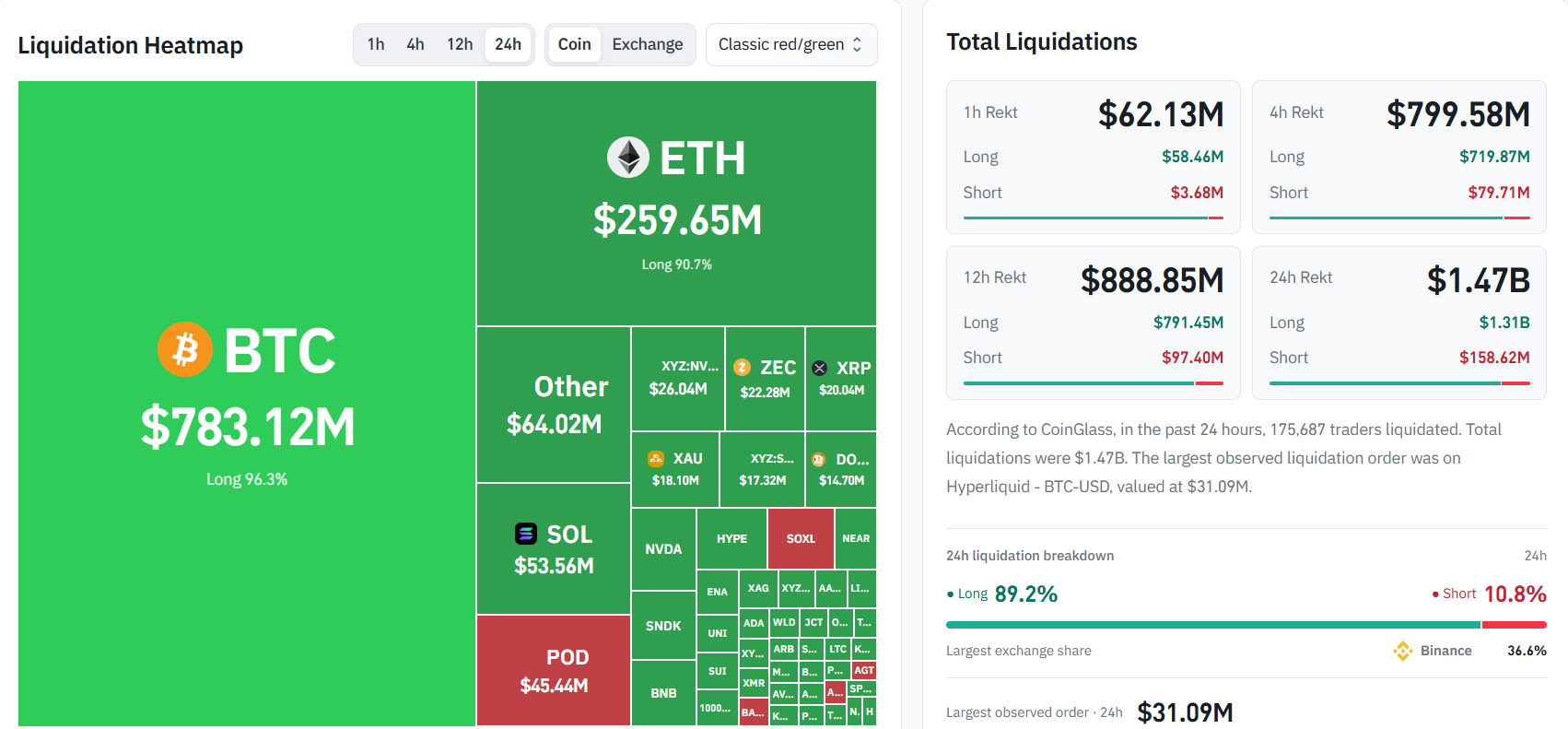
Only about $160 million of the total came from short positions. Most traders were positioned for higher prices when the drop began.
Bitcoin accounted for $783.12 million of the losses. Ethereum followed with $259.65 million, and Solana with $53.56 million, bringing the three to about $1.1 billion.
The largest single liquidation took place on Hyperliquid. A Bitcoin position worth $31.09 million was closed by force.

Exchanges close a position automatically when a trader cannot keep enough collateral in the account. These forced sales add selling pressure to the market.
Lower prices can then trigger more forced sales. This chain reaction is more likely when market liquidity is already weak.
What Pushed Prices Lower
Stronger-than-expected US inflation data has raised expectations that the Federal Reserve could lift interest rates again at its December meeting. Higher rates make safer, interest-paying assets more appealing than speculative ones.
Bitcoin and other cryptocurrencies have reacted strongly to changes in monetary policy. Some analysts have also discussed a larger-than-expected rate increase if inflation stays high.
Technology stocks also came under pressure. Nvidia CEO Jensen Huang resigned unexpectedly, which unsettled investors in artificial intelligence and chip companies.
Bitcoin often trades alongside other risk-sensitive assets when markets are uncertain. Nvidia’s leadership change has no direct link to crypto, but weaker sentiment added to the selling.
Demand from large investors has also cooled. US spot Bitcoin exchange-traded funds recorded about $300 million in net outflows on November 11, and Ethereum funds also saw redemptions.
Glassnode reported that stablecoin supply shrank by about $14.2 billion over the past 30 days. Stablecoins are widely used to fund crypto trades, so a smaller supply can mean less buying power.
With fewer buyers in the market, even modest selling can move prices further. Altcoins often fall by larger percentages than Bitcoin during downturns.
Investors are watching US producer price data due Friday for more clues on interest rates. Bitcoin is still trading below $70,000, and traders are watching whether it can hold near $68,000.


