



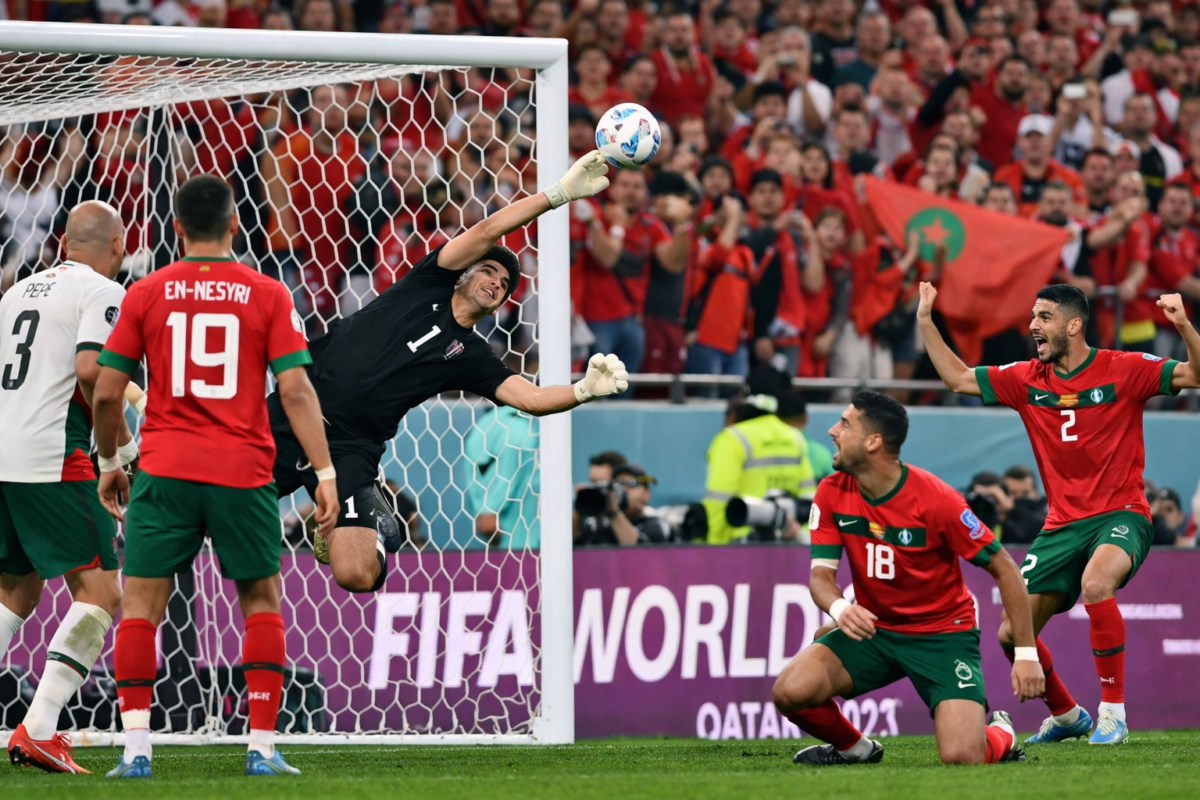


The national team for Morocco has left its previous status as a consistent underdog behind. A huge positive shift after the Qatar 2022 World Cup. A World Cup that showcased efforts being made over the years. A rationally focused national federation had built a clear plan that supported player pipelining built around coaching integration throughout Europe and Morocco. Providing the national team with the type of consistency that has been a missing component for multiple previous cycles.
World Cup Breakthrough and Structural Foundations
An example of Morocco’s rise in status is the 2022 FIFA World Cup in Qatar, where, for the first time, no African or Arab team had achieved it; Morocco’s team reached the semi-finals.
Besides the matches with Belgium, Spain, and Portugal, the results came from well-disciplined setups, with the team remaining compact and deciding when to trigger their attacks. This also impacted the way matches are tracked from day to day, including mobile tracking (Arabic: تحميل ميل بيت), where the fixtures and live odds, along with the Arabic menus, and pre-match and live split sections, offer a more user-friendly way to follow the matches and the players across different competitions. With those sections kept apart, it takes less time to move between matches and compare how different games are unfolding.
It is evident that the Federation’s determination did not happen by chance. The value of the investments made in infrastructure, coaching, and youth development is manifest in the Mohammed VI Football Academy. Players developing within this system are entering senior football with a better technical grounding and an easier pathway to the professional arena.
Key Achievements of Morocco’s National Team:
| Competition | Achievement | Year |
| FIFA World Cup | Semi-final | 2022 |
| Africa Cup of Nations | Winner | 1976 |
| Africa Cup of Nations | Runner-up | 2004 |
| FIFA Arab Cup | Quarter-final | 2021 |
Morocco was well-known before 2022, but that tournament changed the scale of attention. Defeating Belgium in the group stage and then eliminating Spain and Portugal was far too substantial to dismiss as just an impressive one-off. By the end of the tournament, Morocco was no longer treated as a temporary story, but was being talked about in the same breath as the established international teams.
Diaspora Talent and European Integration
A defining feature of Morocco’s progress is the integration of players developed in European systems, mainly in France, Spain, and the Netherlands. Many current internationals were trained abroad, which allows the team to combine European tactical discipline with a unified national structure. In regional markets such as Jordan, this global footprint is easier to follow through MelBet Instagram Jordan, where match updates, player news, short Arabic posts, and platform guidance appear in a single feed, helping users track Moroccan players across multiple leagues without switching between sources.

This has resulted in Morocco having a more extensive player roster with fewer vulnerabilities across the different areas of the pitch. It is visible in their speed of decision-making and conversion of adjustments during the game. This can be seen in players with difficult club backgrounds, such as Achraf Hakimi, Hakim Ziyech, and Sofyan Amrabat. Morocco no longer depends on one or two outstanding players.
Key factors behind this integration include:
- Strong links with European academies
- Structured recruitment of dual-national players
- Regular communication between the federation and players abroad
- Alignment between the youth and senior team systems
This model reduces the gap between domestic football and international standards.
Tactical Identity and Coaching Stability
Morocco has become very structured under the new guidance of head coach Walid Regragui. They keep their defensive unit more tightly organized, then strike on the counter down the flanks. They feature minimal aimless movement, making their efficiency one of the trademarks.
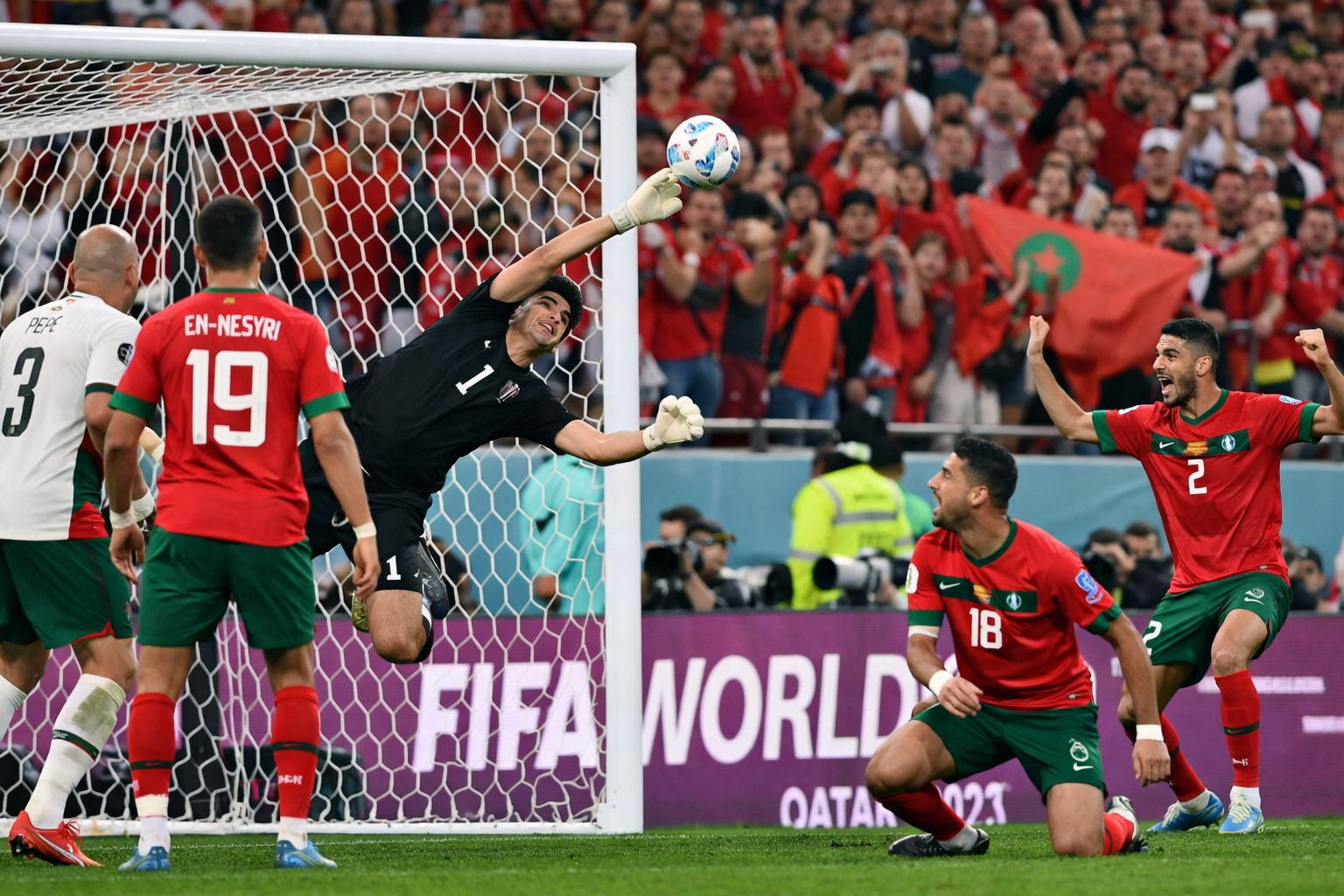
In the 2022 tournament, Morocco had one of the best records, as they had only one goal conceded, from open play, before the semi-finals. This is not because of one defender or the goalkeeper being the hero every night. The back line, midfield screening, and spacing between units were all tightly managed, which made the team far harder to pull apart than many opponents expected.
The tactical framework is based on:
- A deep defensive line with coordinated pressing triggers
- Rapid transitions using full-backs and wide attackers
- Balanced midfield roles between defence and progression
- Efficient use of set pieces in both phases
Regragui’s approach depends on clear roles. Players operate within a strict structure, which reduces positional errors and improves collective movement during defensive phases. That clarity has been a key difference compared to earlier cycles, where tactical consistency was less visible.
Coaching stability has replaced earlier periods of short-term changes, giving the squad a more consistent structure.
Domestic Development and Infrastructure Investment
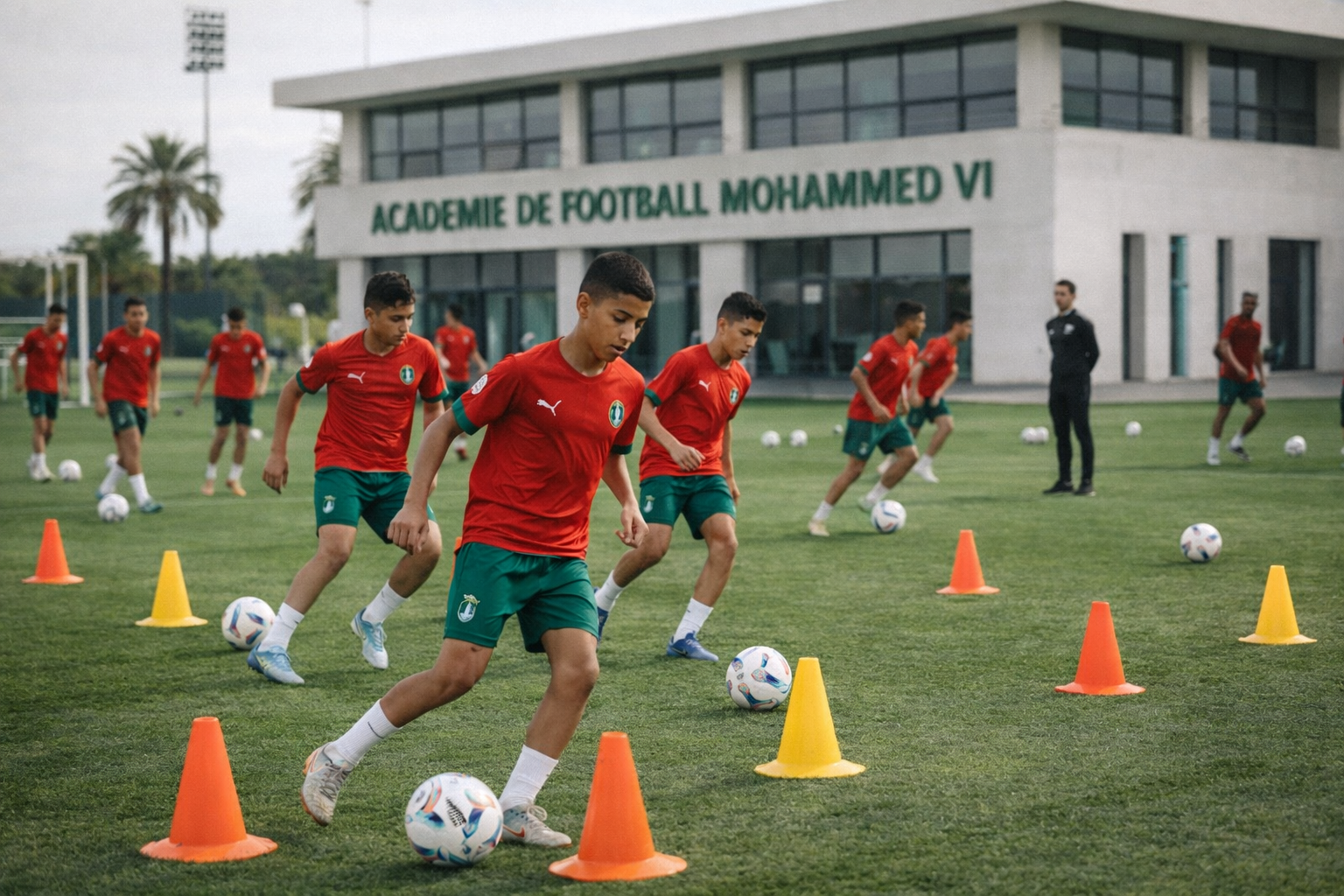
Diaspora players often draw the most attention, but Morocco’s internal system has been doing steady work for years. The Mohammed VI Academy is a prime illustration. It was established in 2009 with the support of the Royal Moroccan Football Federation, and is a completely state-sponsored national initiative that integrates education, training, and player tracking over extended periods, as opposed to short-term trial-based selections.
Not all academy graduates go to elite clubs right away, but a large number start their professional career in Morocco or other countries, which has expanded the player base. This is more important than creating one exceptional player, as it keeps the national team player pipeline active at various levels.
Infrastructure has also been improved with a sorted timeline. As co-hosts for the 2030 FIFA World Cup, Morocco is improving its stadiums in Rabat, Casablanca, and Tangier. Numerous other site revisions are being made to satisfy FIFA requirements. Upgrades were also made to the national teams’ training facilities to accommodate larger training groups and more specialized coaching.
Annually, the two Moroccan football clubs, Wydad Casablanca and Raja Casablanca, compete in the CAF tournaments. Wydad Casablanca won the Continental Africa Football Champions League in 2022. Wydad Casablanca put Moroccan football on the map. The linked domestic and continental competitions help create a National Football Team level of competition, which is due to the emphasis on high competition.
Economic Growth and Media Visibility
Success on the pitch has positively impacted the business side as well. Moroccan football gained mass admiration among the people of North Africa, the Middle East, and even further after the 2022 World Cup, as people also became interested in football clubs and players beyond the national team.
Exposure growth has translated into more broadcast deals and sponsorships. Regional coverage has Arabic digital services with Morocco match data, stats, and updates. For the first time, fans outside Morocco can track the team between major tournaments.
Economic drivers include:
- Rising broadcast value in regional markets
- Increased sponsorship from local and international brands
- Expanding digital audience engagement
- Strong diaspora support across Europe
In addition, federation-level planning has focused on long-term financial stability. Investment is not limited to the national team but extends to youth systems, coaching education, and infrastructure, which support sustainable growth.
Recent Performances and Ongoing Development
Morocco hasn’t fared well during the World Cup, but it’s still better than peaking and disappearing. They had high expectations going into the 2023 Africa Cup of Nations, and while they were eliminated in the round of 16, at least the lost expectations were unfortunate, but the trend was not unchanged.
Morocco’s consistent performance at the World Cup secured it a sustained top FIFA ranking. It not only includes World Cup stats to put them in the top 15 2023/2024, but also the highest from the African continent. It is the sustained performance over time which proved it wasn’t just the World Cup that took them to the top.
Moroccan internationals also stayed visible at the club level. Since his teammates participated in UEFA competitions and kept the national team connected to top-tier football year-round, Achraf Hakimi stayed connected with Paris Saint-Germain as an active player.
There has also been a change in how outsiders view the region. It has become more difficult to see the team as a novelty since Morocco has become more consistent in competing with strong sides, especially after defeating Brazil in a 2023 friendly.
Future changes will not be focused on anything radical but will be refined to smaller details. Adding depth will be key, as will the continued integration of younger players, all alongside the same tactical discipline that saw the team through its best and most recent stretch. The team is also now constructed to be competitive for the long haul, rather than to be built around a single innovative breakthrough.


