





TLDR
- The U.S. dollar is near yearly highs as investors bet on more Federal Reserve rate hikes
- The 10-year real Treasury yield climbed above 2.3%, its highest in over a year
- U.S. and Iranian forces exchanged missile and drone attacks, closing the Strait of Hormuz
- Oil prices rose 2%, with Brent crude at $77.60, adding to inflation concerns
- The British pound slipped 0.1% against the dollar; the euro has fallen 2.7% in 2026
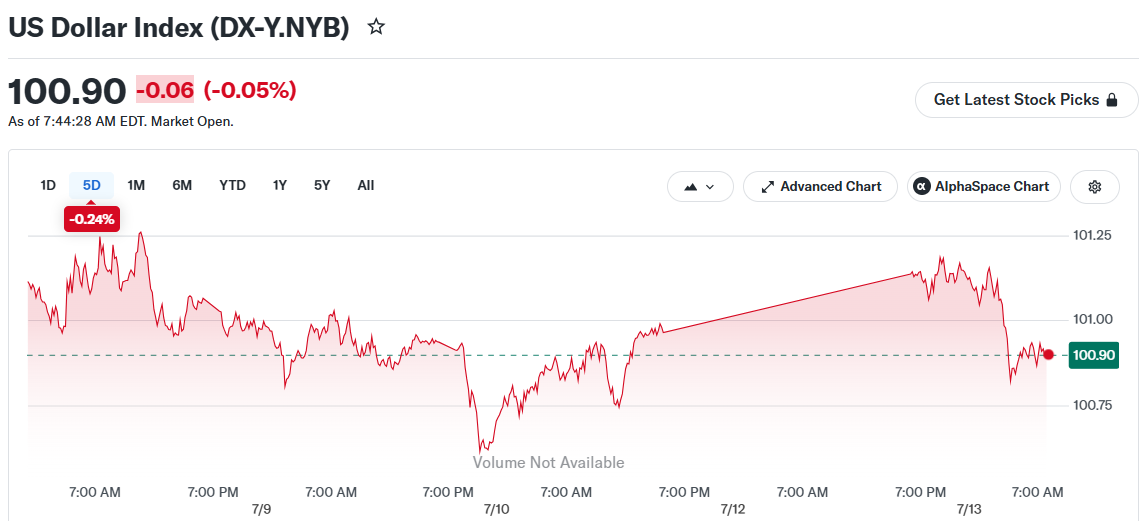
The U.S. dollar is holding near its highest level of the year, pushed up by a combination of strong economic data, rising inflation fears, and renewed conflict between the U.S. and Iran.
Investors are betting that the Federal Reserve will keep interest rates high — or raise them further. Money markets are currently pricing in around 37 to 40 basis points of Fed tightening before year-end, up sharply from early June.
The Bloomberg Dollar Spot Index has stayed near its 2026 highs. Speculative traders now hold their largest bullish dollar bets since 2015, with over $40 billion in net long positions tied to the currency.
Real Yields Climb to Highest Level in Over a Year
The 10-year real Treasury yield — which adjusts for inflation — rose above 2.3% recently. That is the highest it has been in more than a year, and it signals that markets expect monetary policy to stay tight.
Higher real yields make dollar-denominated assets more attractive to global investors. But they also push bond prices lower, creating a difficult situation for those holding long-term U.S. government debt.
Some asset managers are responding by favoring the dollar while cutting their exposure to longer-dated Treasuries. A number of investors are funding bullish dollar bets by shorting lower-yielding currencies like the euro and the Japanese yen.
Several Wall Street firms, including Bank of America, expect real yields to stay elevated and for the Fed to stay hawkish, particularly against currencies from low-rate economies.

Not everyone agrees. Some investors argue that the labor market has softened and that real yields may already be near their peak. They say the stronger dollar and rising yields are already tightening financial conditions, which could reduce the need for the Fed to act further.
Iran Conflict Adds Pressure on Oil and Currencies
Over the weekend and into Monday, U.S. and Iranian forces exchanged missile and drone attacks. Iran struck U.S. facilities in the region and said it had again closed the Strait of Hormuz, a key route for global oil shipments.
The U.S. military said it struck Iranian air defense systems and coastal radar sites in response.
Brent crude oil rose 2% to $77.60 per barrel. Higher oil prices add to inflation risks, which in turn supports the case for further Fed rate hikes.
The British pound fell 0.1% to $1.339 on Monday. Sterling has slipped 0.6% against the dollar in 2026. The euro has dropped 2.7% against the dollar over the same period.
Senior currency analyst Lee Hardman at MUFG said the foreign exchange impact has been “relatively modest so far,” but warned that much higher oil prices could become a stronger catalyst for dollar gains.
Federal Reserve Chairman Kevin Warsh is set to testify before Congress this week, alongside new U.S. inflation data. Both could shift rate expectations further.
Stop guessing and start investing with confidence. KnockoutStocks gives you the AI insights, market intelligence, and stock research you need to spot opportunities, cut through the noise, and make smarter investment decisions — all in one powerful platform.
Sign up today and get 50% OFF full access to our premium stock picks.
Simply use coupon code SPECIAL50 at checkout to claim your exclusive discount.
Get 3 Free Stock Ebooks
Discover top-performing stocks in AI, Crypto, and Technology with expert analysis.
- Top 10 AI Stocks - Leading AI companies
- Top 10 Crypto Stocks - Blockchain leaders
- Top 10 Tech Stocks - Tech giants



