





TLDR
- Gold fell 0.5% to $4,395.78 as Treasury yields and oil prices pushed higher
- Iran’s threat of a “fully offensive” military posture lifted oil and stoked inflation fears
- Markets now price a 65% chance the Fed holds rates steady in September
- Central banks bought 244 tonnes of gold in Q1 2026, the highest since Q4 2024
- ANZ forecasts gold reaching $5,200 an ounce by year-end
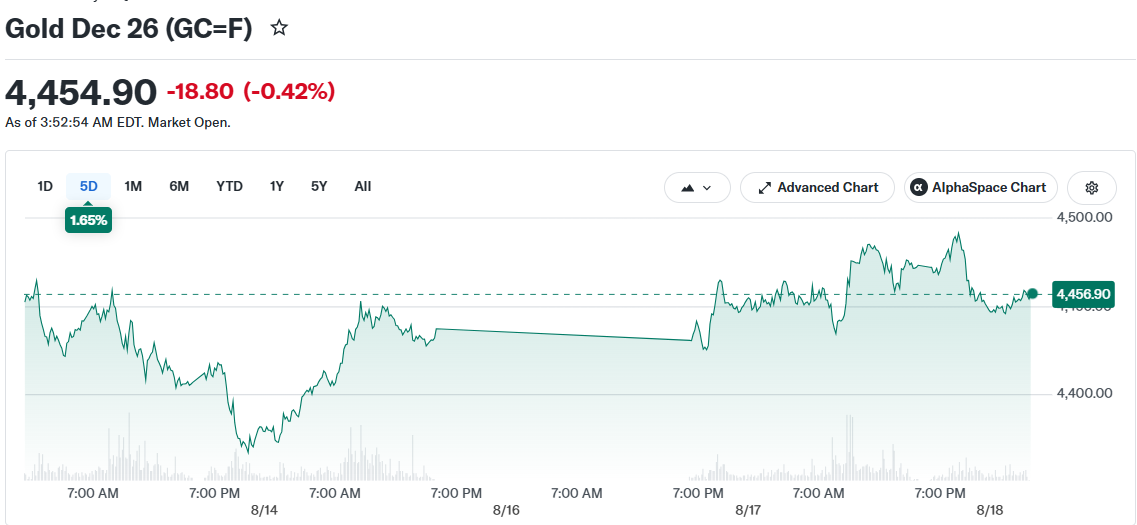
Gold fell on Tuesday as two familiar headwinds returned: rising U.S. Treasury yields and climbing oil prices. The combination pushed the precious metal down 0.5% to $4,395.78 an ounce in early trading.
Gold futures also slipped 0.5% to $4,451.07. Silver dropped 0.8% to $65.24 an ounce, and platinum fell 0.7% to $1,760.90.
The U.S. Dollar Index edged up 0.1% to 99.67, adding a small layer of pressure on dollar-denominated commodities.
Treasury Yields Raise the Cost of Holding Gold
The benchmark 10-year U.S. Treasury yield extended its rise on Tuesday. When yields go up, the opportunity cost of holding gold, which pays no income, goes up with them.
This dynamic has repeatedly capped gold’s rallies in recent weeks. Traders tend to rotate toward yield-bearing assets when bond returns improve.
Oil Prices Add to Inflation Worries
Oil prices moved higher after Iran said it would adopt a “fully offensive” military posture if diplomatic talks with the United States break down. Washington also ruled out extending a temporary ceasefire.
That news kept energy markets on edge. Higher oil prices can push inflation expectations up, which in turn raises the chance that the Federal Reserve keeps interest rates elevated for longer.

Although gold is often seen as an inflation hedge, higher interest rates tend to reduce its appeal because it generates no yield.
Markets have sharply cut bets on a September Fed rate hike following last month’s unexpected job losses, softer consumer inflation data, and weaker retail sales. Pricing now points to roughly a 65% probability that the Fed holds rates unchanged next month.
Investors are waiting on Wednesday’s release of minutes from the Fed’s July meeting. Federal Reserve Chair Kevin Warsh’s remarks at Jackson Hole are also on the radar for clues on the rate path ahead.
Central Bank Buying Remains a Key Support
Despite Tuesday’s pullback, gold has still risen more than 10% this month. The broader recovery has been supported by strong central bank buying, especially from China.
Global central bank gold purchases reached 244 tonnes in the first quarter of 2026, the highest quarterly total since Q4 2024. China added 8 tonnes in April alone, its largest monthly purchase since December 2024.
Gold reclaimed its 100-day moving average for the first time since April last week, though it has since slipped back near that level.
Key resistance sits at the $4,440 to $4,450 range, with the 200-day moving average at around $4,503 acting as the next major barrier. A break above both levels would open the door toward $5,000.
ANZ forecasts gold will reach $5,200 an ounce by year-end, citing central bank diversification demand driven by deteriorating international relations.
Stop guessing and start investing with confidence. KnockoutStocks gives you the AI insights, market intelligence, and stock research you need to spot opportunities, cut through the noise, and make smarter investment decisions — all in one powerful platform.
Sign up today and get 50% OFF full access to our premium stock picks.
Simply use coupon code SPECIAL50 at checkout to claim your exclusive discount.
Get 3 Free Stock Ebooks
Discover top-performing stocks in AI, Crypto, and Technology with expert analysis.
- Top 10 AI Stocks - Leading AI companies
- Top 10 Crypto Stocks - Blockchain leaders
- Top 10 Tech Stocks - Tech giants



