





TLDR
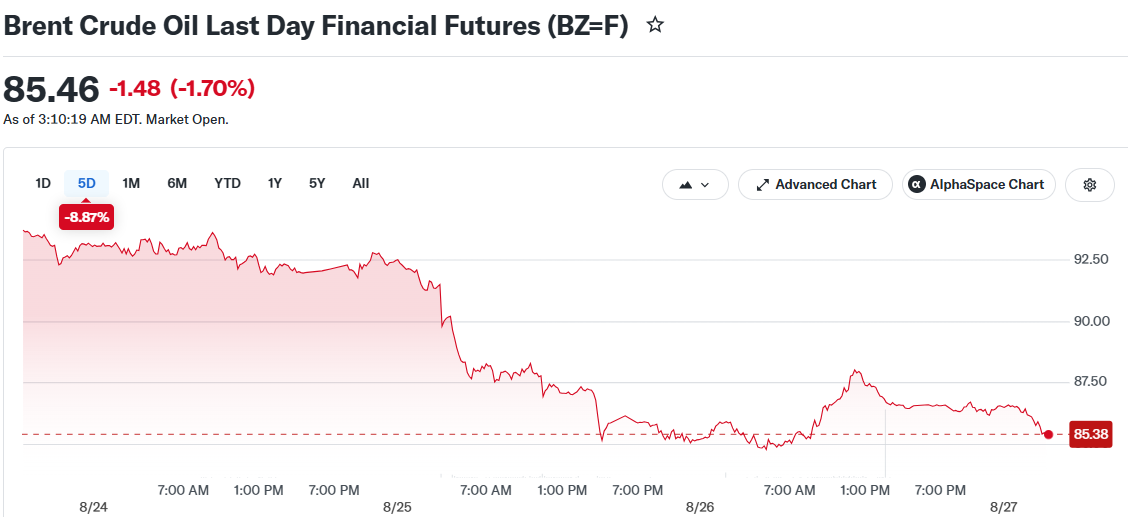
- Brent crude fell 2.5% to $86.38 and WTI dropped 2.2% to $80.53 a barrel
- Iran and Oman discussed a temporary framework to reopen the Strait of Hormuz
- Both countries agreed to work together to clear the strait of mines
- Oil prices are down over 6% this week on diplomatic optimism
- Russia-Ukraine tensions add further supply risk to global oil markets
Oil prices fell for a third straight day on Tuesday as talks between Iran and Oman raised hopes that the Strait of Hormuz could reopen, easing fears about global crude supply.
Brent crude for October delivery fell 2.5% to $86.38 a barrel. West Texas Intermediate dropped 2.2% to $80.53, after dipping below the $80 mark earlier in the session. Both contracts were on track for their lowest settlement in nearly two weeks.
The declines came after Iran and Oman said their foreign ministers held talks in Tehran on a framework to temporarily reopen the Strait of Hormuz. The strait had supplied roughly 20% of the world’s crude before the conflict disrupted flows.
In a joint statement, the two countries said the proposed framework would establish a temporary shipping route through the waterway. They also agreed to work together to clear mines from the strait.
Hormuz Deal Still Has Hurdles
President Trump said on Truth Social that the U.S. Navy had already removed or detonated all mines in the strait. Some analysts have questioned that claim.
BREAKING: President Trump says the US Navy has cleared all mines in international waters in the Strait of Hormuz.
US oil prices extend losses toward $82/barrel. pic.twitter.com/mVBD5APCGr
— The Kobeissi Letter (@KobeissiLetter) August 25, 2026
Negotiations between Oman and Iran will continue, the joint statement said, with the goal of agreeing on a permanent shipping corridor and future management of the strait.

But analysts at ING warned that even a deal between Oman and Iran would not bring oil flows back to pre-war levels quickly. They said the U.S. would need to lift its blockade on Iranian ports and ease sanctions before any real normalization could happen.
The U.S. imposed stricter economic sanctions on Iran earlier this week and warned other countries against trading with Iran. Iran accused the U.S. of obstructing progress on a Hormuz agreement with Oman.
Despite that, Russian state media reported that the U.S. and Iran had reached a new ceasefire deal to be announced in the coming days. Pakistan, a regional mediator, also said peace talks were making progress.
Axios reported that around 40 ships transited the strait over the weekend. U.S. diplomats are also reportedly set to return to the Middle East.
Russia-Ukraine Conflict Adds Supply Risk
Oil’s weekly losses came even as new reports warned of fresh supply disruptions elsewhere. Russia is reportedly considering escalating ballistic missile attacks on Kyiv and other infrastructure targets after concluding that peace negotiations have stalled.
Ukraine has previously retaliated against Russian aggression by striking Moscow’s energy and oil refining infrastructure. Any escalation could add pressure to already strained global supply chains.
U.S. CIA Director John Ratcliffe reportedly traveled to Moscow this week to meet with Russian officials. The agenda of that meeting was not immediately clear.
Shipping data showed that flows through Hormuz remain well below pre-war levels despite the diplomatic activity.
Stop guessing and start investing with confidence. KnockoutStocks gives you the AI insights, market intelligence, and stock research you need to spot opportunities, cut through the noise, and make smarter investment decisions — all in one powerful platform.
Sign up today and get 50% OFF full access to our premium stock picks.
Simply use coupon code SPECIAL50 at checkout to claim your exclusive discount.
Get 3 Free Stock Ebooks
Discover top-performing stocks in AI, Crypto, and Technology with expert analysis.
- Top 10 AI Stocks - Leading AI companies
- Top 10 Crypto Stocks - Blockchain leaders
- Top 10 Tech Stocks - Tech giants



