





TLDR
- Gold is trading around $4,282 to $4,332 an ounce after a two-day decline in September
- Markets are pricing in a 92% chance the Federal Reserve will hike rates for the first time since 2023
- The 10-year US Treasury yield briefly hit its highest level since 2007, reaching 5.04%
- Saudi Arabia’s east-west pipeline shutdown is keeping oil prices elevated, stoking inflation fears
- Gold has fallen more than 3% in September after trading above $4,700 an ounce in late August
Gold prices steadied on Wednesday as investors waited for the Federal Reserve to announce its latest interest rate decision. The metal had fallen for two straight sessions before finding some footing.
Spot gold was trading around $4,282 to $4,332 an ounce in early Wednesday trading. Gold futures also rose roughly 0.9% to $4,372.92 an ounce.
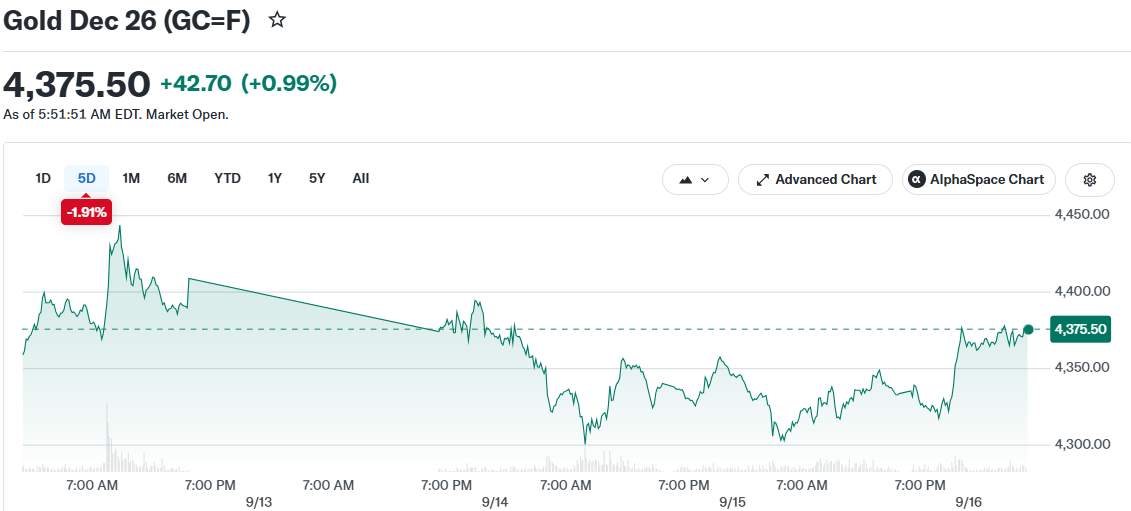
The metal is down more than 3% so far in September. That follows a peak above $4,700 an ounce in late August.
Rising Yields Put Pressure on Gold
The 10-year US Treasury yield briefly touched 5.04% on Tuesday, its highest point since 2007. That move came as energy prices stayed high and inflation concerns grew.
U.S. 20-YEAR TREASURY YIELD HITS 5.42%
The Treasury’s $13 billion 20-year bond auction cleared at a high yield of 5.420%, highlighting elevated long-term borrowing costs.
Demand remained solid, with a 2.57 bid-to-cover ratio, while indirect bidders took roughly $6.8 billion.…
— *Walter Bloomberg (@DeItaone) September 15, 2026
Higher bond yields make gold less attractive because gold pays no interest. When investors can earn more from bonds, they tend to move money away from bullion.
A stronger US dollar adds to that pressure. Overseas buyers face higher costs when the dollar rises, which can reduce demand for gold priced in the currency.

Markets are now pricing in a 92% chance the Fed raises rates. That would be the first hike since 2023.
Investors will be watching not just the decision itself, but also how Fed Chair Kevin Warsh speaks about future moves. Analysts say a hawkish tone could push the dollar higher and weigh further on gold.
Neil Welsh, Head of Metals at Britannia Global Markets, said a measured message from Warsh could help gold stabilize. A more aggressive tone, he warned, would risk renewed dollar strength and more pressure on non-interest-bearing assets like gold.
Oil Pipeline Disruption Fuels Inflation Concerns
Saudi Arabia’s east-west pipeline remains shut after attacks last week. The pipeline had been moving millions of barrels of oil per day, helping crude avoid the Strait of Hormuz.
Saudi Aramco has already delayed deliveries to some European customers. The company has not said when the pipeline will reopen.
Oil prices had risen for two straight days before pausing after a larger-than-expected build in US crude inventories. Prices remain elevated due to continued supply uncertainty.
Those high energy costs are feeding into broader inflation concerns. That, in turn, is pushing bond yields higher and keeping the pressure on gold.
Silver was little changed at $63.67 an ounce. Platinum dipped 0.2% and palladium edged up 0.1%.
Gold investors are largely in a wait-and-see mode. Many still believe bullion can recover once the rate outlook becomes clearer and the metal returns to its traditional role as a portfolio hedge.
The Fed decision is expected later Wednesday.
Stop guessing and start investing with confidence. KnockoutStocks gives you the AI insights, market intelligence, and stock research you need to spot opportunities, cut through the noise, and make smarter investment decisions — all in one powerful platform.
Sign up today and get 50% OFF full access to our premium stock picks.
Simply use coupon code SPECIAL50 at checkout to claim your exclusive discount.
Get 3 Free Stock Ebooks
Discover top-performing stocks in AI, Crypto, and Technology with expert analysis.
- Top 10 AI Stocks - Leading AI companies
- Top 10 Crypto Stocks - Blockchain leaders
- Top 10 Tech Stocks - Tech giants



