






TLDR
- The U.S. Senate blocked the CLARITY Act in a 49-50 procedural vote, falling short of the 60 votes needed
- Around $571 million in bullish crypto futures positions were liquidated in 24 hours
- Bitcoin and Ethereum each saw roughly $190 million in long liquidations
- Bitcoin dropped below $75,000 after the vote, down from nearly $80,000 earlier in the week
- The CFTC and SEC can still pursue their own rule making, but broad legislative progress has stalled
The U.S. Senate’s failure to advance the CLARITY Act triggered a wave of forced liquidations across the crypto market, wiping out hundreds of millions of dollars in bullish futures bets within hours.
🚨BREAKING: The CLARITY Act has FAILED its Senate procedural vote, short of the 60 votes needed to advance.
The setback stalls the crypto market structure bill but leaves open the possibility of another vote. pic.twitter.com/gDGCYG3Hir
— Coin Bureau (@coinbureau) September 15, 2026
The Senate voted 49-50 on a procedural motion, well short of the 60 votes needed to move the bill forward. The CLARITY Act was intended to set clear federal rules for digital assets and define how crypto markets and trading platforms would be regulated.
Markets had been pricing in a positive outcome. Bitcoin climbed from around $77,000 to nearly $80,000 earlier in the week after reports that President Donald Trump was open to making concessions on the bill’s ethics provisions.
When the vote failed, prices reversed fast.
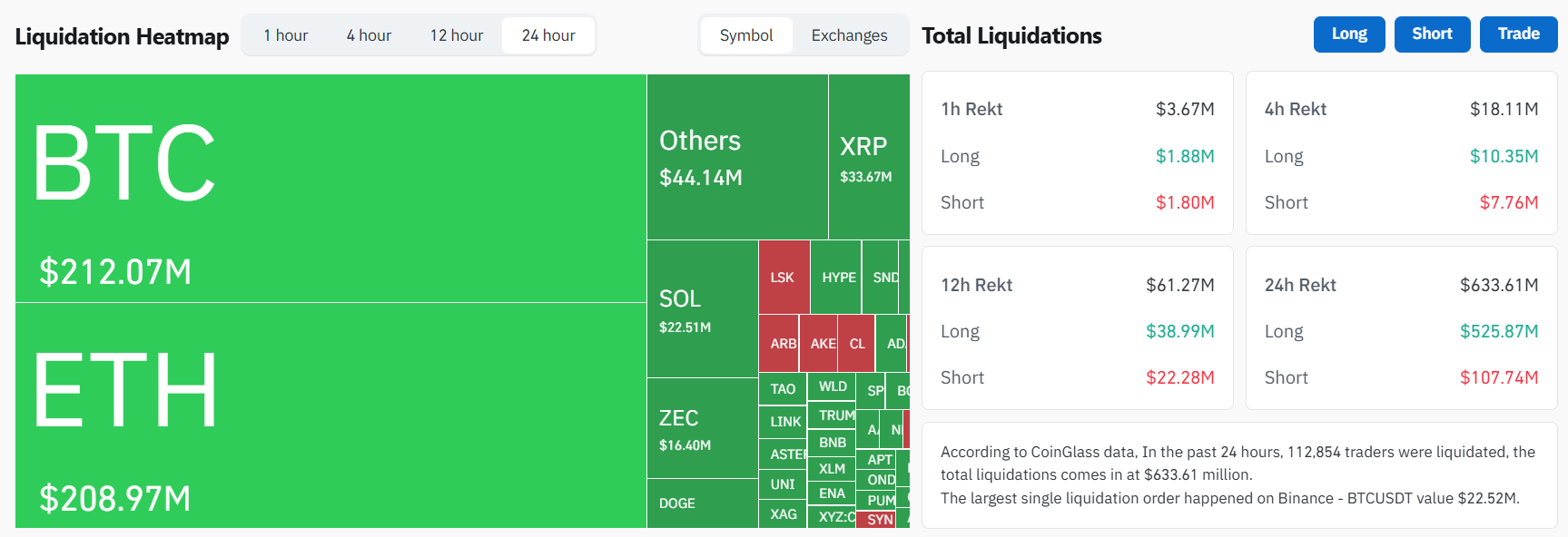
Roughly $300 million in leveraged long positions were liquidated in about 20 minutes, according to reports. In total, about $571 million in long positions were closed over 24 hours, the highest single-day total since August 22, according to CoinGlass.
Bearish positions accounted for only around $100 million of the total liquidations.

Bitcoin and Ethereum Hit Hardest
Bitcoin and Ethereum absorbed the most damage, with each seeing approximately $190 million in liquidated longs. XRP longs lost around $30 million, while Solana longs lost about $22 million.
Analysts had previously flagged Ethereum and DeFi tokens as likely outperformers if the bill passed. That trade unwound quickly after the vote.
The sell-off was made worse by leverage. As Bitcoin fell, exchanges automatically closed positions that could no longer meet margin requirements. Those forced sales pushed prices lower, triggering more liquidations in what is known as a liquidation cascade.
Bitcoin fell below $75,000 following the vote and was trading around $75,700 at the time of writing.
Other Pressures Already Weighing on Bitcoin
The Senate vote was not Bitcoin’s only problem. Treasury yields near 5%, elevated oil prices and expectations for tighter Federal Reserve policy had already been putting pressure on prices.
Those factors had already stopped Bitcoin from holding above $82,000 in recent sessions.
The failed vote added another bearish catalyst at a vulnerable time.
The CFTC and SEC can still move forward with their own rule making, but broad crypto legislation through Congress now looks less likely in the near term.
For traders still holding leveraged positions, Bitcoin needs to stabilize around $75,000 to $76,000. A further drop could open lower support levels, especially if Treasury yields stay elevated.
The immediate damage from the liquidation wave has already been done.


