





The Bitcoin world is abuzz with both excitement and curiosity… and the opportunity for upside potential to skyrocket. Everyone from everyday Joes to reputable experts is betting on Bitcoin’s success.
It’s been a wild 8 years since Bitcoin’s release. Most notably, we’ve seen headlines of people who fortuitously purchased bitcoins early on turn into kid-millionaires. With the immense potential of new cryptocurrencies, our attention often turns to Bitcoin as a quintessential example of what’s to come.
We’ve designed this guide to teach you about Bitcoin so that you’re up to speed and ready to join the crypto-world.
What is Bitcoin?
Released as an open-source software in 2009, Bitcoin is often credited as the world’s first cryptocurrency and is best defined as a digital currency that only exists electronically.
Bitcoin is decentralized, meaning it doesn’t have a central issuing authority or political institution that controls the amount of bitcoin in circulation. But the Bitcoin platform is far from anarchy.
The whole process is pretty simple and organized: Bitcoin holders are able to transfer bitcoins via a peer-to-peer network. These transfers are tracked on the “blockchain,” commonly referred to as a giant ledger. This ledger records every bitcoin transaction ever made. Each “block” in the blockchain is built up of a data structure based on encrypted Merkle Trees. This is particularly useful for detecting fraud or corrupted files. If a single file in a chain is corrupt or fraudulent, the blockchain prevents it from damaging the rest of the ledger.

Instead of relying on a government to print new currency, Bitcoin’s blockchain programming handles when bitcoins are made and how many are produced. It also keeps track of where bitcoins are and ensures the transactions are accurate.
There are currently about 17 million bitcoins in circulation. There isn’t a central regulatory agency or government controlling the supply of bitcoins, meaning the supply is controlled by design. The total supply to ever be created is capped at 21 million bitcoins.
This cap raises an argument that Bitcoin could have problems scaling. However, since Bitcoin is essentially infinitesimally divisible (meaning users can transfer as little as 0.00000001 bitcoins), this doesn’t really create a scaling issue. The magic number of 21 million is arbitrary.
It’s believed that Bitcoin was designed to become a deflationary currency to combat the government’s use of inflation as a hidden taxation to redistribute earned wealth. Many people praise Bitcoin for empowering the people by overthrowing the currency printing powers of transient politicians.
How Does Bitcoin Work?
One of Bitcoin’s most appealing features is its ruthless verification process, which greatly minimizes the risk of fraud. Since Bitcoin is decentralized, volunteers—referred to as “miners”—constantly verify and update the blockchain. Once a specific amount of transactions are verified, another block is added to the blockchain and business continues per usual.
What is “Mining”?
Instead of a single central server verifying every transaction, essentially every other person on the network verifies each transaction.
Cue the “miners.”
Let me simplify the process so we all understand: Miners are presented with a complicated math problem and the first one to solve the math problem adds the verified block of transactions to the ledger. The calculations are based on a Proof of Work (POW), or the proof that a minimum amount of energy was spent to get a correct answer.
There aren’t actual human beings hunched over computers with scraps of notebook paper and calculators doing pre-calculus homework; hardware is used to perform Bitcoin mining.
Bitcoin’s built-in reward system compensates successful miners with a chunk of bitcoins. The reward changes over time per Bitcoin’s programming, and the block reward halves about every four years. The current reward for each new block of verified transactions is about 12.5 bitcoins.
The mining processes have become increasingly sophisticated. The most popular method uses ASICS–Application-Specific Integrated Circuits. ASICS are hardware systems similar to CPU computers that are built for the sole reason of mining bitcoins.
Bitcoin mining operations take a lot of effort and power, and the sheer amount of competition makes it difficult for newcomers to enter the race and profit. A new miner would not only need to have the adequate computing power and the knowledge to use it to outcompete the competition but would also need the extensive amount of capital necessary to fund the operations.
A Simple Bitcoin Transaction Example
While Bitcoin’s underlying technology may seem hard to grasp, using Bitcoin does not have to be difficult. Here’s an example of how simple a real-world Bitcoin transaction can be.

Bitcoin Wallets: How to Store Your Bitcoins
So, you’ve got this digital currency. You can’t really chuck it in your pocket. Let’s go through some useful definitions before we jump into storing cryptos:
- Exchange platform: where you trade money for cryptocurrencies such as Bitcoin, Ethereum, or Litecoin. You can also trade one cryptocurrency for another.
- Wallet platform: essentially a bank account where your cryptocurrencies are kept.
- Hard wallet: an “offline” wallet that is not linked to a network.
- Public Cryptographic Key: your account number. Similar to how someone would send money to your bank account via your account number, your public cryptographic key is the information you give to someone to receive cryptos.
- Private Cryptographic Key: the key that allows you to spend your Bitcoins and other cryptocurrencies. You guard this with your life. If someone has access to it, they can transfer (steal!) your bitcoins.
Now that we’ve got that out of the way, we can discuss Bitcoin wallet better.
When you hear of bitcoins being hacked, you’re probably hearing about an “exchange platform” being hacked. Since Bitcoin’s blockchain structure makes it EXTREMELY difficult to hack (borderline impossible), it is considered very secure.
Exchanges, however, are a different story. Perhaps the most notable hack was the Tokyo-based MtGox hack in 2014, where 850,000 bitcoins with a value of over $350 million suddenly disappeared from the platform. This doesn’t mean that Bitcoin itself was hacked; it just means that the exchange platform was hacked. Imagine a bank in Iowa is robbed: the USD didn’t get robbed, the bank did.
Industries surrounding Bitcoin are new and not without their kinks. Bitcoin advocate and esteemed venture capitalist Marc Andreessen stated, “MtGox had to die for Bitcoin to thrive. Its former role from early Bitcoin days has been supplanted by better, stronger entities.”
Even though most wallet platforms are considered extremely secure, the prospect of hackers makes many users paranoid. They’re also now more heavily regulated, especially those based out of the United States. You can compare any bitcoin exchange with another and view our in-depth reviews in our How to Buy Bitcoin Guide. We’ve also listed our top two recommended options below:”
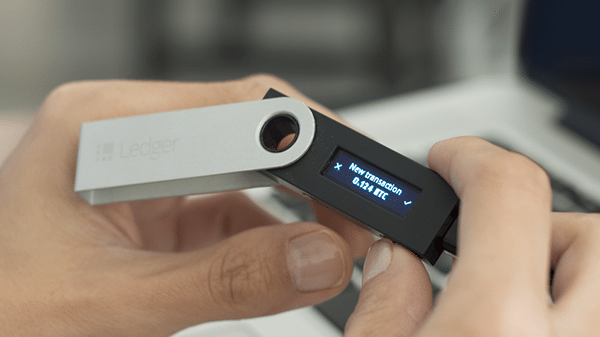
That brings us to hard wallets. A hard wallet is essentially a USB that allows users to store their cryptographic keys offline and off of exchanges. Your cryptographic key only lives on your hard wallet and is impossible to hack (unless someone physically steals your hard wallet).
.
Hard wallets are so secure that there are countless stories of people carelessly misplacing a hard wallet full of cryptos and never being able to recover thousands, hundreds of thousands, or millions of bitcoins.
Some users opt to use a “paper wallet,” which is essentially your cryptographic keys on a piece of paper stored somewhere safe like a bank vault. Although paper wallets are not recommended, they can be done either by an online key generator (not recommended due to threats of malware) or handwritten.
For more information on Bitcoin wallets, read out Guide to Finding the Best Bitcoin Wallet.
Why use Bitcoin?
Bitcoin is often hailed as the future of the monetary world for a variety of reasons.
- It’s decentralized and brings power back to the people. Launched just a year after the 2008 financial crises, Bitcoin has attracted many people who see the current financial system as unsustainable. This factor has won the hearts of those who view politicians and government with suspicion. It’s no surprise there is a huge community of ideologists actively building, buying, and working in the cryptocurrency world.
- Freedom. The concept that one could carry millions or billions of dollars in Bitcoin across borders, pay for anything at any time, and not have to wait on extended bank delays is a major selling point.
- Security. Bitcoin payments don’t necessarily need to be tied to one’s personal information. Since personal information is left out of the transactions, users aren’t as exposed to threats such as identity theft. Bitcoin can also be backed up and encrypted to ensure the security of your money.
- Low Transaction Fees. Banks and companies like PayPal charge to send and receive money. Bitcoin replaces the 2.5% “transaction fee” with one that’s only a fraction of that.
The Immutable Ledger. Bitcoin’s blockchain public ledger is objective. People trust it to be fair because it is based on pure mathematics, rather than the human error and corruption of questionable politicians.
What are the disadvantages of Bitcoin?
For all its advantages, Bitcoin does still pose some significant issues.
Perhaps one of the largest reasons everyone hasn’t jumped on the Bitcoin train is because its price is shrouded in uncertainty. Many people are concerned with…
- Legal Gray Area. Major governments have largely remained on the sidelines, and this has created both a sense of potential and apprehension for Bitcoin proponents and critics respectively. Bitcoin isn’t backed by a regulatory agency and a government would technically be ceding power by supporting a decentralized currency. This has been largely officially unaddressed. Bitcoin’s price, however, tends to be very sensitive to any news concerning the US government’s opinion of cryptocurrencies. For example, when the SEC denied the approval of bitcoin-based exchange-traded-products—essentially bitcoin-backed assets on the stock market—in 2017, Bitcoin’s price dropped 18%. Yet while the price and adoption of Bitcoin would be affected by government action, governments are unable to criminalize Bitcoin. In fact, governments such as the United States and China have invested in it at some capacity.
- Exchange hacks. As stated above, an exchange hack has nothing to do with the integrity of the Bitcoin system… but the market freaks out regardless. This trend seems to minimize as users see that cryptos recover from exchange hacks. As exchanges evolve and become more secure, this threat becomes less of an issue. Additionally, outside investments funneling into exchanges are providing the capital for them to grow stronger.
- Illiquidity. This is mostly moot due to Bitcoin’s $47 market cap but it still makes users sweat. It’s highly unlikely that Bitcoin’s price would plummet and you’d be unable to take action, but it’s still unsettling. As more investors invest, however, illiquidity becomes a negligible risk, as there will likely always be a buyer for Bitcoins waiting.
- Volatility. This very reason many speculators are attracted to Bitcoin is the same reason many potential users are hesitant to get involved. Users that look at Bitcoin as a speculative investment option are essentially gambling on the process, and the future price of Bitcoin is largely unknown. There are estimates that Bitcoin will both be worth pennies in a few years, while some predict that a single bitcoin will be worth $500k in three years. As new investors continue to invest and the market cap grows, Bitcoin’s price could become more stable.
- Lack of adoption by businesses. The price volatility is a large reason that many businesses have yet to adopt Bitcoin as a form of payment. Increased consumer adoption and price stability will eventually mitigate this disadvantage.
Another disadvantage is that while many people have heard of Bitcoin, few understand exactly what it is or how it functions. Guides like this help to push the needle and build a foundation, but it’s ultimately on the users to seek out more information.
Bitcoin’s strength lies in its networking effect. The more we spread the word and grow the Bitcoin community, the better off our bitcoins will be.
How to Buy Bitcoin
As mentioned above, in the early years of Bitcoin it was difficult to find a trustworthy place to buy the cryptocurrency specially for those who didn’t know how to buy bitcoin. With the increase in demand for Bitcoin, numerous new companies have sprouted to help facilitate easily purchasing Bitcoin.
These days, many Bitcoin exchanges have received huge investments from venture capitalists. They’re also now more heavily regulated, especially those based out of the United States. You can compare exchanges and view our in-depth reviews in our How to Buy Bitcoin Guide. We’ve also listed our top two recommended options below:
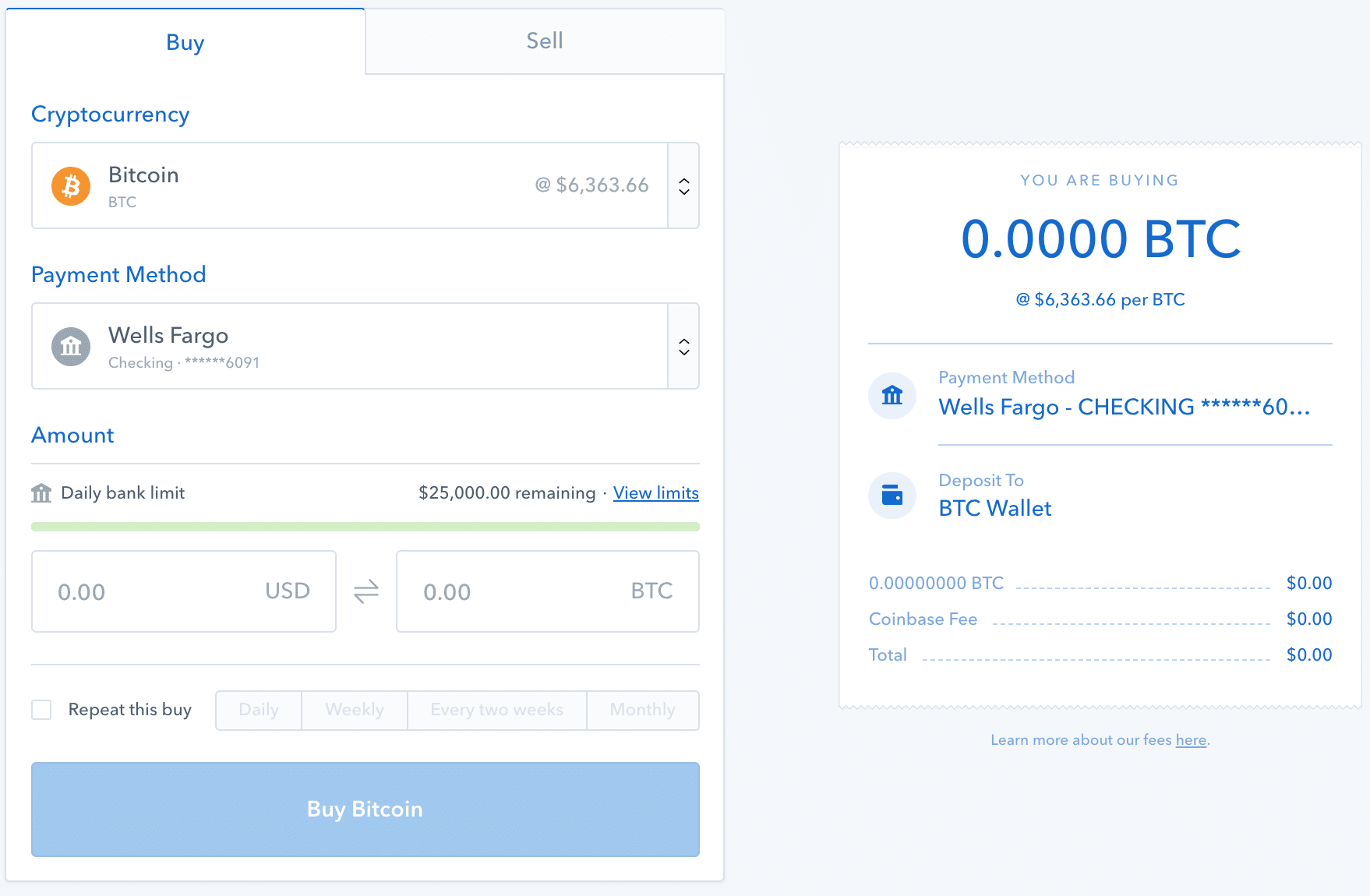
- Coinbase launched in 2012 with the hopes of giving users an easier way to buy Bitcoin. Since its launch, the San Francisco based startup has become the most commonly recommended buying option for newbies. You can learn more in our complete Coinbase Review and User’s Guide.
- Gemini was founded in 2015 by Tyler and Cameron Winklevoss. While they launched more recently than many of their competitors, the New York-based cryptocurrency exchange has quickly built a great reputation in the crypto community. You can learn more in our Gemini Review and User’s Guide.
Who invented Bitcoin?
Satoshi Nakamoto is credited with designing Bitcoin. Nakamoto claims to be a man living in Japan born on April 5th, 1975 but there are speculations that he is actually either an individual programmer or group of programmers with a penchant for computer science and cryptography scattered around the United States or Europe.
Nakamoto is believed to have created the first blockchain database and has been the first to solve the double spending problem other digital currency failed to. While Bitcoin’s creator is shrouded in mystery, his Wizard of Oz status hasn’t stopped the digital currency from becoming increasingly popular with individuals, businesses, and even governments.
Bitcoin’s Popularity
It’s important to take a look at Bitcoin’s popularity over time because… well, have a look below:

Google Trends structures the chart to represent a relative search interest to the highest points in the chart. A value of 100 is the peak popularity for the term “Bitcoin” and a value of 50 means it was half as popular at that time. A score of 0 indicates that the term was less than 1% as popular as the peak. It’s amazing how the searches relating to Bitcoin have spiked in the past few years.
When Bitcoin began circulating in 2009, its early adopters consisted of programmers and a niche crowd of technical people. Its popularity over time indicates that many of the disadvantages of Bitcoin will likely dissipate as Bitcoin becomes more standard.
Unsurprisingly, Bitcoin’s price has grown with increased demand. As you can see, more buyers enter the market and raise the price as more people learn about Bitcoin and its technical applications.
Bitcoin’s popularity has undeniably been its number one advantage over the numerous other cryptocurrencies. By gaining a large number of adopters and users, Bitcoin has achieved a network effect that attracts even more users. Users who would otherwise be more apprehensive investing in a relatively unknown and unproven digital currency are reassured by Bitcoin’s performance over time, its growing community, and the fact that people they know are adopting cryptos.
Bitcoin’s first mover advantage, popularity, and network effect have cemented it as the most popular cryptocurrency with the largest market cap. Rivals like Litecoin may have numerous technical advantages over Bitcoin’s algorithm (see more about that here), but they only hold a fraction of Bitcoin’s market cap and their dwindling communities largely consist of loyalists, speculators, and antagonistic anti-Bitcoin buyers.
What We Can Learn From Bitcoin’s Popularity
Understanding what makes Bitcoin so popular allows us to not only conceptualize where Bitcoin is headed but also how other cryptocurrencies generally function. Bitcoin is able to attract users better than any other cryptocurrency because…
- It has the network effect. Bitcoin’s network validates its worth to newcomers and gives Bitcoin a viral growth rate.
- The high market cap is comforting. Bitcoin’s massive market cap gives users a sense of security and stability since it’s harder to manipulate and less prone to drastic swings in price. With a market cap of over $100 billion, Bitcoin is comparatively a much safer crypto investment.
- Speculation drives numbers. Many Bitcoin users are holding onto their bitcoins in hopes of selling them off for an enormous profit one day. With news articles portraying Bitcoin millionaires as lucky kids who got in early, you can’t really blame them. For example, if you had spent your $5 latte money on 2,000 bitcoins one morning in 2010, they would be worth about $5.4 million today. Makes you really wish you’d managed your Starbucks budget better, doesn’t it?
News drives attention, and attention drives understanding. While many people have flocked to cryptocurrencies purely in search of financial gain, there are a ton of people that are simply curious. Some peoples are sticking around and trying to understand what cryptos are all about. While more users increase Bitcoin’s network effect, more people forming in-depth understandings of cryptos also strengthen the active Bitcoin community.
Final Thoughts
Bitcoin is still a relatively young currency but it has achieved substantial user adoption and growth. Bitcoin’s network only grows stronger as more people obtain a bitcoin ATM service to learn about Bitcoin’s fundamental technology and potential in relation to other methods of value storage.
As the flagship of the cryptocurrency fleet, Bitcoin is considered the “gateway” cryptocurrency. Understanding Bitcoin’s potential is an essential first step to seeing the brilliant solutions being worked on in the cryptocurrency world.
Bitcoin paints a future that is drastically different from the fiat-based world today. This is either exciting or unsettling for the vast majority. Equip yourself with the best possible resources. Become active in communities that further explore not only the technical applications of Bitcoin and other cryptos but with their overall potential to disrupt virtually every market. Brace yourselves. Cryptos are coming.
[addthis tool=”addthis_inline_share_toolbox_00xv”]


