





TLDR
- Binance co-founder Changpeng Zhao urged Thailand to tokenize bonds and stocks and launch baht-backed stablecoins.
- He said these tools could attract foreign investment and modernize Thai capital markets.
- Thailand’s draft stablecoin rules would initially limit baht stablecoins to domestic use.
- Thailand’s G-Token bonds were designed for small local investors and cannot be used as payment.
- With Bitcoin near $60,000, CZ is presenting real-world use, rather than price, as crypto’s next phase.
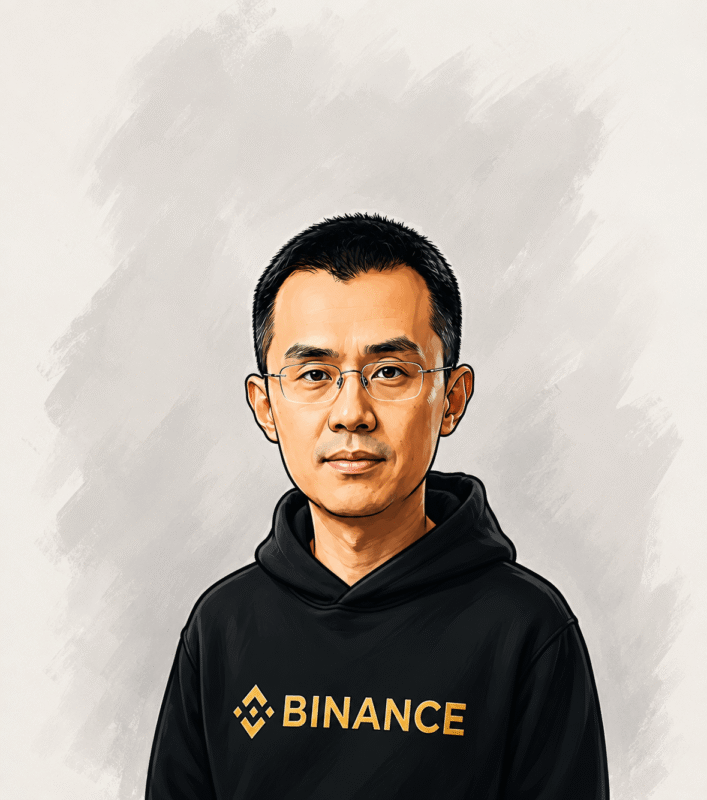
Changpeng Zhao went to Bangkok on November 27 to argue that Thailand should put its bonds, shares and currency on blockchains and sell them to the world. The rules Thailand’s regulators are drafting point in a more cautious direction.
🚨 CZ: "AI is really sexy, but AI does not replace money"
– Binance founder Changpeng Zhao says fading hype around blockchain could start a more meaningful phase, driven by real-world use rather than speculation
– Speaking in Thailand, he pitched tokenized stocks and government… pic.twitter.com/VD0RWlL5Wb— Finance Culture (@CultFinance_) November 27, 2026
That gap between the Binance co-founder’s vision and Thai policy may matter more than his comments on Bitcoin’s price. Southeast Asian markets are now deciding how far crypto infrastructure should reach.
A Pitch Built on Global Reach
Speaking at an event hosted by Binance TH, Zhao, known as CZ, said tokenized government bonds and stocks could help Thailand draw foreign capital, crypto.news reported. He cited Binance’s roughly 330 million users as an example of how far digital investment products could travel. He added that bond sales would need regulatory approval.
He said tokenized shares could let overseas buyers trade Thai companies outside normal exchange hours. He also urged Thailand to build baht-backed stablecoins, fully backed one-to-one by reserves, to support remittances and cross-border payments.
“AI is really sexy, but AI does not replace money,” Zhao said.
Thailand’s Plans Point Inward
Thailand is already testing several of these ideas, but so far each one is built mainly for domestic users.
In May 2025, the Thai Cabinet approved plans for the Ministry of Finance to issue government investment tokens, called G-Tokens, starting with a proposed 5 billion baht. The stated goals were a new borrowing channel for the state and wider access to government debt for people with small savings. G-Tokens cannot be used as payment.

The Bank of Thailand’s draft stablecoin framework, open for public comment from October 19 to November 17, would license issuers and wallet providers under the Payment Systems Act. Under the initial proposal, baht stablecoins would be restricted to domestic transactions because of concerns that they could be used to sidestep foreign exchange controls. That restriction runs close to the opposite of the cross-border role Zhao described.
Separately, Thailand’s Securities and Exchange Commission has proposed capping stablecoin transfers at 5 million baht per customer per day at each regulated operator, with some institutional exemptions.
Why Regulators Are Moving Slowly
The draft rules suggest Thai authorities see tokenization as a domestic modernization tool first and a foreign-investment channel second. That is an interpretation of the policy documents rather than a stated position. The foreign exchange concern cited in the stablecoin framework indicates that control over money flows is a priority.
Zhao acknowledged one risk himself. He said AI is making software flaws easier to find and exploit, and he predicted security incidents could decline over the next six to 12 months as defenses improve.
A Market Searching for a New Story
The timing is notable. According to Coingape, Bitcoin fell below $60,000 on November 20 for the first time since July. Zhao called that level a good price, noting it was the previous cycle’s peak, though he said he would prefer $120,000. He blamed AI companies such as SpaceX, OpenAI and Anthropic for pulling capital away from crypto. He also cited trillion-dollar-plus valuations for those companies, which Coingape did not independently confirm.
Binance is moving into tokenization itself. On November 25, the exchange added five tokenized securities for trading, including products tied to BlackRock’s iShares Bitcoin Trust.
What to Watch
Three decisions will show whether Zhao’s vision gains ground: whether the Bank of Thailand’s final rules keep the domestic-only limit, whether G-Token sales open to foreign buyers, and whether the SEC’s transfer cap survives consultation.
Zhao credited Binance TH’s partnership with Gulf Group’s Sarath Ratanavadi for growing the local exchange from under 2% market share to market leader. Expanding into government debt and currency will depend on regulators more than on partners.


