





TLDR
- Tesla CEO Elon Musk said on the July 22, 2026 earnings call that Optimus could be the biggest product ever.
- Tesla is building a dedicated Optimus production line at its Fremont facility in California.
- The long-term goal is about one million Optimus 3 robots a year at Fremont.
- UBS expects more than two million humanoid robots by 2035, and Deloitte sees a $30 billion to $50 billion market by then.
- Battery limits, costs, safety rules and a lack of real-world training data could slow adoption.
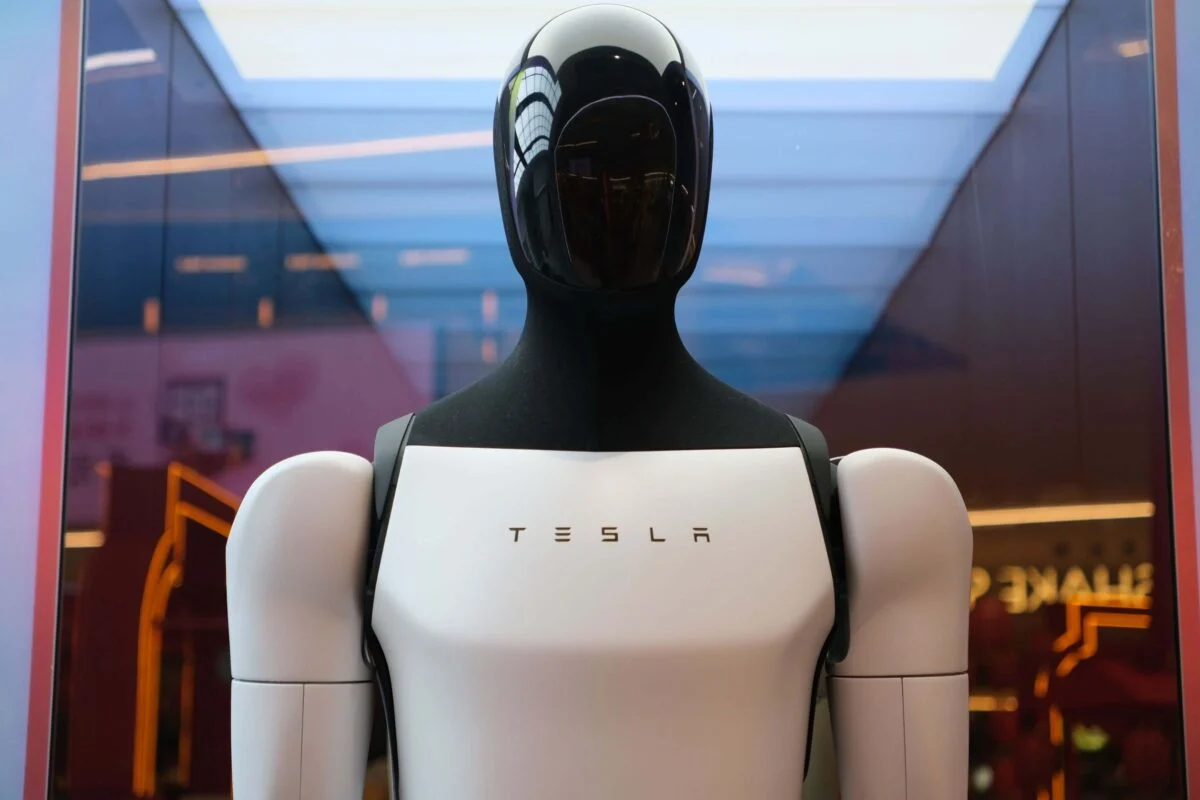
Tesla is moving ahead with plans for its Optimus humanoid robot. CEO Elon Musk shared the details during the company’s second-quarter earnings call on July 22, 2026. He told investors, “I think Optimus will be the biggest product ever.”
— Shredder (@Shred_0x) July 24, 2026
Musk also admitted that building the robot is hard. Tesla has to create many specialized parts and supply chains from scratch. He pointed to the human hand as one of the biggest problems, because people can handle objects of many shapes, weights and textures.
What Tesla Said About Optimus Production
Musk said Tesla is developing a dedicated Optimus production line at its Fremont facility in California. The company is aiming for a long-term capacity of about one million Optimus 3 robots per year there.
Tesla also has a longer-range goal for Optimus 4. That plan calls for 10 million units a year at a site in Austin, Texas. These numbers are long-term ambitions, not confirmed production schedules.
Tesla believes Optimus could become a general-purpose robot. It would be built to do many tasks that people do today. Musk has described uses in manufacturing, logistics, healthcare and household services.
The idea fits into a field called physical AI, also known as embodied AI. It pairs AI models with sensors, robotics and real-time decision systems. The goal is for machines to understand new places and adapt to changes.

Older industrial robots work differently. They are programmed to repeat set movements. Physical AI aims to let a machine handle different jobs without being reprogrammed each time.
Possible uses include warehouse work, manufacturing, agriculture, construction and elderly care. Most of these uses are still in testing. Reliable general-purpose robot intelligence has not yet been shown at commercial scale.
Market Forecasts and Competitors
Several research firms have published estimates for humanoid robots. UBS expects the global number of humanoid robots to pass two million by 2035. It projects about 300 million by 2050.
Deloitte estimates the market could reach $30 billion to $50 billion by 2035. It says the figure could pass $1.4 trillion by 2050. Wide commercial use is still several years away.
Tesla is not the only company in the race. Boston Dynamics, Figure AI, Agility Robotics, Apptronik and China’s Unitree are also building humanoid robots. Many of these designs target industrial and commercial settings.
Nvidia supplies robotics development platforms and AI computing infrastructure. That puts it in the supply chain for many robot makers. Semiconductor firms, sensor suppliers and industrial automation companies are also drawing interest.
Battery suppliers, precision engineering firms and industrial software developers could see demand from robot makers too. Advances in agentic AI may help machines plan and carry out complex physical tasks. DeepSeek founder Liang Wenfeng has also spoken about embodied intelligence as a future stage of AI.
Several obstacles remain. Battery limits, high manufacturing costs, safety requirements and limited real-world training data could delay adoption. Robot demonstrations do not always lead to products that work well at a workable cost.
Companies still need to show that humanoid robots can do useful tasks reliably. They also need to show the robots cost less than current alternatives. Tesla’s Fremont line and its production targets are the latest steps in that effort, and the company has not confirmed a schedule.


