





TLDR
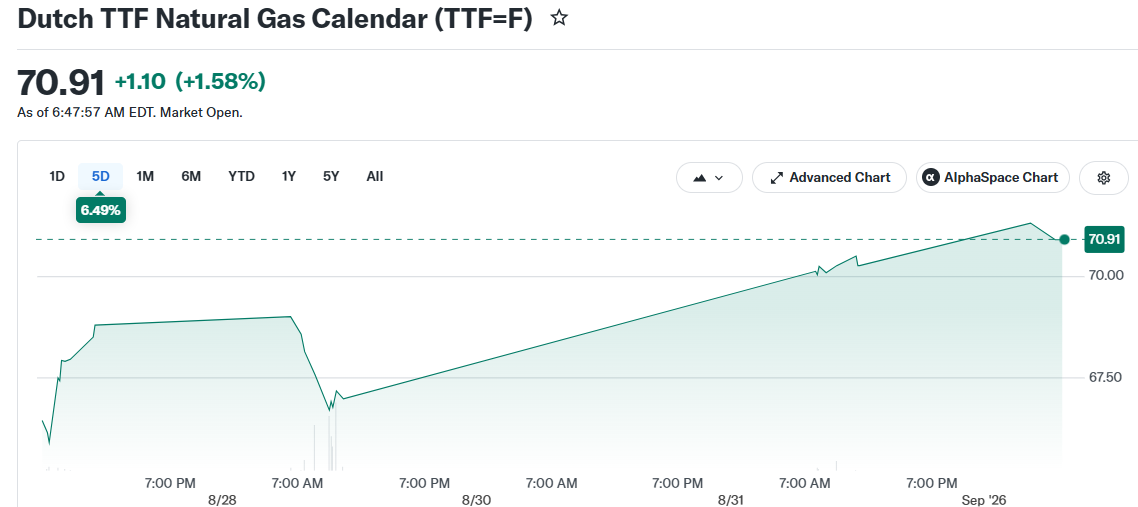
- Dutch TTF gas benchmark surged above €70/MWh, its highest since March 2026
- US strikes on Iranian rocket launchers near the Strait of Hormuz triggered Iranian missile retaliation against US bases in Jordan
- The Strait of Hormuz carries roughly one-fifth of global LNG trade and remains effectively closed
- European gas storage is at just 62-64% capacity, well below the five-year seasonal average
- Goldman Sachs warns prices could hit €100/MWh if Middle East disruptions persist into 2027
European natural gas prices climbed to their highest point since March this week after fresh military strikes between the US and Iran raised fears about LNG supply disruptions through the Persian Gulf.
The benchmark Dutch TTF front-month contract rose to as high as €70.85 per megawatt-hour on Monday before adding another 1.3% on Tuesday to reach €71.30. In Britain, the NBP wholesale gas contract jumped 6.4% to 175.40 pence per therm after traders returned from a public holiday.
The moves came after US forces struck Iranian rocket launchers on Larak Island near the Strait of Hormuz over the weekend. Iran responded by firing missiles at US military bases in Jordan.
US President Donald Trump has threatened further strikes against Iranian infrastructure, with diplomatic efforts to restore commercial shipping through the strait largely stalled.
Why the Strait of Hormuz Matters
The Strait of Hormuz is one of the most important energy chokepoints in the world. Around one-fifth of all global LNG trade passes through it, much of it originating from Qatar.
BREAKING: Brent crude oil prices surge above $92/barrel after two oil tankers are struck in the Strait of Hormuz.
Markets are pricing-in another wave of inflation. pic.twitter.com/E8bgCHfaRd
— The Kobeissi Letter (@KobeissiLetter) September 1, 2026
The waterway remains effectively closed, cutting off a critical route for LNG tankers heading to Europe and Asia. QatarEnergy has already told Italian energy company Edison that it has extended a force majeure suspension of LNG deliveries until early November due to the conflict.

The Edison-Qatar contract normally covers about 10% of Italy’s annual gas consumption. Edison said it is sourcing replacement supplies.
Storage Levels Add to the Pressure
Europe was already in a tight spot before the conflict escalated. Gas storage facilities across the continent were just 62-64% full, according to Gas Infrastructure Europe data. That is around 17 percentage points below the five-year seasonal average for this time of year.
Germany and the Netherlands are at risk of missing their storage targets of 70% and 80% respectively by the November 1 deadline. High prices have slowed the refilling process because the gap between summer and winter prices has often been too narrow to make storage profitable.
Sebastian Heinermann, managing director of German gas storage association INES, warned that if storage is insufficient and winter turns cold, Germany may not be able to cover normal gas demand in full.
European utilities are now competing with Asian buyers for available spot LNG cargoes, pushing up freight rates and cargo premiums.
Goldman Sachs analysts warned last week that if Middle East energy exports normalise only gradually through 2027, December 2026 TTF prices would likely need to rise above €100/MWh.
Rising gas prices are also feeding into broader inflation concerns. Eurozone headline CPI accelerated to 3.3% year-on-year in August, driven largely by energy costs. The European Central Bank meets on September 10 and markets expect another 25-basis-point rate increase.
Stop guessing and start investing with confidence. KnockoutStocks gives you the AI insights, market intelligence, and stock research you need to spot opportunities, cut through the noise, and make smarter investment decisions — all in one powerful platform.
Sign up today and get 50% OFF full access to our premium stock picks.
Simply use coupon code SPECIAL50 at checkout to claim your exclusive discount.
Get 3 Free Stock Ebooks
Discover top-performing stocks in AI, Crypto, and Technology with expert analysis.
- Top 10 AI Stocks - Leading AI companies
- Top 10 Crypto Stocks - Blockchain leaders
- Top 10 Tech Stocks - Tech giants



