





TLDR
- The U.S. dollar fell after Trump said a peace deal with Iran could be signed this weekend
- Oil prices dropped to two-month lows on hopes of de-escalation and restored energy supply
- The euro hit a one-week high, on track for its best weekly gain in over a month
- U.S. producer prices rose more than expected in May but core inflation came in below forecast
- The Federal Reserve is expected to hold rates next week; markets price a 60% chance of a hike by December
The U.S. dollar fell on Friday after President Donald Trump said a peace deal with Iran could be finalized as soon as this weekend. Trump said Iran’s Supreme Leader had signed off on the plan, easing fears of further military conflict in the Middle East.
The U.S. Dollar Index dropped 0.1% to 99.803 in London trade, hitting a one-week low overnight. It was on track for a 0.3% weekly decline.
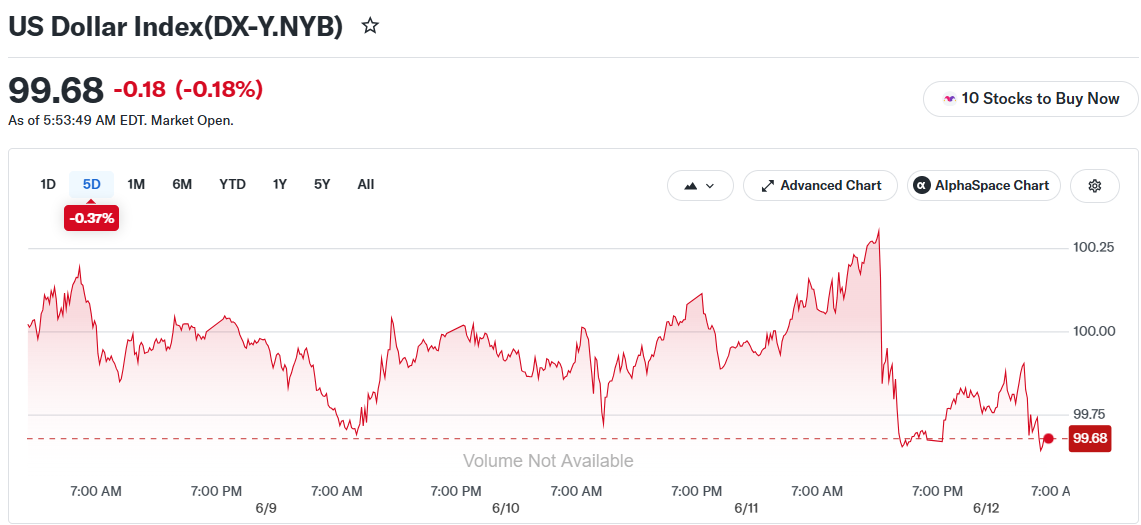
When risk sentiment improves, the dollar tends to fall. That’s because investors move away from safe-haven assets when they feel less worried about global instability.
“For now, the market is in a relief mode that further escalation can be avoided, and we are moving closer to a deal,” said Jefferies economist Mohit Kumar.
Oil prices also dropped sharply, falling to their lowest level in about two months. Lower oil prices added more pressure on the dollar, given that the United States is a net oil exporter.
Euro and Pound Hold Firm
The euro hovered near its strongest level in a week and was set for its best weekly performance in more than a month. The European Central Bank’s first interest rate increase in nearly three years helped support the currency.
Sterling was little changed on Friday but remained on course for its strongest week in nearly a month. The pound largely ignored data showing the U.K. economy contracted 0.1% in April, its first monthly drop since August.
The pound’s recent gains remain fragile. Investors are watching the June 18 Makerfield by-election closely, as the result could have political consequences for Prime Minister Keir Starmer.

The Bank of England meets next week and is widely expected to leave rates unchanged. Policymakers face pressure from both stubborn inflation and a slowing economy.
“Rising prices associated with the conflict in the Middle East are expected to continue putting pressure on a fragile UK economy,” said Danni Hewson of AJ Bell.
Fed in Focus as Inflation Data Sends Mixed Signals
U.S. producer prices rose more than expected in May, driven largely by higher energy costs tied to earlier Middle East disruptions. However, core producer prices, which strip out food and energy, rose less than forecast.
The mixed data eased some fears about an immediate Federal Reserve rate hike. Markets pushed expectations for further tightening toward later in the year.
The Fed meets next week and is widely expected to hold rates steady. Investors will be watching Chair Jerome Powell’s comments closely for any hints on the path ahead.
Markets are currently pricing roughly a 60% chance of a rate increase by December, according to CME FedWatch data.
Stop guessing and start investing with confidence. KnockoutStocks gives you the AI insights, market intelligence, and stock research you need to spot opportunities, cut through the noise, and make smarter investment decisions — all in one powerful platform.
Sign up today and get 50% OFF full access to our premium stock picks.
Simply use coupon code SPECIAL50 at checkout to claim your exclusive discount.
Get 3 Free Stock Ebooks
Discover top-performing stocks in AI, Crypto, and Technology with expert analysis.
- Top 10 AI Stocks - Leading AI companies
- Top 10 Crypto Stocks - Blockchain leaders
- Top 10 Tech Stocks - Tech giants



