






TLDR
- Bitcoin climbed to nearly $75,000, up 8% on the day and 18% on the week, after short sellers were forced out of their positions
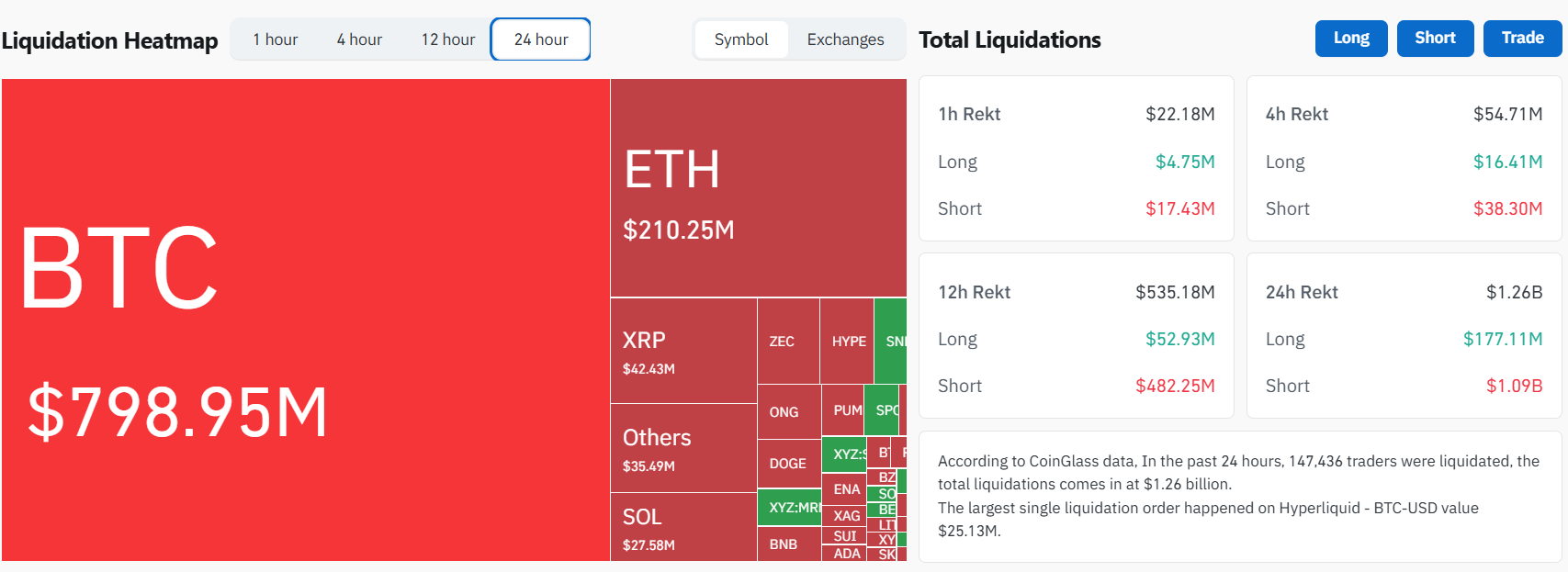
- Over $4 billion in short positions were liquidated across two days, the largest event of this kind since 2021
- The U.S. Treasury doubled its bond buyback operations from $2 billion to $4 billion per session, easing conditions for risk assets
- Ethereum surged 18% in a single day, outperforming Bitcoin, while Solana, Dogecoin, and others posted double-digit weekly gains
- President Trump urged Congress to advance the Digital Asset Market Clarity Act at a White House event with top crypto executives
Bitcoin and several major cryptocurrencies rallied sharply this week after a wave of forced selling wiped out more than $4 billion in short positions over two days, pushing prices to multi-week highs.
Bitcoin rose to just under $75,000 during Asian trading on Friday, up about 8% on the day and nearly 18% over the week. Just two days earlier, it was trading near $64,100.
What Triggered the Move
The rally started on August 19 when the U.S. Treasury announced it would double the maximum size of its bond buyback operations for long-dated securities. The cap increased from $2 billion to $4 billion per session, effective from September 9 through November 4.
Treasury buybacks work by removing older, less liquid bonds from the market and replacing them with fresh issuance. This compresses long-end yields and improves conditions for riskier assets like crypto.
Bitcoin moved from $64,100 to $66,800 within an hour of the announcement. That initial move was enough to trigger the first wave of forced closures on leveraged short positions.
A short liquidation happens when a trader bets on falling prices using borrowed money. If the price rises enough, the exchange automatically closes the position by placing a buy order. That buy order pushes prices higher, triggering more closures in a chain reaction.
The cascade ran for roughly 18 hours. Total short liquidations reached approximately $2.77 billion, or 92% of all forced closures. The largest single position closed was a $25.13 million Bitcoin trade on Hyperliquid.

Why So Many Were Caught Short
Bearish positioning had been building for six weeks before the squeeze. Funding rates on Bitcoin perpetual futures turned negative in late July and stayed that way through mid-August. That meant short sellers were being paid to hold their positions, which attracted more traders into shorts, not because they expected prices to fall but because of the yield.
On August 18, one day before the squeeze, shorts held over 51% of open interest on Binance, OKX, and Bybit. When the Treasury announcement gave markets a reason to move higher, that positioning could not absorb the move without triggering forced buying.
A second catalyst followed. President Trump urged Congress to advance the Digital Asset Market Clarity Act at a White House event, attended by executives from Coinbase, Gemini, Ripple, and Chainlink Labs. That pushed Bitcoin from $68,000 to above $71,000 on August 20.
Ethereum gained 18% in a single day, its strongest move since March 2024, partly because short positioning in Ethereum was even more extreme relative to open interest. Solana rose over 5% on the day and 17% on the week. Dogecoin gained nearly 9%.
Binance absorbed around $518 million in liquidations. Hyperliquid took roughly $513 million. Bybit recorded around $303 million.
Bitcoin’s market value now stands at $1.5 trillion, though it remains about 40% below its all-time record above $126,000 set last October.
The Treasury’s expanded buyback program ends on November 4. Whether the rally holds beyond that date will depend on whether new capital enters the market or whether traders simply reposition for the next move.


