






TLDR
- Gold is trading above $4,500 an ounce, up around 4% this week and 11% in August
- The U.S. Treasury doubled buybacks of long-dated debt, pushing yields and the dollar lower
- Treasury Secretary Scott Bessent said buybacks could be expanded further
- A weaker dollar and falling yields reduce the opportunity cost of holding gold
- Rising oil prices and inflation risks could limit further gold gains
Gold is heading for its third straight weekly gain, trading around $4,530 an ounce as a softer dollar and U.S. Treasury debt management moves continue to push prices higher.
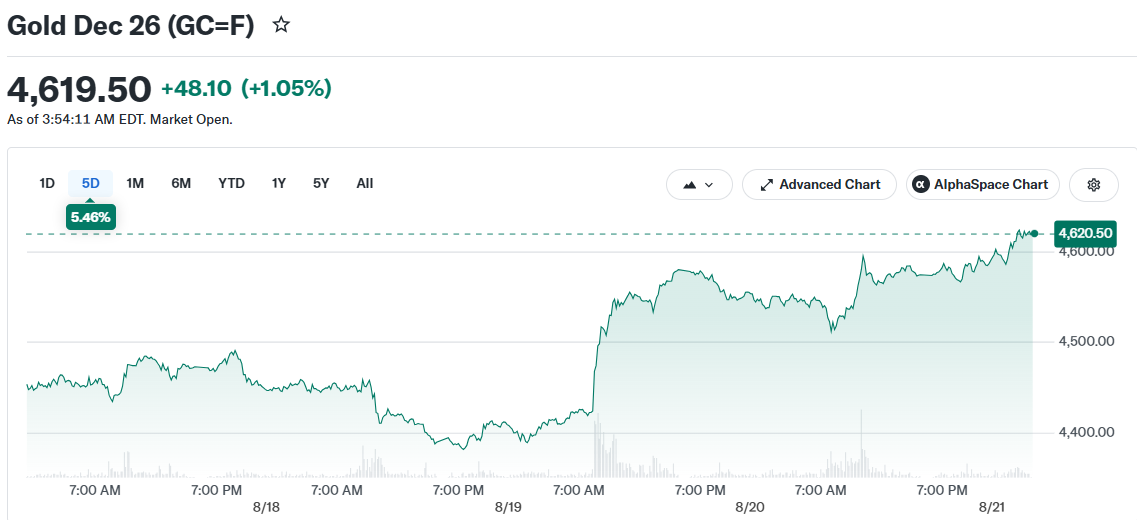
The metal has climbed about 4% this week and is up more than 11% in August alone. Gold futures also gained, rising to around $4,587.
Treasury Buybacks Push Yields Lower
The U.S. Treasury announced this week it would double buybacks of longer-dated government securities to at least $4 billion per operation over the next quarter. The move sent long-term yields lower and weakened the dollar.
BREAKING: US Treasury Secretary Bessent says Treasury buybacks announced yesterday could now MORE than double, exceeding $4 billion per operation.
Bessent said buybacks will increase “by at least double,” adding, “we have a big toolkit, so we’ll see.”
This comes just hours… https://t.co/SLNs0MfTgD
— The Kobeissi Letter (@KobeissiLetter) August 20, 2026
Treasury Secretary Scott Bessent said on Thursday the government could expand those purchases further. He also said current yields do not reflect true economic conditions.
When bond yields fall, gold becomes more attractive to investors because the income they give up by holding bullion instead of bonds is reduced. Lower yields also weigh on the dollar, making gold cheaper for buyers using other currencies.
The U.S. dollar index fell 0.1% to 98.77 on Friday and was on track for a weekly decline of more than 0.8%.

Silver also advanced, rising about 1% to $68.79 an ounce. Platinum climbed 1.6% to $1,866.
Rate Outlook and Geopolitics in Focus
Weekly jobless claims came in lower, suggesting the U.S. labor market is holding up despite a surprise drop in July employment. The Federal Reserve remains focused on inflation rather than cutting rates.
Markets are currently pricing about a 64% chance the Fed holds rates steady in September, with a 36% chance of a hike, according to CME FedWatch data.
Some Fed officials have raised concerns about how the Treasury’s debt strategy could make financial conditions easier at a time when the central bank is still fighting inflation.
On the geopolitical side, Bessent said the U.S. would impose its toughest-ever sanctions on Iran. He argued the measures could reduce the need for major military action.
Oil prices rose sharply this week after President Trump threatened to crush the Iranian economy, dimming hopes for a deal to reopen the Strait of Hormuz. Rising energy prices could keep inflation elevated and limit gold’s upside.
Gold had been down around 15% from its pre-conflict highs after the U.S.-Iran conflict erupted in late February. It held above $4,000 since mid-July when buyers stepped in following that decline.
ANZ analysts noted the week’s move reinforced gold’s appeal as investors look to diversify away from U.S. assets.
Stop guessing and start investing with confidence. KnockoutStocks gives you the AI insights, market intelligence, and stock research you need to spot opportunities, cut through the noise, and make smarter investment decisions — all in one powerful platform.
Sign up today and get 50% OFF full access to our premium stock picks.
Simply use coupon code SPECIAL50 at checkout to claim your exclusive discount.
Get 3 Free Stock Ebooks
Discover top-performing stocks in AI, Crypto, and Technology with expert analysis.
- Top 10 AI Stocks - Leading AI companies
- Top 10 Crypto Stocks - Blockchain leaders
- Top 10 Tech Stocks - Tech giants



