





TLDR
- Gold rose 0.7% to $4,184.68 an ounce after falling 6% in September, its worst month since June
- The Fed’s preferred inflation gauge, core PCE, rose 0.2% in August, below expectations
- Odds of an October Fed rate hike fell to about 34%, down from nearly 70% earlier in the week
- Strong consumer spending kept Treasury yields near multi-decade highs, capping gold’s gains
- Traders are now watching Friday’s U.S. jobs report for more clues on the Fed’s next move
Gold prices climbed on Thursday after a rough September. The metal gained ground as new inflation data gave investors some relief.
At 01:44 ET, the price of gold rose 0.7% to $4,184.68 an ounce. Gold futures gained 0.7% to reach $4,214.
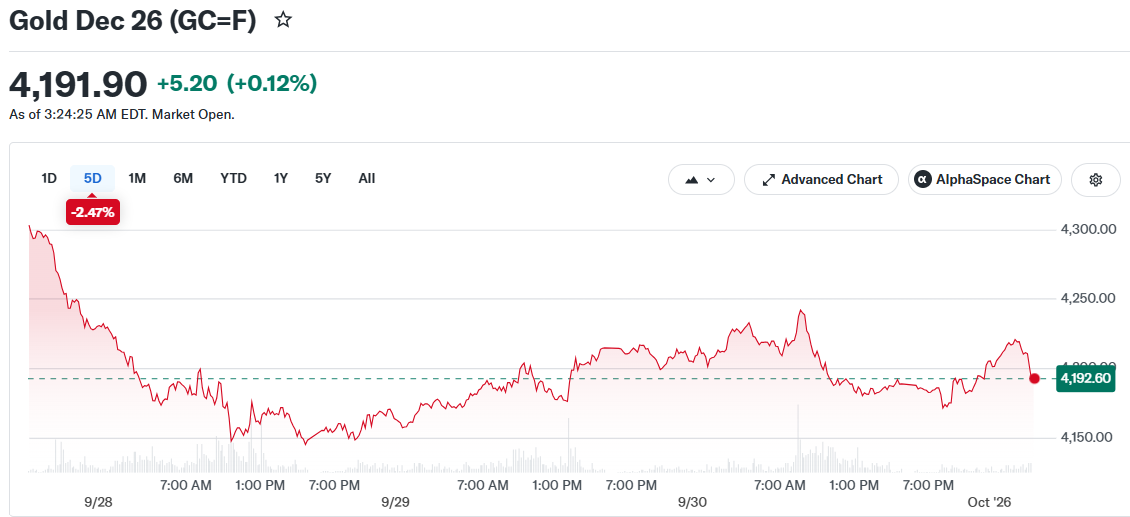
Silver also moved higher, climbing 1.4% to $61.27. Platinum rose 0.5% to $1,725.77.
Inflation Data Shifts Rate Expectations
The Federal Reserve watches a measure called the personal consumption expenditures price index. This gauge, minus food and energy costs, rose just 0.2% in August.
That number came in lower than expected. The previous month’s reading was also revised down.
This softer inflation data changed how traders view the Fed’s next steps. The chance of another rate hike in October dropped sharply.
BREAKING: US August PCE inflation, the Fed's preferred inflation metric, falls to 3.4%, below expectations of 3.7%.
Core PCE inflation fell to 3.0%, below expectations of 3.3%.
July headline and core PCE inflation were also revised down by 30 basis points each.
October rate…
— The Kobeissi Letter (@KobeissiLetter) September 30, 2026

Earlier in the week, markets saw almost a 70% chance of a hike. That number fell to around 34% after the inflation report.
Lower rate hike odds are usually good news for gold. Gold does not pay interest, so higher rates make it less attractive compared to bonds.
Strong Spending Keeps Yields High
Even with the inflation relief, gold still faces challenges. U.S. consumer spending rose in August at its fastest pace in over a year.
This strong spending suggests the economy can handle higher interest rates. That kept Treasury yields near multi-decade highs.
High bond yields work against gold prices. They increase the cost of holding an asset that generates no income.
The U.S. Dollar Index also stayed firm, up 0.2% at 101.66. A stronger dollar typically makes gold more expensive for foreign buyers.
Gold fell 6% in September. This marked its worst monthly performance since June.
That drop came after the Fed raised interest rates for the first time since 2023. The central bank also signaled more tightening could follow.
Global bond yields rose throughout September. Investors grew concerned about rising government debt and deficits.
These worries pushed up what is known as the term premium. This is the extra yield investors demand for holding longer term debt.
Higher yields across the board made it tougher for gold to hold its value last month.
Looking ahead, traders are focused on Friday’s U.S. jobs report. This data could offer more signals about the Fed’s plans for interest rates.
The jobs report will likely shape expectations for gold prices in the days ahead. Markets remain sensitive to any sign of economic strength or weakness.
For now, gold has found some stability after a difficult month. But elevated yields mean the metal still faces pressure.
Stop guessing and start investing with confidence. KnockoutStocks gives you the AI insights, market intelligence, and stock research you need to spot opportunities, cut through the noise, and make smarter investment decisions — all in one powerful platform.
Sign up today and get 50% OFF full access to our premium stock picks.
Simply use coupon code SPECIAL50 at checkout to claim your exclusive discount.
Get 3 Free Stock Ebooks
Discover top-performing stocks in AI, Crypto, and Technology with expert analysis.
- Top 10 AI Stocks - Leading AI companies
- Top 10 Crypto Stocks - Blockchain leaders
- Top 10 Tech Stocks - Tech giants



