





TLDR
- Micron stock rose before the open Wednesday after Nvidia’s earnings beat.
- It is still down about 20% over the past month.
- Nvidia’s supply commitments jumped to $390 billion, mostly for multi-year memory.
- Major buybacks can begin Dec. 9 under Micron’s Chips Act terms.
- Raymond James keeps an Outperform rating on the stock.
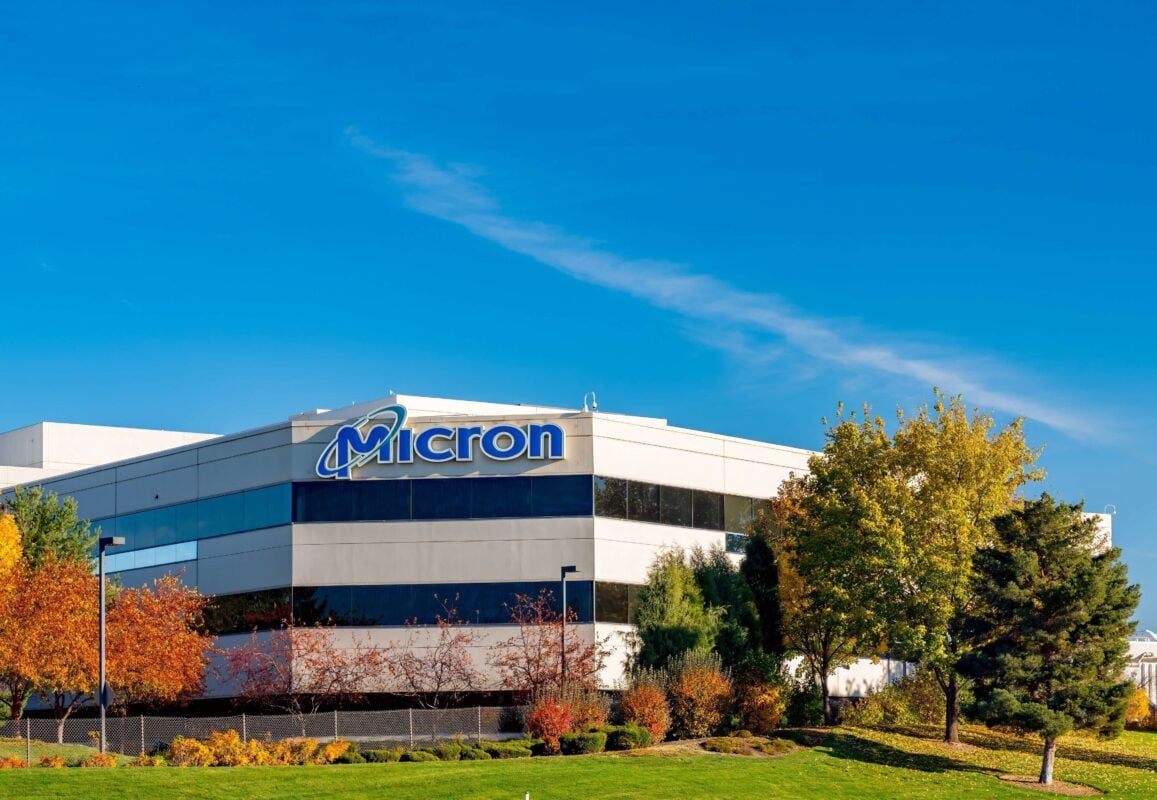
Micron (MU) stock is climbing ahead of Wednesday’s open, helped by a strong report from Nvidia. The gain ran as high as 3.5% before the bell, with one quote showing a 1.7% rise at $724.29.
Nvidia posted revenue of $115.84 billion, well above the roughly $109 billion analysts expected. That put a stop to a days-long selloff in tech.
The Nasdaq gained 1.1% and the S&P 500 rose 0.6%. Chip peers bounced back along with Micron.
Even with the pop, Micron stock is still down about 20% over the past month. It also sits well below its 52-week high of $1,255.
Micron has more than tripled over the past 12 months. That makes the recent pullback hard to miss.
Chip stocks had been under pressure for much of November as investors weighed the risk around AI spending. Nvidia’s results took some of that pressure off.

Nvidia’s memory bill points Micron’s way
Nvidia’s CFO said supply commitments rose from $279 billion last quarter to $390 billion. Most of the increase came from multi-year memory purchases.
That is the most direct read-through for Micron, which supplies high-bandwidth memory for AI accelerators. Memory is clearly having a moment.
Apple is also reportedly moving to multi-year DRAM supply deals with major memory makers starting in 2027. Deals like that give producers a clearer view of future pricing.
Micron executives are speaking at the TomorrowX Summit investor event in Austin today. It gives the company a stage to talk up its AI memory plans.
The Dec. 9 buyback date
Under the terms of its Chips Act funding, Micron can begin major stock buybacks on Dec. 9. In October, the company raised its buyback authorization to $35.2 billion.
Raymond James analyst Sebastien Naji expects more. His base case has 80% of free cash flow going to buybacks, which would top $100 billion this fiscal year and in each of the next two.
Naji also wants proof that earnings can hold up if memory prices drop. He points to strategic customer agreements, which lock in long-term pricing.
Micron has signed 26 of those agreements so far. They cover more than 35% of projected revenue through 2030.
Hardware co-design deals are the second piece. One reached with Anthropic could shield part of Micron’s business from Chinese and South Korean rivals.
Naji kept an Outperform rating on the stock. He noted it trades at 3.7 times his 2027 earnings forecast, against a median forward multiple of 10 over the past decade.
Micron’s next company-specific catalyst is its fiscal first-quarter 2027 earnings report, expected in late December.


