





TLDR
- Brent crude fell over 1% to $71.10 a barrel on Monday
- OPEC+ agreed to raise output by 188,000 barrels per day from August
- Shipping through the Strait of Hormuz is recovering after the US-Iran interim peace deal
- Global oil demand is forecast to contract by 1.5 million barrels per day in 2026
- Citigroup has flagged the possibility of Brent falling to $60 by year-end
Oil prices dropped on Monday as OPEC+ announced another output increase and shipping through a key Middle East waterway continued to recover.
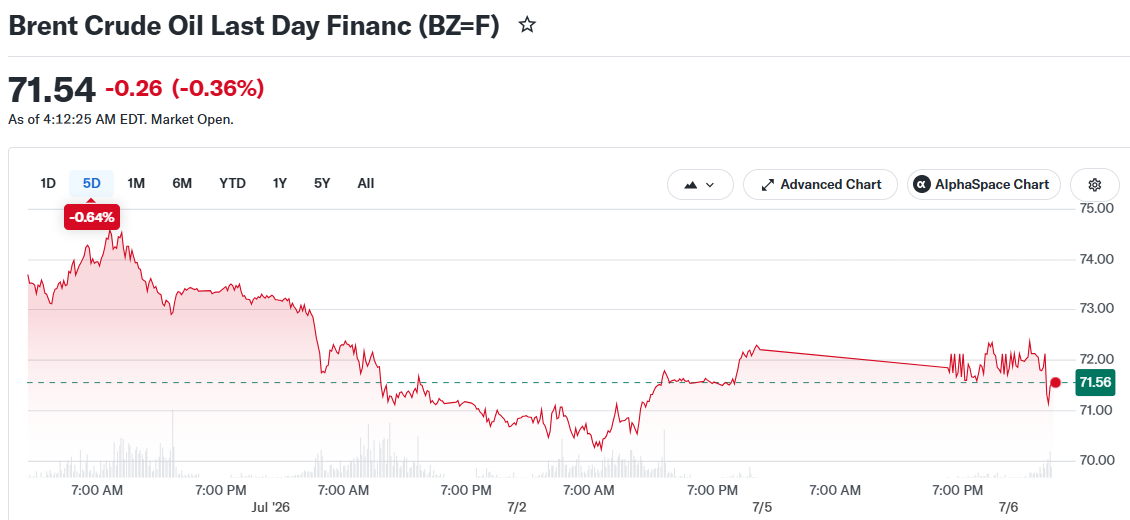
Brent crude fell $1.02, or 1.41%, to $71.10 a barrel. US West Texas Intermediate dropped 80 cents to $67.89. Both benchmarks have been under pressure for several weeks.
OPEC+ members, led by Saudi Arabia and Russia, agreed on Sunday to raise collective output targets by 188,000 barrels per day starting in August. This follows similar increases already set for June and July.
The group has been rolling back production cuts made in previous years. Seven major member nations backed the latest increase.
Hormuz Shipping Slowly Coming Back Online
The Strait of Hormuz had been closed to tanker traffic during the US-Israeli war on Iran. That disruption had capped actual output from key producers including Saudi Arabia, Kuwait, and Iraq, meaning much of the OPEC+ increase existed only on paper.
🚨OPEC+ TO PUMP MORE OIL AS PRICES RETURN TO PRE-WAR LEVELS
OPEC+ will raise output by another 188,000 barrels per day from August, continuing monthly hikes as the Strait of Hormuz gradually reopens, per Reuters.
The move comes as WTI crude has dropped from above $105 in early… pic.twitter.com/FaKfRi57EC
— Coin Bureau (@coinbureau) July 5, 2026
Oil and gas shipping along a US-protected corridor in the waterway showed signs of recovering on Sunday. A day earlier, a batch of vessels had made unexplained U-turns in the corridor before resuming course.

Gulf oil exports in June jumped more than 3 million barrels from May, exceeding 10 million barrels per day. However, that volume still remains 40% below pre-war levels.
Brent crude collapsed by 30% in the second quarter after Washington and Tehran agreed to an interim peace deal, clearing the way for a gradual resumption of Hormuz traffic.
Supply Climbing as Demand Falls
ANZ Bank now expects global oil demand to contract by 1.5 million barrels per day in 2026. Year-on-year declines could reach 4 million barrels per day in Q2 based on early data.
PVM analysts noted that producers are “selling into a falling market, offering little hope of an imminent price recovery.”
Abu Dhabi National Oil Company has sold around 16 million barrels of crude at wider discounts in spot tenders since June, pointing to a surge in available supply.
Russia’s western port shipments hit a record high in June and are expected to stay at that level in July. Ukraine drone strikes on Russian refineries have forced Moscow to export more crude instead of processing it at home.
Market structure is also turning bearish. Timespreads for Brent and Dubai have flipped into contango, where prompt contracts trade at a discount to longer-dated ones. Many physical crude grades are also trading below benchmark prices.
Citigroup has flagged the possibility of Brent falling to $60 a barrel by year-end if the current supply and demand trends continue.


