





TLDR
- Brent crude rose to $91.87 and WTI climbed to $87.15 on Tuesday as U.S.-Iran tensions escalated
- U.S. forces struck Iranian military targets on Larak Island; Iran retaliated with missiles at U.S. facilities in Jordan
- Tanker traffic through the Strait of Hormuz fell to just 5 vessels per day, well below the 10-day average of 14
- A tanker was struck by three projectiles while exiting the strait on Tuesday
- The U.S. Strategic Petroleum Reserve sits at 286.6 million barrels, near its lowest level in 44 years
Oil prices pushed higher on Tuesday as fresh fighting between the U.S. and Iran brought supply disruption fears back to the oil market. Brent crude futures rose to $91.87 per barrel, while U.S. West Texas Intermediate climbed to $87.15.
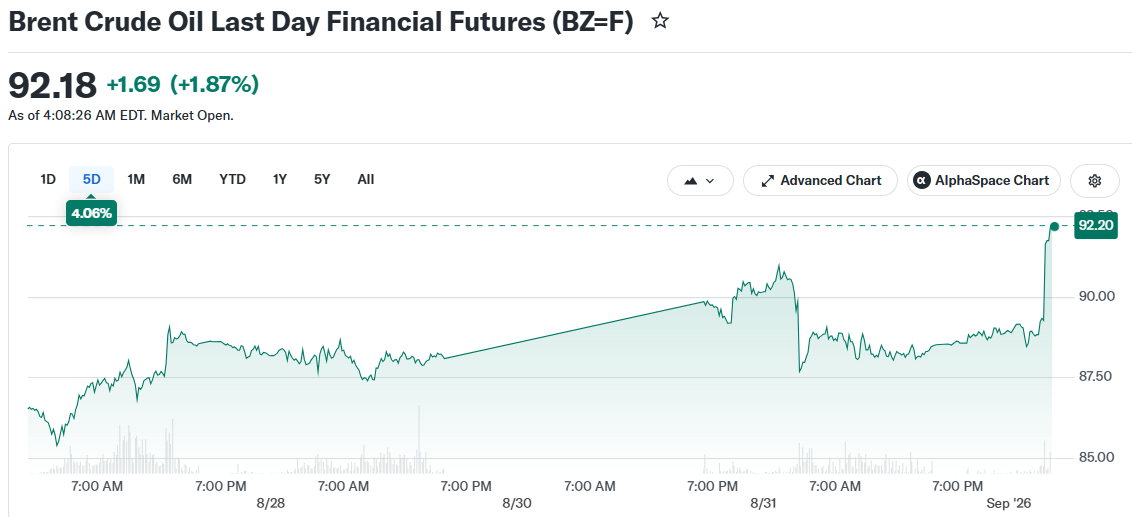
Both contracts had already settled around 3% higher the session before, continuing a rebound driven by renewed hostilities in the Middle East.
Fighting Resumes After Brief Lull
The latest flare-up began after U.S. forces struck Iranian military targets on Larak Island, ending weeks of relative calm. Iran responded by launching missiles at U.S. military facilities in Jordan.
BREAKING: Iran has just struck an oil tanker with 3 anti-ship cruise missiles in the US-backed southern Omani corridor while completing an outbound transit in the Strait of Hormuz under US escort, per UKMTO.
The vessel is the Saudi VLCC oil tanker "SIDR."
— The Hormuz Letter (@HormuzLetter) August 31, 2026
President Trump pledged a strong response, pushing fears higher that direct conflict could spread and threaten energy infrastructure across the Gulf region.
“These bring the potential for Iranian retaliation back into the equation,” said Tim Waterer, chief market analyst at KCM. “Both of those risks are being reflected in the firmer tone in crude prices.”
The Strait of Hormuz carried about a fifth of global oil supplies before the conflict began in late February. Iran shut the waterway after the U.S. and Israel attacked the country on February 28.
Efforts by mediators including Qatar and Oman to reopen the strait have so far failed.

Tanker Traffic Has Fallen Sharply
Shipping data from Kpler showed only five commodity vessels transiting the Strait of Hormuz on Monday, well below the 10-day average of around 14. None of the five ships were liquid tankers.
On Tuesday, the United Kingdom Maritime Trade Operations agency reported a tanker was struck by three projectiles while sailing out of the strait. No casualties or environmental damage were reported.
ANZ analysts noted that oil flowing through the Hormuz is now around 6 million barrels per day, well below pre-conflict levels.
Oil flowing through the route had shown some recovery in recent weeks, but the latest attacks have put that progress at risk.
Supply Buffers Are Getting Thin
The U.S. Strategic Petroleum Reserve dropped by about 3.1 million barrels last week and now stands at 286.6 million barrels, near its lowest point in 44 years. Trump said oil from a new deal with Venezuela would be used to help refill it, though timing on those supplies remains unclear.
OPEC+ approved an additional production increase of around 188,000 barrels per day from September, completing its planned output rollback. Russia also extended its diesel export ban through September 30, adding pressure on refined fuel supplies.
Analysts polled by Reuters in August expect oil prices to stay above $80 a barrel for the rest of 2026 as shipping disruptions continue.
Stop guessing and start investing with confidence. KnockoutStocks gives you the AI insights, market intelligence, and stock research you need to spot opportunities, cut through the noise, and make smarter investment decisions — all in one powerful platform.
Sign up today and get 50% OFF full access to our premium stock picks.
Simply use coupon code SPECIAL50 at checkout to claim your exclusive discount.
Get 3 Free Stock Ebooks
Discover top-performing stocks in AI, Crypto, and Technology with expert analysis.
- Top 10 AI Stocks - Leading AI companies
- Top 10 Crypto Stocks - Blockchain leaders
- Top 10 Tech Stocks - Tech giants



