






TLDR
- Gold fell 1.6% to around $4,377 as oil prices and bond yields jumped sharply
- Fed Chair Kevin Warsh’s hawkish Jackson Hole speech pushed rate hike bets to 66% for September
- Brent crude crossed $91 a barrel after renewed U.S.-Iran tensions raised supply concerns
- The 10-year Treasury yield hit 4.78%, its highest since early 2025
- Gold is still up nearly 10% for August, supported by Treasury debt purchases and central bank buying
Gold dropped sharply on Tuesday, falling 1.6% to around $4,377 an ounce. The move came as oil prices surged and a global bond selloff pushed yields higher, raising the chances of another Federal Reserve rate hike.
Gold futures also fell 1.2% to $4,426. Silver dropped 2.4% to $64.98 an ounce, and platinum declined 1.2%.
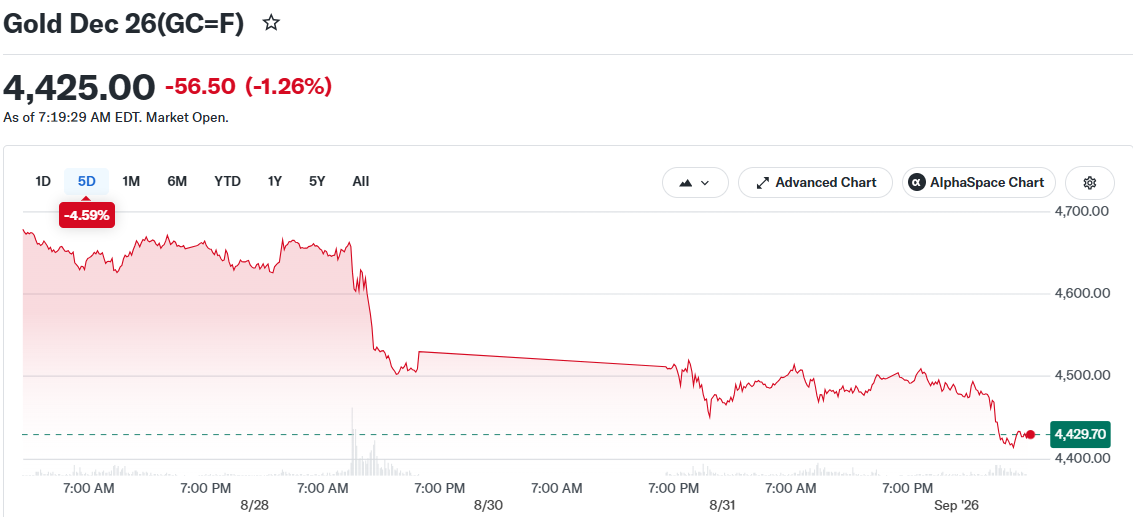
The latest drop puts gold around $320 below last week’s high near $4,697.
Rate Hike Fears Drive the Selloff
Federal Reserve Chair Kevin Warsh spoke at Jackson Hole on Friday. He signaled a firm commitment to getting inflation back to the Fed’s 2% target.
Markets responded quickly. CME FedWatch now shows about a 66% chance of a 25 basis point rate hike at the September meeting. That is up from around 40% before the speech.
JUST IN: 🇺🇸 Odds of next Fed rate hike before 2027 surge to 76%, per Kalshi traders. pic.twitter.com/1nTXKalehC
— Whale Insider (@WhaleInsider) September 1, 2026
Higher rates tend to hurt gold. The metal pays no yield, so it becomes less attractive when interest rates rise.

ANZ analysts said gold now looks vulnerable as the market adjusts to the shift in monetary policy expectations.
Oil and Bonds Add to the Pressure
Renewed fighting between the United States and Iran has pushed oil prices higher. Brent crude moved above $91 a barrel and U.S. crude crossed $86.
That raised concerns about energy supply disruptions and added to inflation worries.
The 10-year U.S. Treasury yield climbed to around 4.78%, its highest level since early 2025. Bond yields rising globally have added further pressure on gold.
Tony Sycamore, senior market analyst at IG, said the combination of Warsh’s speech and fresh tensions around the Strait of Hormuz drove the roughly $300 decline from last week’s peak.
Longer-Term Support Still in Place
Despite the recent drop, gold gained nearly 10% in August. That rally was driven by an unexpected move from the U.S. Treasury, which increased purchases of longer-dated government debt.
That pushed borrowing costs lower and weakened the dollar. It also brought renewed concerns about U.S. government debt levels and possible currency devaluation.
Those factors helped gold rally around 65% in 2025. Gold-backed ETFs saw strong inflows, and central bank buying added support.
Sycamore said his medium-term view has not changed. He sees the late June low near $3,942 as a base and still targets $5,000 on the upside.
Gold remains below its 200-day moving average, which stands near $4,526.
Investors are now watching this week’s jobs data, including Friday’s nonfarm payrolls, for clues on whether the Fed will actually raise rates in September.
Stop guessing and start investing with confidence. KnockoutStocks gives you the AI insights, market intelligence, and stock research you need to spot opportunities, cut through the noise, and make smarter investment decisions — all in one powerful platform.
Sign up today and get 50% OFF full access to our premium stock picks.
Simply use coupon code SPECIAL50 at checkout to claim your exclusive discount.
Get 3 Free Stock Ebooks
Discover top-performing stocks in AI, Crypto, and Technology with expert analysis.
- Top 10 AI Stocks - Leading AI companies
- Top 10 Crypto Stocks - Blockchain leaders
- Top 10 Tech Stocks - Tech giants



