





TLDR
- Isar Aerospace’s Spectrum rocket became the first private rocket to reach orbit from continental Europe, launching from Arctic Norway
- This was Isar’s second attempt after its first rocket crashed 30 seconds after liftoff last year
- The rocket carried five small satellites and an in-flight technology experiment
- Isar has raised €270 million and signed a €200 million contract with the European Space Agency
- Defense customers now make up about 60% of Isar’s orders, with missions already booked through 2028
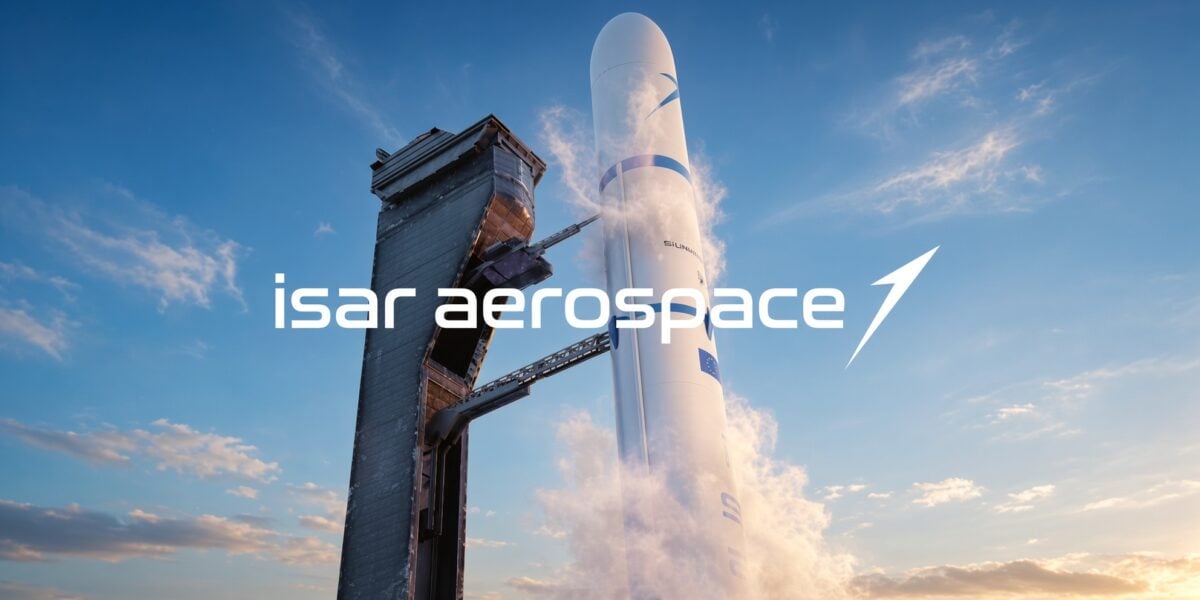
Germany-based Isar Aerospace launched its Spectrum rocket into orbit on Saturday from Andøya Spaceport in Arctic Norway. It was the first private commercial rocket to reach orbit from continental Europe.
We made history. On just our second flight, we became the first commercial space company from Europe to deliver satellites into orbit. Mission 'Onward and Upward' successfully lifted off and deployed payloads into orbit. A new chapter for European spaceflight. More:… pic.twitter.com/AWvqG2l8Mn
— Isar Aerospace (@isaraerospace) September 5, 2026
The mission marks a turning point for Europe’s push to build its own launch capability. Several European nations have been working to reduce their reliance on rockets built elsewhere.
This was Isar’s second attempt. Its first Spectrum rocket crashed about 30 seconds after liftoff from the same site roughly 18 months ago. No one was injured in that incident.
German Chancellor Friedrich Merz praised the launch, calling it “the beginning of a new era.” EU Defence and Space Commissioner Andrius Kubilius also responded on social media, writing that “Europe’s independent access to space just got a major boost.”
Isar CEO Daniel Metzler said the mission gives Europe “sovereign access to space” and described launch capability as “the biggest bottleneck in the entire industry.”
What the Spectrum Rocket Can Do
Spectrum stands 28 meters tall and can carry up to 1,000 kilograms to low Earth orbit. That puts it well below SpaceX’s Falcon 9 in size, but Isar says that is part of the pitch.

Smaller satellites launched on a dedicated rocket can be placed into specific orbits. That flexibility is harder to get when sharing a larger rocket with other payloads.
Saturday’s mission carried five small satellites and an in-flight technology experiment.
Funding and Future Plans
Isar raised €270 million earlier this year. In August, it signed a contract worth roughly €200 million with the European Space Agency to help fund continued development of its launch vehicle.
Defense customers now make up about 60% of the company’s order book. European governments have been increasing spending on satellites and space infrastructure, driving that demand.
Isar currently has five more rockets in production. The company is building a factory near Munich with a long-term goal of producing up to 40 rockets per year.
Missions are already booked through 2028, including launches for the European Space Agency and the Norwegian Space Agency.
Isar is also developing a second launch site in Nova Scotia, Canada, which could be operational by 2028.
An IPO is not currently planned. Metzler said the company remains well-funded and that going public is “not on the table.”
Reaching orbit is a key technical milestone, but the company’s financial success will depend on how quickly it can scale production and convert its order book into regular launches.
Stop guessing and start investing with confidence. KnockoutStocks gives you the AI insights, market intelligence, and stock research you need to spot opportunities, cut through the noise, and make smarter investment decisions — all in one powerful platform.
Sign up today and get 50% OFF full access to our premium stock picks.
Simply use coupon code SPECIAL50 at checkout to claim your exclusive discount.
Get 3 Free Stock Ebooks
Discover top-performing stocks in AI, Crypto, and Technology with expert analysis.
- Top 10 AI Stocks - Leading AI companies
- Top 10 Crypto Stocks - Blockchain leaders
- Top 10 Tech Stocks - Tech giants



