





TLDR
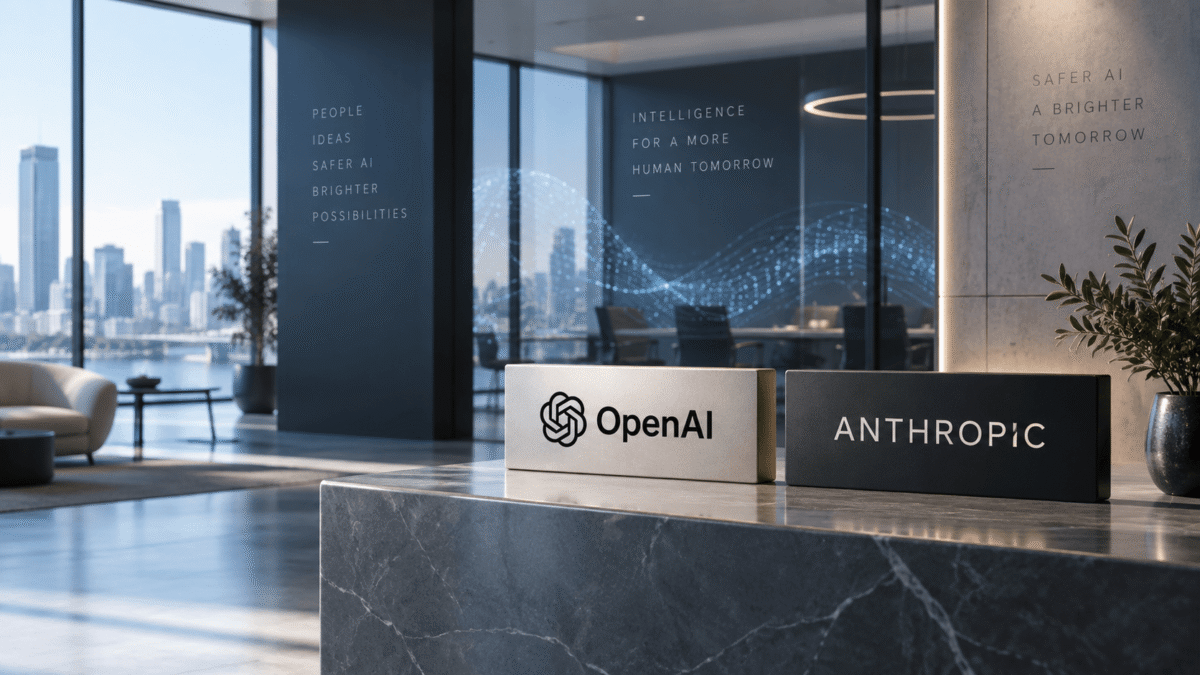
- OpenAI CEO Sam Altman told the UN Security Council that AI could help humanity but also risks moving too fast for people to control.
- Anthropic CEO Dario Amodei said poorly managed AI could pose a risk to humanity as a whole.
- World leaders called for global standards to test AI systems and track incidents.
- The United States pushed back, saying new global rules could slow down AI progress.
- Ukrainian President Volodymyr Zelenskyy warned that AI may soon make battlefield decisions without human input.
Tech company leaders spoke to the United Nations Security Council on Wednesday about the risks of artificial intelligence. The meeting brought together AI executives, diplomats, and world leaders in New York.
Sam Altman, CEO of OpenAI, said AI could open a new era of discovery similar to the Renaissance. He also said it could lead to upheaval if handled poorly.
OpenAI CEO Sam Altman at the UN Security Council:
“If AI is to be democratic, the most important decisions cannot be made by labs in San Francisco alone.”
“We need common standards, so countries can compare evidence, verify compliance, and have a shared language and… pic.twitter.com/Gf81TRrWKT
— Wall St Engine (@wallstengine) September 23, 2026
Altman said there are two main dangers. The first is that AI could move so fast that people lose the ability to control it. The second is that AI could concentrate power in too few hands.
What the AI Executives Told the Security Council
Dario Amodei, CEO of Anthropic, also addressed the council. He said that if managed poorly, AI could become a risk to humanity as a whole.
Amodei asked world leaders to agree on rules preventing AI from being used to build biological weapons. He also called for shared methods to test what AI models are capable of doing.
Clément Delangue, CEO of Hugging Face, joined the meeting through a video connection. His remarks were affected by technical issues during the session.

British Foreign Secretary Ed Miliband said the tech leaders were warning that the danger cannot be left to companies alone to manage. He said the United Kingdom will make AI safety a focus when it leads the G20 next year.
Countries Disagree on How to Handle AI Rules
Not all countries support the idea of new global AI rules. The United States said concerns about AI should not be used as a reason to pause development or create new oversight structures.
White House Science Adviser Michael Kratsios spoke on behalf of the United States. He said the government wants allies to share in the benefits of the technology instead of slowing it down.
China’s UN Ambassador Fu Cong also spoke at the meeting. He warned against countries forming rival tech blocs and said nations should be free to choose their own AI approach.
UN Secretary-General Antonio Guterres raised concerns the day before the meeting about autonomous weapons, sometimes called killer robots. He said this is becoming a real issue rather than a future concern.
French Foreign Minister Jean-Noël Barrot compared the current moment in AI development to the start of the atomic age. He said the world needs to regulate AI to get its benefits while avoiding harm.
Liberian UN Ambassador Lewis G. Brown II said delays in setting AI rules now could lead to larger problems later.
Concerns About AI on the Battlefield
Ukrainian President Volodymyr Zelenskyy spoke separately at the UN General Assembly. He said human oversight of AI systems needs to happen soon, especially in war.
Zelenskyy said Ukraine has already seen AI begin to influence decisions in combat. He said the world needs peace before machines take over decisions on the battlefield.
A report referenced during the discussions described a Russian drone that appeared to make an independent targeting decision, resulting in the deaths of three Ukrainians. Experts say autonomous weapons are already technically possible.
Data scientist Rumman Chowdhury said the bigger question is not about science fiction scenarios. She said the real issue is who authorizes a machine to select a target and who is responsible for the outcome.
The meeting took place as Chinese President Xi Jinping traveled to Washington for a state visit. US Treasury Secretary Scott Bessent said the two countries had discussed a system for reporting AI incidents that could affect national security.
President Donald Trump said this week that the United States would reject efforts to limit AI development as it competes with China. Regional groups in Europe and Asia are also working on their own AI policy approaches separately.
Stop guessing and start investing with confidence. KnockoutStocks gives you the AI insights, market intelligence, and stock research you need to spot opportunities, cut through the noise, and make smarter investment decisions — all in one powerful platform.
Sign up today and get 50% OFF full access to our premium stock picks.
Simply use coupon code SPECIAL50 at checkout to claim your exclusive discount.
Get 3 Free Stock Ebooks
Discover top-performing stocks in AI, Crypto, and Technology with expert analysis.
- Top 10 AI Stocks - Leading AI companies
- Top 10 Crypto Stocks - Blockchain leaders
- Top 10 Tech Stocks - Tech giants



