






TLDR
- Wrapped Monero token XMR1 fell from about $500 to $1 on Hyperliquid on Nov. 20
- A wallet that got tokens from the deployer sold about $13.5 million worth
- Bitquery traced the funds from USDC on Arbitrum into 7,467 Ether
- Wagyu’s operator blames a breach at hosting provider 1984 and promises refunds
- Native Monero was not affected by the crash
A wrapped version of Monero lost almost all of its value in about half an hour on Friday. The token, called XMR1, trades on Hyperliquid and fell from around $500 to $1. That is a drop of 99.8%.
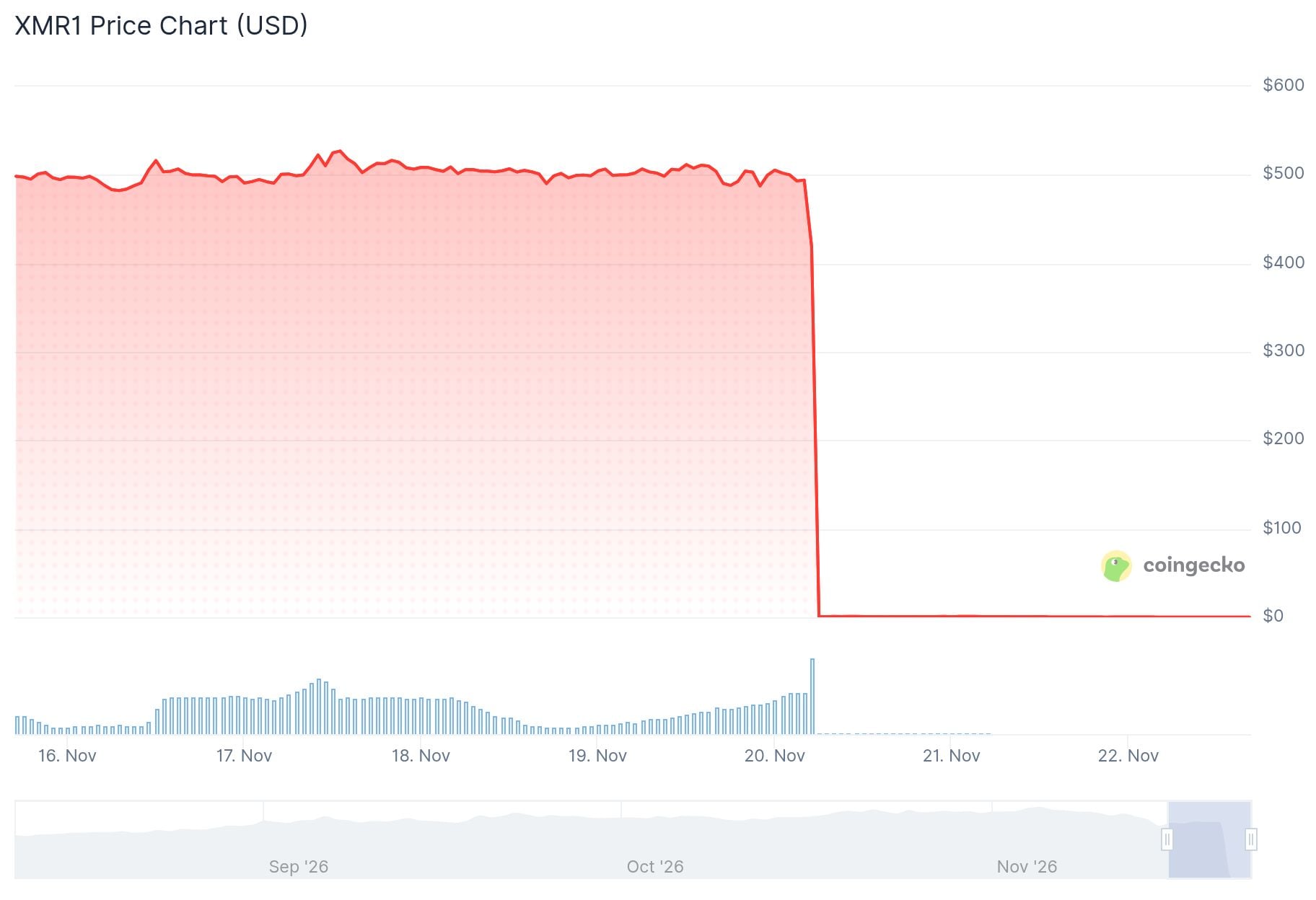
Wrapped tokens stand in for another cryptocurrency on a different blockchain. They let people trade an asset outside its home network. Native Monero was not hit by the crash, and it traded near $492 on Saturday.
How the Sell-Off Unfolded
Blockchain analytics firm Bitquery said a new wallet received 5.2 million XMR1 tokens from the deployer account. The transfers came in three transactions. The wallet then began selling.
🚨HYPERLIQUID WRAPPED MONERO APPEARS TO BE GETTING HACKED!@lookonchain flagged an attacker wallet that received 5.2 million $XMR1, dumped it on Hyperliquid, then used the proceeds to buy ethereum:native.
So far the address has spent $13.22M USDC for 7,467 ethereum:native.… pic.twitter.com/boP1oXXmjl
— Crypto Banter (@crypto_banter) November 20, 2026
The wallet sold 369,623 XMR1 to 420 buyers and took in about $13.51 million. Roughly 76% of that came in the first 11 minutes. One buyer paid about $3.56 million, and market-making orders made up most of the trading.
The sales overwhelmed the order book on Hyperliquid. Prices dropped far faster than buyers could react.
Where the Money Went
Bitquery tracked $13.28 million in USDC moving from Hyperliquid to Arbitrum across 11 transactions. Of that, $13.22 million was swapped for 7,467 Ether through CoW Protocol. Most of the Ether was then moved to Ethereum using several cross-chain bridges.

The firm also found that about $6.6 million of earlier XMR1 purchases came from funds taken in four November hacks. Those hacks hit Across Protocol, Kava, Lighter and Safe. The buyers appeared to be using XMR1 as a path to native Monero.
Bitquery said it found no onchain evidence linking those four incidents to Friday’s sell-off. It also could not say how the deployer account’s private key was obtained. It could not say who controlled the key during the transfers either.
What the Operator Says
PerpetualCow is the pseudonymous operator of Wagyu, the service behind XMR1. The operator blamed a breach at 1984, an Icelandic hosting provider. The operator said customer data and internal server files were exposed.
According to PerpetualCow, the deployer key had been kept on an old server that was later deleted. The hosting provider may still have held logs and files tied to that key. The operator did not give proof of this in the public statements.
Reports say 1984 and Iceland’s cybersecurity authorities have acknowledged a serious cyberattack. Investigators have not independently confirmed how the XMR1 signing key was obtained.
PerpetualCow promised to repay affected traders from personal funds. The operator also said Wagyu will relaunch at a later date. No timeline was given for repayments or the relaunch.
Cointelegraph asked the operator for more details about the breach and the repayment plan. No reply had come by publication time.
As of Saturday, Ether traded near $1,717, and USDC held at $1.00.


