





TLDR
- AbbVie completed its acquisition of Apogee Therapeutics for $135.11 per share in cash, totaling approximately $10.9 billion
- Apogee’s lead drug, zumilokibart, targets IL-13 and showed about two-thirds of atopic dermatitis patients achieved skin clearance in Phase 2 trials
- The pipeline also includes APG273, a combination therapy targeting both IL-13 and TSLP for asthma treatment
- AbbVie expects the deal to dilute adjusted EPS by $0.14 in 2026 and $0.46 in 2027, with accretion not starting until 2032
- AbbVie reaffirmed its full-year 2026 adjusted diluted EPS guidance of $13.87 to $14.07
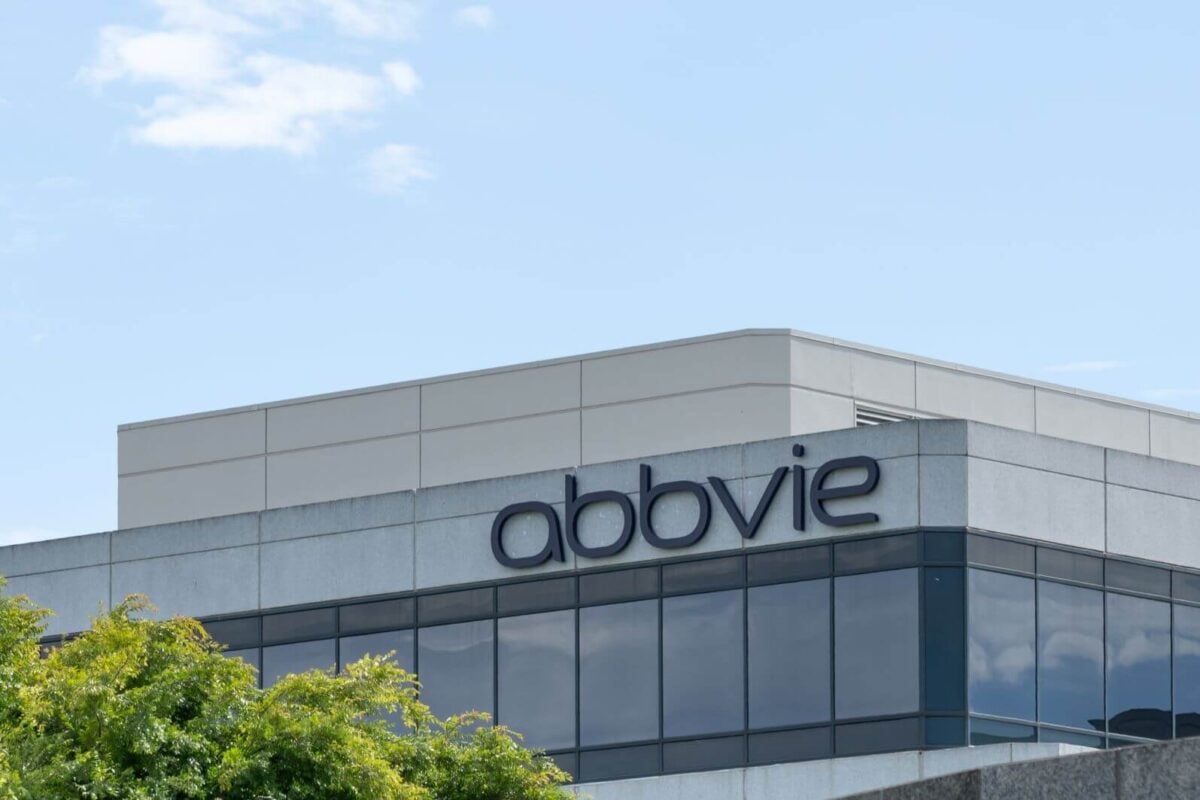
AbbVie (ABBV) closed its acquisition of Apogee Therapeutics on September 3, 2026, paying $135.11 per share in cash for a total equity value of around $10.9 billion. Apogee’s stock stopped trading on that date.
The deal adds a pipeline of immunology drugs to AbbVie’s existing portfolio. The focus is on inflammatory and immunological diseases including atopic dermatitis, asthma, and chronic obstructive pulmonary disease.
The headline asset from Apogee is zumilokibart, a monoclonal antibody that targets IL-13, a protein that drives type 2 inflammation. It is designed with a longer half-life, allowing for less frequent dosing than current treatments.
In a Phase 2 trial, about two-thirds of atopic dermatitis patients on zumilokibart achieved skin clearance at 16 weeks. Patients also saw improvements in itch reduction and overall disease control.
Longer-term data from the same trial support maintenance dosing either quarterly or twice per year. That kind of dosing schedule could appeal to patients and physicians looking for convenience.
What’s in Apogee’s Pipeline
Beyond zumilokibart, Apogee brings APG273, a combination drug pairing zumilokibart with APG333. APG333 blocks TSLP, a signaling protein that triggers early inflammation in the lungs.

Phase 1 data showed APG333 suppressed inflammatory markers for up to six months after a single dose. Positive interim data from a Phase 1b asthma study of zumilokibart further supports the combination approach.
Together, APG273 could offer quarterly or twice-yearly injections for asthma patients. That would put it in competition with existing biologics in what is a large and growing market.
AbbVie CEO Robert Michael said the goal is to combine Apogee’s science with AbbVie’s commercial capabilities to speed up development and reach patients faster.
What It Means for AbbVie’s Earnings
The deal comes with a short-term cost. AbbVie expects the acquisition to reduce adjusted diluted EPS by $0.14 in 2026 and by around $0.46 in 2027.
Accretion is not expected until 2032, which is a long runway. That said, AbbVie did not change its guidance as a result of the deal closing.
The company reaffirmed its full-year 2026 adjusted diluted EPS guidance of $13.87 to $14.07. Q3 2026 adjusted diluted EPS guidance was also held at $3.84 to $3.88.
The 2026 guidance already accounts for $0.58 per share in unfavorable IPR&D and milestone expenses recorded through Q2. Any further IPR&D or milestone costs beyond Q2 are excluded from guidance as they cannot be reliably forecast.
AbbVie noted that more than 1 million patients worldwide are currently treated with its immunology medicines, approved across 19 immune-mediated diseases in more than 175 countries.
Stop guessing and start investing with confidence. KnockoutStocks gives you the AI insights, market intelligence, and stock research you need to spot opportunities, cut through the noise, and make smarter investment decisions — all in one powerful platform.
Sign up today and get 50% OFF full access to our premium stock picks.
Simply use coupon code SPECIAL50 at checkout to claim your exclusive discount.
Get 3 Free Stock Ebooks
Discover top-performing stocks in AI, Crypto, and Technology with expert analysis.
- Top 10 AI Stocks - Leading AI companies
- Top 10 Crypto Stocks - Blockchain leaders
- Top 10 Tech Stocks - Tech giants



