





The typical online casino player of 2026 looks different from the one the major platforms were designed for. They are more likely to hold cryptocurrency than a traditional bank account as their primary financial instrument. They expect transactions to settle in minutes because that is how every other digital payment in their life works. They play casino games and bet on sports — including esports — and they want to do both in one place without managing multiple accounts. They want to know what their loyalty is worth before they commit to earning it rather than after they have already spent months accumulating points they cannot value.
The platforms that were built a decade ago were not designed for this player. They were designed for a different era — fiat banking, limited game libraries from a handful of providers, sports betting focused on traditional leagues, and loyalty programs built around opacity rather than transparency. Those platforms have updated incrementally but their foundations were laid before the player they are now trying to serve existed in meaningful numbers.
ZunaBet launched in 2026 with those foundations built from scratch around how people actually gamble now. Not how they gambled five years ago. Not how a team assumed they might gamble in the future. How they are gambling today. This article looks at each dimension of that shift and what ZunaBet has built to address it.
People Pay With Crypto Now — And They Expect It To Work Properly
The relationship between online gambling and cryptocurrency has changed significantly over the past few years. Crypto is no longer a niche payment preference held by a small technical minority. It is a mainstream financial instrument used by a substantial and growing segment of the gambling audience. These players hold portfolios across multiple coins, manage their crypto actively, and expect their gambling platform to accommodate their payment preferences as seamlessly as any other digital service they use.
What they find at most traditional platforms is a gap between that expectation and reality. Bitcoin support that runs through a third-party processor. No support at all for Ethereum, Solana, USDT, or any of the other coins they actually hold. Withdrawal times that negate the speed advantage crypto is supposed to offer because the platform was not built for it natively.
ZunaBet was built crypto-first. More than 20 cryptocurrencies are supported natively — BTC, ETH, USDT across multiple chains, SOL, DOGE, ADA, XRP, and others. No platform processing fees. Withdrawals settle at network speed — minutes in practice. A player using ZunaBet with their preferred cryptocurrency experiences online gambling the way digital payments are supposed to work. Fast, direct, low-cost, and without the institutional friction that fiat banking introduces.
The breadth of coin support matters as much as the speed. A player holding Solana should not have to convert to Bitcoin to deposit. A player using USDT for price stability should be able to transact across multiple chains. ZunaBet supports the coins players actually hold rather than requiring them to adjust their portfolio to fit the platform.

People Play More Games From More Providers Than Ever Before
The modern casino player has access to more information about game quality, provider reputations, and mechanical design than any previous generation. Review sites, streaming platforms, and player communities have created a sophisticated audience that knows the difference between a high-volatility Hacksaw Gaming slot and a low-variance Pragmatic Play title. They follow providers the way music fans follow labels. They seek out specific mechanics — bonus buys, cascading reels, cluster pays — and want platforms where those mechanics are available in depth rather than as token inclusions.
This level of sophistication requires a library that matches it. A platform with 1,500 titles from 10 providers serves a casual player reasonably well. It does not serve a player who knows what they want and wants it at depth.
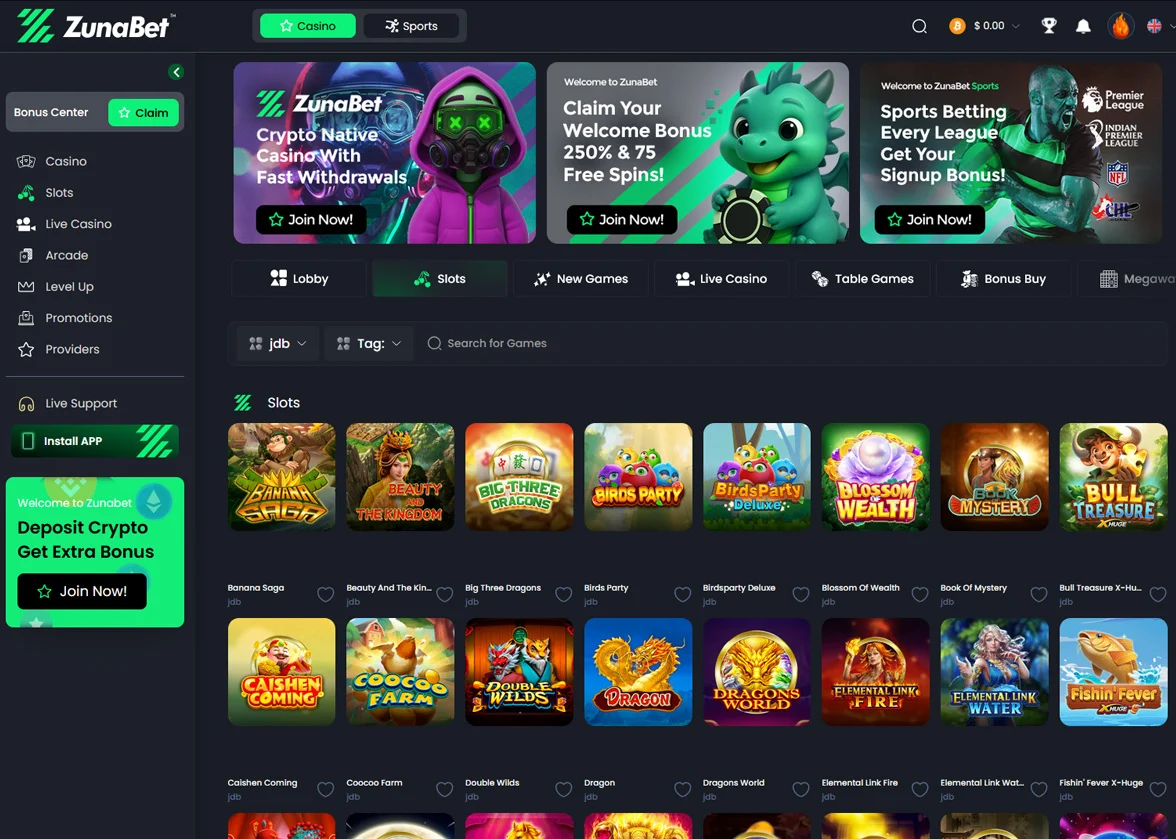
ZunaBet carries 11,294 titles from 63 providers. The provider list covers the industry comprehensively — Evolution for live dealer, Pragmatic Play across multiple categories, Hacksaw Gaming for high-volatility mechanics, Yggdrasil for both slots and table variants, BGaming among many others. Sixty-three suppliers means the library has genuine depth across every category and mechanical style. Players with specific preferences find their preferred content represented properly. Players who want to explore have enough variety to sustain engagement over the long term without cycling through the same content repeatedly.
For the modern casino player who approaches game selection with knowledge and preference rather than casual indifference, a library of this depth is not a luxury — it is what a proper casino library looks like.
People Bet on Esports Now — And They Want It in the Same Place
The esports betting audience has grown from a niche segment to a mainstream market in a short period of time. Players who grew up watching CS2 tournaments, following Dota 2 teams, and competing in League of Legends and Valorant ranked queues are now of gambling age and they are betting on the games they already know with the same engagement they bring to traditional sports.
These players do not want to use a separate platform for esports and a different one for casino games. They want everything in one place — one account, one balance, one loyalty program covering all of their activity regardless of whether it is a slot session, a football bet, or a CS2 match.
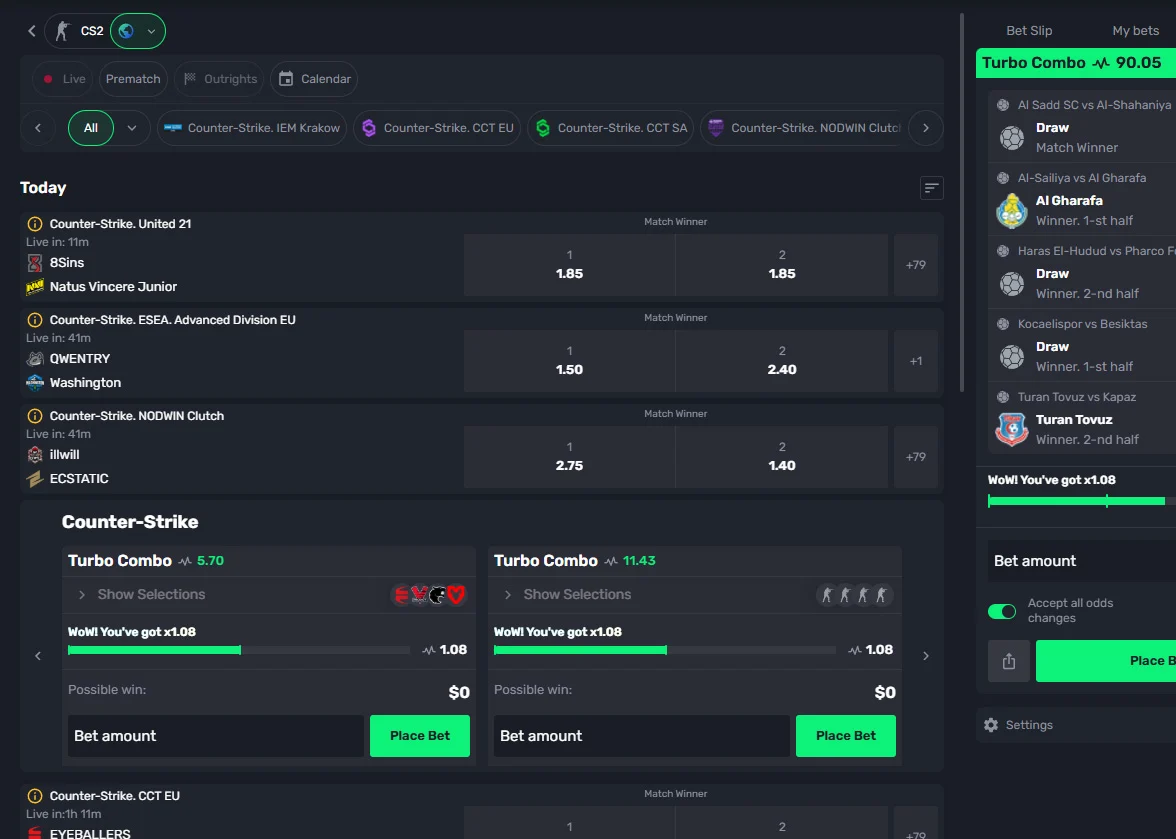
ZunaBet’s sportsbook covers football, basketball, tennis, NHL, and other major global sports alongside esports — CS2, Dota 2, League of Legends, and Valorant. Virtual sports and combat sports extend the offering further. The sportsbook sits alongside the casino as a complete operation rather than a secondary feature, and all activity across both contributes to the same loyalty tier progression.
For the player whose gambling activity spans casino games and esports betting, ZunaBet is built around how they actually behave rather than asking them to fragment their activity across platforms.
People Want to Know What Their Loyalty Is Worth Before They Commit
The points-based loyalty program worked for a player who did not think too carefully about what they were receiving. That player is increasingly rare. The modern gambling audience is more financially literate, more willing to compare options, and less tolerant of systems that obscure their value by design.
They want to know, before they commit to a platform, what their regular play is actually worth in return. Not points that convert to something. Not free play credits redeemable under specific conditions. A percentage. A number. Something they can calculate in seconds and compare against what they are currently receiving elsewhere.
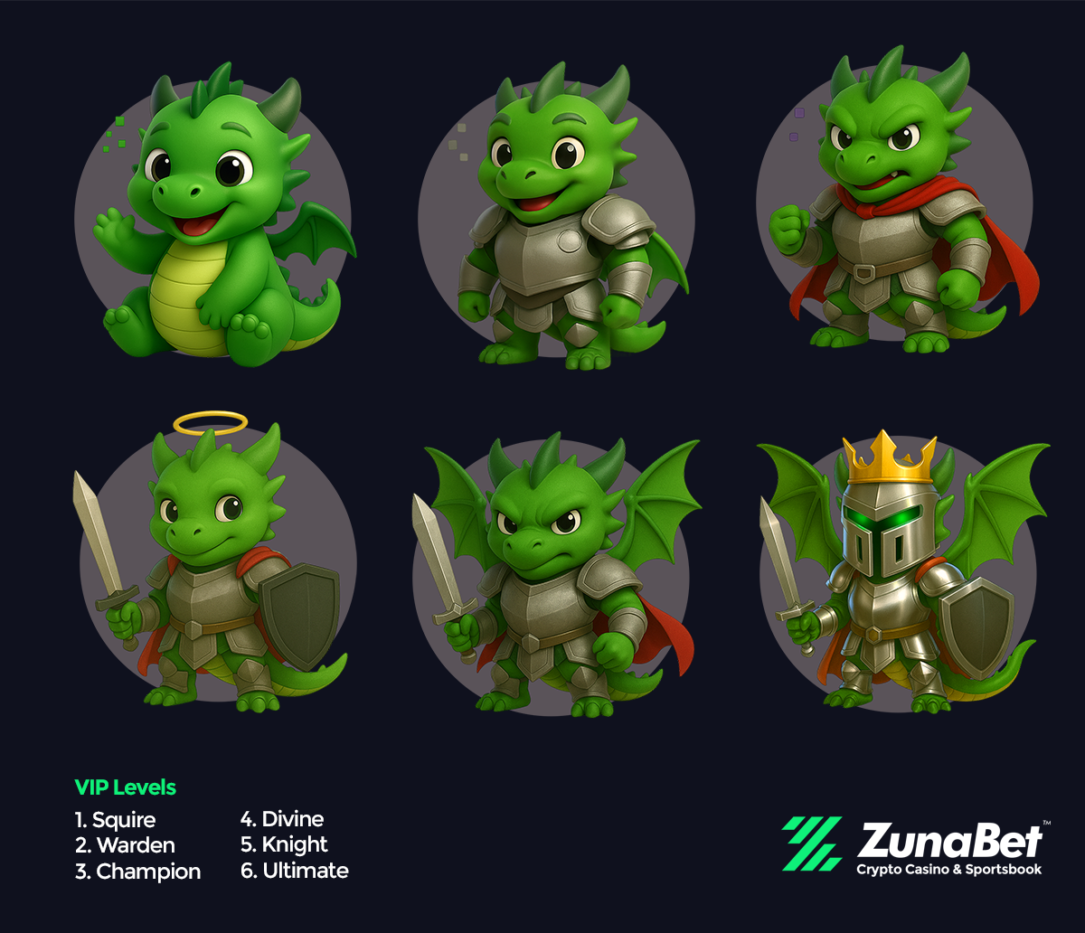
ZunaBet’s dragon evolution loyalty system delivers exactly that. Six tiers — Squire, Warden, Champion, Divine, Knight, and Ultimate — each carrying a direct rakeback rate. One percent at Squire, 2% at Warden, 4% at Champion, 5% at Divine, 10% at Knight, 20% at Ultimate. The gamified identity, built around a mascot called Zuno and a dragon evolution theme, gives the progression personality. The substance is in the percentages.
A player evaluating ZunaBet’s loyalty program before joining can calculate precisely what they will receive at their expected volume of play. There is no trust required. The maths is available and it is simple. For a player who has spent time trying to extract meaningful value from a points system that required reading the terms document to understand, that clarity is not a minor benefit — it is a fundamental shift in how the relationship between player and platform works.
Additional tier benefits include up to 1,000 free spins, VIP club access, and double wheel spins at higher levels — concrete rewards building on a core structure that already delivers transparent financial value.
People Use Multiple Devices and Expect a Consistent Experience Across All of Them
The modern gambler does not sit at a desktop for every session. They move between a laptop, a phone, and a tablet. They start a session on one device and continue it on another. They expect the experience to be consistent and complete across all of them rather than degraded on mobile or limited on certain operating systems.
ZunaBet offers dedicated apps for iOS, Android, Windows, and MacOS. Not a mobile-optimised browser experience — purpose-built apps for each platform. The interface runs on modern HTML5 technology with a dark-themed design, fast load times, and fully responsive layout across screen sizes. Live chat support operates around the clock.
For a player who moves between devices as a matter of course, a platform that delivers the same complete experience regardless of which device they are on is meeting a basic expectation of modern digital services. ZunaBet was built to meet it.
The Welcome Bonus and Credentials
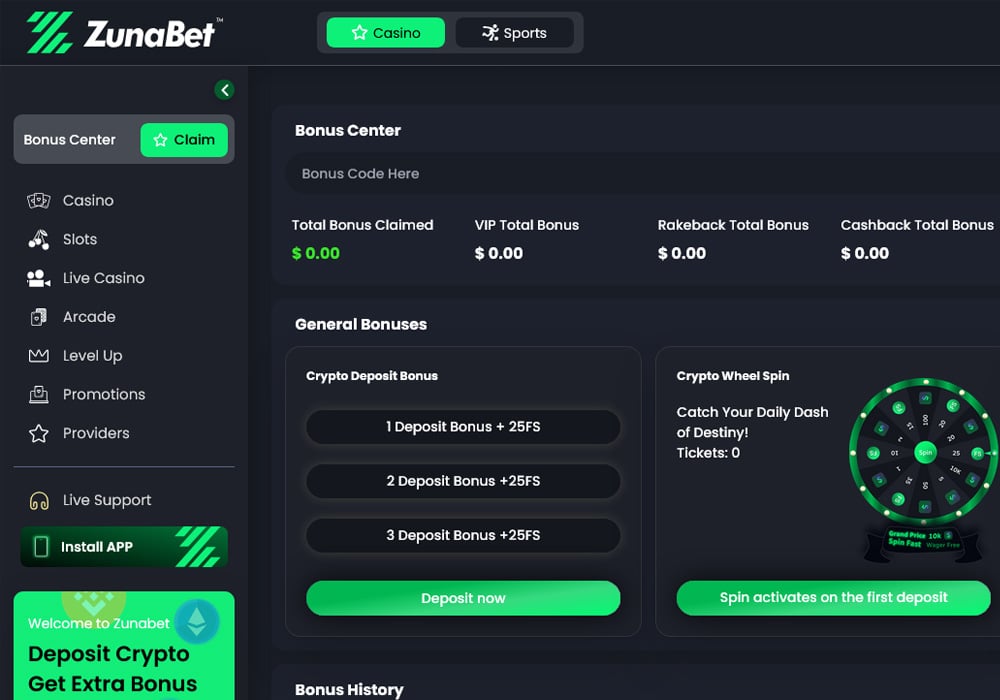
New players receive a bonus across three deposits totalling up to $5,000 plus 75 free spins. The first deposit is matched 100% up to $2,000 with 25 free spins. The second is matched 50% up to $1,500 with 25 spins. The third is matched 100% up to $1,500 with 25 spins.
ZunaBet is owned by Strathvale Group Ltd, operates under an Anjouan gaming license, and is registered in Belize. The team behind it brings over 20 years of combined industry experience. It launched in 2026 and is still building the long-term operational track record that players reasonably factor into their platform decisions. That gap is worth acknowledging honestly — newer platforms carry a different risk profile than established ones and trust accumulates over time.
Built for Now, Not for a Decade Ago
The gap between how people gambled when the major platforms were built and how they gamble now is significant. Crypto as a primary payment method. Sophisticated game preferences across a wide provider base. Esports as a mainstream betting market. Loyalty programs evaluated on transparent financial terms. Multi-device usage as standard.
ZunaBet was built in 2026 with all of that already true. It did not inherit infrastructure from an earlier era and attempt to update it. It was designed around the player that exists now — their payment preferences, their game expectations, their betting behaviour, and their loyalty standards. For that player it is not just another option in a crowded market. It is the platform that was built for them.


