





TLDR
- Trump threatened to bomb Oman if it “gets in the way” of U.S.-Iran peace efforts
- A U.S.-Iran ceasefire framework expired Monday with no clear replacement deal
- Ship traffic through the Strait of Hormuz dropped sharply, with zero vessels passing on Sunday
- Trump confirmed a backchannel exists between the U.S. and Iran’s IRGC
- Brent crude was trading at $88.91 a barrel on Monday
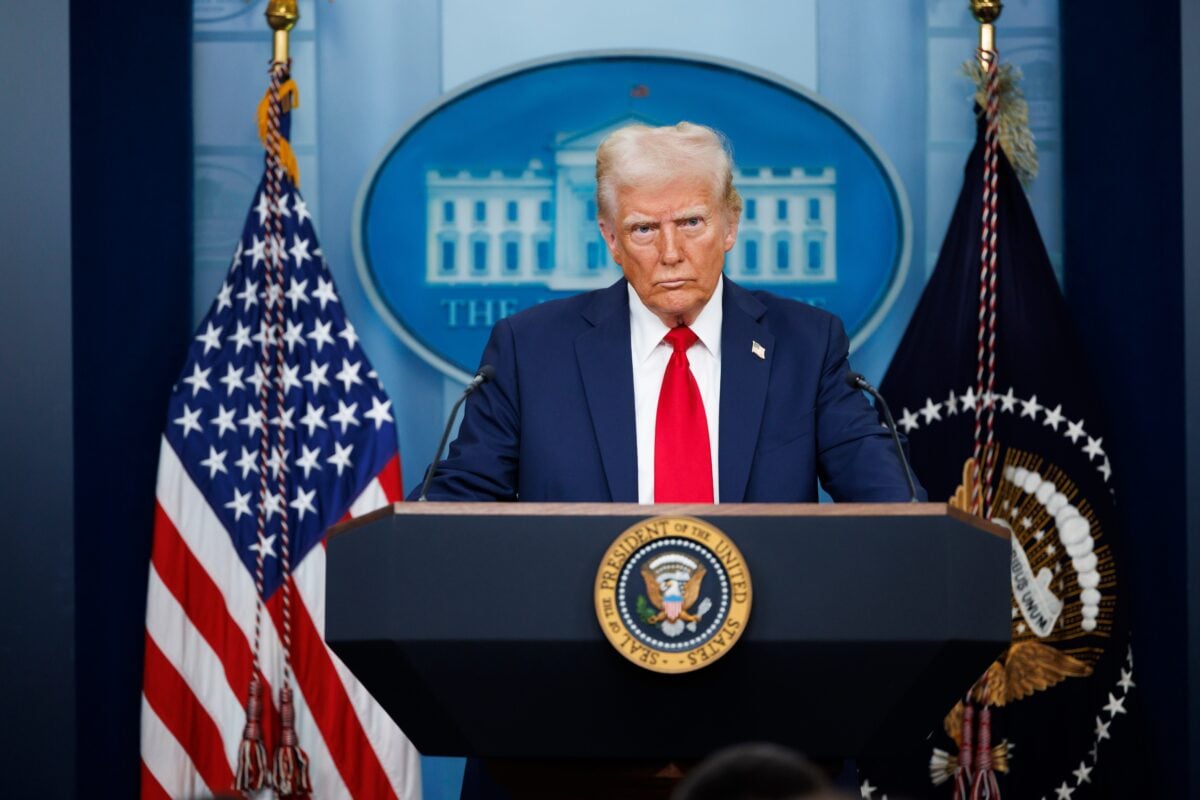
Trump threatened to bomb Oman on Monday after the country entered parallel talks with Iran over control of the Strait of Hormuz. The comments came as a U.S.-Iran ceasefire framework was set to expire.
BREAKING: 🇺🇸🇴🇲Trump says the US will bomb Oman if it gets in the way, Fox News reports.
The warning comes as Oman negotiates with Iran over jointly controlling navigation through the Strait of Hormuz.
The threat now could widen the Iran war and trigger another surge in oil… pic.twitter.com/quoiw8N3bh
— Coin Bureau (@coinbureau) August 17, 2026
Speaking to Fox News, Trump said he would “bomb the s—” out of Oman if it interfered with Washington’s diplomatic efforts with Tehran. He also confirmed a backchannel between the U.S. and Iran’s Islamic Revolutionary Guard Corps, despite Iranian officials publicly denying direct negotiations were taking place.
BREAKING: President Trump confirms to Fox News’ @TreyYingst there is a backchannel with Iran Revolutionary Guard officials, says he’s in “no hurry” — and warns, “If Oman gets in the way, we’ll bomb the s— out of them”
— Fox News (@FoxNews) August 17, 2026
The ceasefire framework was originally signed in June but has since effectively collapsed following a series of attacks on ships in the Strait of Hormuz. The 60-day agreement expired Monday with no new deal in place.
Hormuz Strait Traffic Drops Sharply
Ship traffic through the strait has fallen drastically. Just five commodity vessels passed through on Saturday, and none on Sunday, according to shipping data from Kpler cited by Reuters. The prior weekend saw 31 vessels make the crossing.
Before the U.S. and Israel launched strikes on Iran in late February, more than 130 ships a day passed through the strait. The waterway carries roughly a fifth of the world’s oil and liquefied natural gas supply.

Activity stalled further last week after three vessels operated by the Abu Dhabi National Oil Company were struck. The United Arab Emirates confirmed those attacks.
Iran said it had been in talks with Oman about reopening the strait. Both countries share coastlines along the waterway, which gives them strategic positions over its access.
U.S. Signals Long-Term Naval Presence
The U.S. has suggested it could maintain its naval blockade of Iranian ports indefinitely. That statement has dampened hopes for a quick diplomatic resolution with Tehran.
Trump told supporters he expects to declare the Strait of Hormuz “a territory of the United States” after the conflict with Iran concludes. Iran’s Deputy Foreign Minister rejected the claim, saying the strait “will be opened and closed only under Iran’s command.”
On social media Monday, Trump wrote that the “number one Goal” of the Iran war “is, and always will be, that Iran cannot have, in any way, shape, or form, a Nuclear Weapon.”
Trump also said he is in “no hurry” on Iran, suggesting the standoff could continue for some time. Diplomatic progress has shown little sign of movement since the June framework fell apart.
Brent crude futures were trading at $88.91 a barrel on Monday, up slightly on the day.
Stop guessing and start investing with confidence. KnockoutStocks gives you the AI insights, market intelligence, and stock research you need to spot opportunities, cut through the noise, and make smarter investment decisions — all in one powerful platform.
Sign up today and get 50% OFF full access to our premium stock picks.
Simply use coupon code SPECIAL50 at checkout to claim your exclusive discount.
Get 3 Free Stock Ebooks
Discover top-performing stocks in AI, Crypto, and Technology with expert analysis.
- Top 10 AI Stocks - Leading AI companies
- Top 10 Crypto Stocks - Blockchain leaders
- Top 10 Tech Stocks - Tech giants



