





TLDR
- Oil prices dropped on Tuesday as Middle East crude exports stayed strong despite ongoing regional conflict.
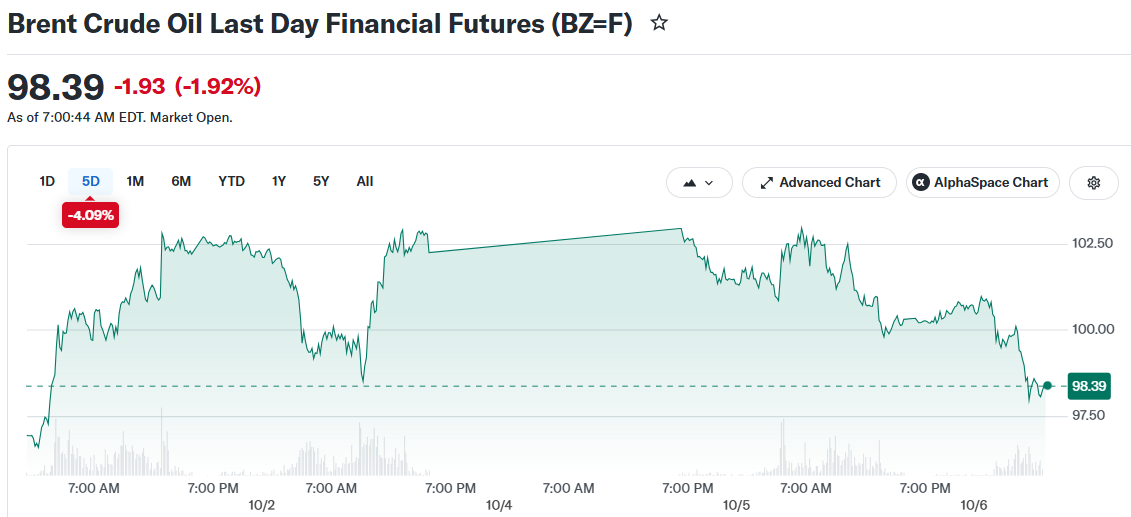
- Brent crude fell to around $100.17 a barrel, while WTI crude slid to about $88.67 a barrel.
- Gulf exporters surpassed pre-war export levels on several days in late September, according to shipping data.
- G7 countries pledged to release 100 million barrels of diesel and crude from emergency reserves.
- Fuel products like gasoline and diesel remain tight due to damaged regional refineries, even as crude flows improve.
Oil prices slipped on Tuesday. New data showed that crude exports from the Middle East held steady, even as conflict continues in the region.
Brent crude futures fell slightly to $100.17 a barrel by midmorning. U.S. West Texas Intermediate crude dropped further, trading near $88.67 a barrel.
Shipping data from Kpler showed Gulf oil exporters moved more crude than expected last month. The seven day moving average for exports reached 18.3 million barrels per day by September 30.
On 14 days in September, export volumes from the region topped levels seen before the Iran war began in late February. This happened despite constant threats to tankers and other ships moving through the area.
Strait of Hormuz Remains a Flashpoint
Iran shut down most traffic through the Strait of Hormuz after the war started. Roughly one fifth of the world’s oil and gas once passed through that waterway.
Oil flows in the Strait of Hormuz have sharply rebounded:
Persian Gulf crude oil exports surpassed 14 million barrels per day last week for the first time since the Iran War began on February 28th.
This marks an over +210% increase from the ~4.5 million barrels per day low seen… pic.twitter.com/nzNU4ktWm1
— The Kobeissi Letter (@KobeissiLetter) October 4, 2026
The conflict has since spread to other areas, including Yemen. Iran backed Houthi fighters and Saudi aligned forces are now fighting for control of the Bab el Mandeb Strait, another key shipping route.

On Monday, reports surfaced that Saudi Arabia’s east west pipeline was targeted again. The pipeline was not damaged, but analysts said the incident is a reminder that oil flows still face risk.
Fuel Products Stay Tight Despite Crude Gains
The Wall Street Journal reported that while crude oil is moving more freely, fuel products are not seeing the same relief. Gasoline and diesel shipments remain limited.
Damaged refineries in the region are part of the reason fuel supplies have stayed tight. This has kept global prices for these products elevated, separate from crude oil prices.
Central banks are watching energy prices closely. Rising fuel costs can push inflation higher, which affects how banks set interest rates.
Policymakers are expected to raise borrowing costs over the coming months if fuel prices stay high. Energy costs remain a key factor in those decisions.
A pledge from G7 nations has eased some supply fears. The group plans to release 100 million barrels of diesel and crude oil from emergency reserves.
G7 countries have also agreed not to restrict energy exports. This decision came after pressure from President Donald Trump.
Separately, a Tuesday report showed WTI crude for December delivery fell 1.69%, trading at $87.92 a barrel. Brent crude for December settlement dropped 1.24%, reaching $99.08 a barrel.
Crude exports from the Middle East exceeded pre-war levels on four days during the last week of September. This marked continued resilience in regional supply chains despite attacks on vessels in the Strait of Hormuz.
Stop guessing and start investing with confidence. KnockoutStocks gives you the AI insights, market intelligence, and stock research you need to spot opportunities, cut through the noise, and make smarter investment decisions — all in one powerful platform.
Sign up today and get 50% OFF full access to our premium stock picks.
Simply use coupon code SPECIAL50 at checkout to claim your exclusive discount.
Get 3 Free Stock Ebooks
Discover top-performing stocks in AI, Crypto, and Technology with expert analysis.
- Top 10 AI Stocks - Leading AI companies
- Top 10 Crypto Stocks - Blockchain leaders
- Top 10 Tech Stocks - Tech giants



